
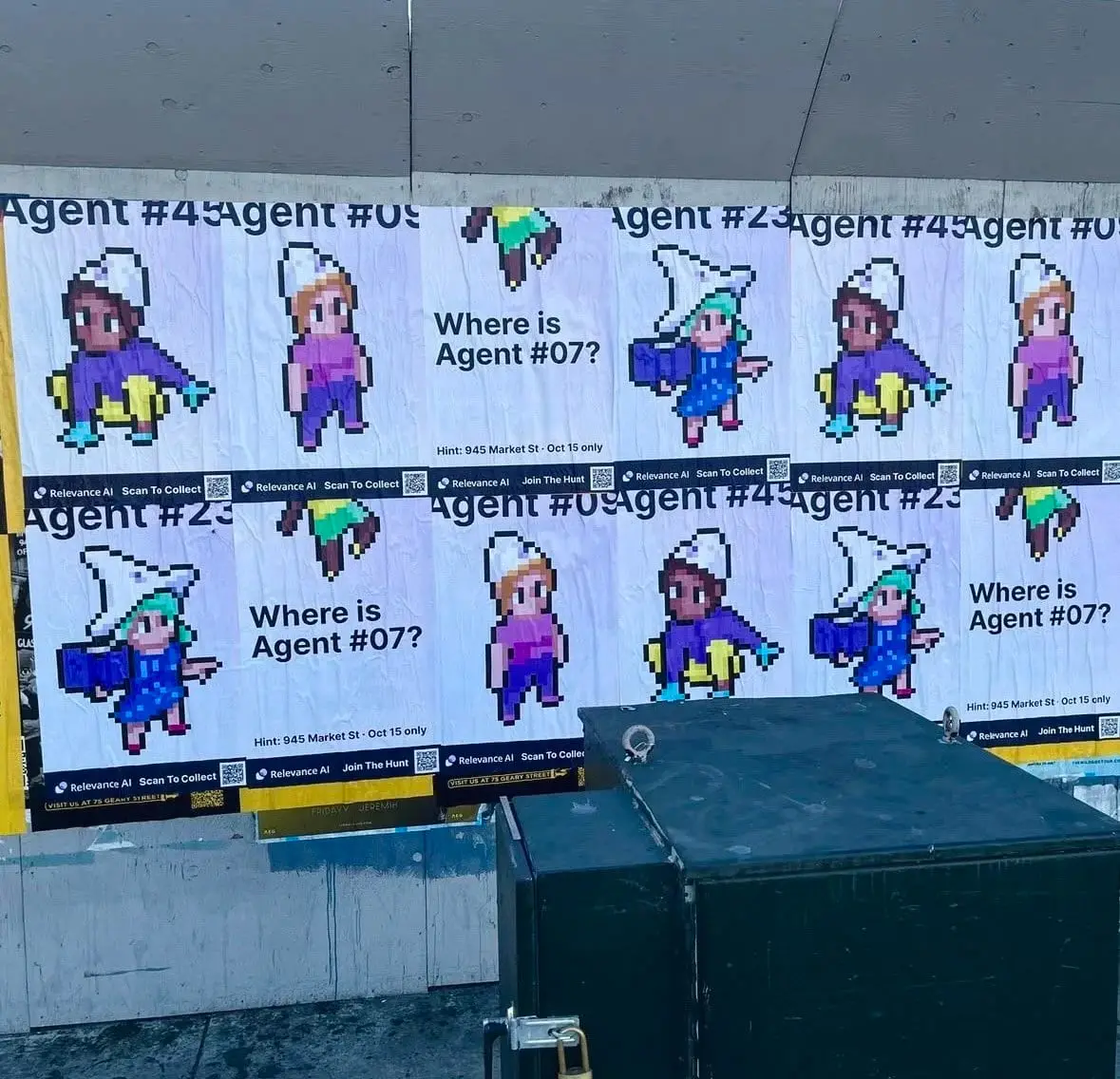
San Francisco has always been a testing ground for ideas. In a city where software dreams turn into daily tools, concrete and brick still matter. Walls carry stories. Corners become conversations. For AI startups seeking real visibility with real people, street posters change product talk into public art. The result is a brand presence that feels alive.
Where tech meets texture
Code reads clean on a terminal. It gets messy in everyday life. That gap is where street posters shine.
Sidewalk Tattoos works at that intersection of intelligence and grit. The team turns complex concepts into approachable visuals that stop pedestrians in their tracks. A robotic brain with a wink of local humor. A cryptic prompt that rewards curiosity. An algorithm drawn as a helpful companion rather than a faceless grid of lines.
The streets give AI a human setting. Neighbors pass the same posters every morning, each time noticing something new. That repetition builds familiarity without feeling repetitive.
And it sparks conversation.
Why posters are a perfect fit for AI startups
There is an irony to AI marketing. Products live online, yet the audience is exhausted by screens. Posters cut through that fatigue with scale, texture, and surprise.
- Visibility that isn’t gated by algorithms or ad blockers
- Messages tailored to neighborhoods where founders, creatives, and investors move daily
- Photogenic visuals designed for sharing, more than seeing
- Emotional cues that lower the intimidation factor around AI
Cost matters too. Compared to a paid search sprint, a citywide wheatpaste run can place your brand in front of tens of thousands of people for a fraction of the price. Add a smart QR flow, and a single poster becomes a funnel to demos, beta access, or waitlists. Sidewalk Tattoos often sees 4 to 5 times the attention relative to the initial outlay, amplified by user photos and social chatter.
Physical attention that fuels digital outcomes. That’s the win.
Design language that translates AI for the street
AI can appear cold or abstract. The design challenge is to say “smart” without saying “sterile.”
- Keep taglines short and punchy: five words or fewer, set in high-contrast sans-serif type
- Choose color with intention: bold gradients and neon accents that hold up in sunlight
- Use familiar metaphors: friendly robots, circuits as vines, human silhouettes layered with soft grid textures
- Make space: breathing room around the call to action boosts scanning without friction
- Bring the city in: bilingual puns, local references, neighborhood motifs
Sample poster lines that land:
- You Are Not Your Algorithm
- Scan Here. See AI In Action
- Who Said That
- Learn To Forget
- Beta In The Wild
Short words carry long distances. Simple language gets read at walking speed.
The wall-to-web handshake
Great posters move people twice. First to pause, then to act.
Sidewalk Tattoos bakes in the digital bridge from the start. Every campaign uses scannable elements and geo tags that track engagement by corridor. Hashtags are printed intentionally to standardize social sharing. AR cameos or NFC taps convert curiosity into quick, delightful demos. The effect is a street-to-phone loop that compounds attention.
A simple framework for the bridge:
- Single QR destination per campaign, with UTM tags for placement clusters
- Lightweight mobile demo that loads in under 2 seconds
- Auto-open social share with the campaign hashtag pre-filled
- Optional AR filter unlocked by scanning in specific neighborhoods
- Short vanity URL for non-scanners, easy to snap and type
Measure scans, dwell time, and shares. Map those signals back to placements. Optimize the next wave accordingly.
Campaign timing around event weeks
San Francisco lives by the calendar of launches, hackathons, and conferences. Timing your street presence around those peaks magnifies the payoff.
A quick timeline for a Moscone-centered week:
- Two weeks out: tease on social with a location riddle and a blurred poster crop
- Seven days out: seed the first wave along Market, SoMa, and Mission corridors
- Three days out: add sidewalk stencils pointing toward a live demo location
- Event day: pop-up moments, AR opens up, photo scavenger challenge with prizes
- Day after: second wave in Oakland and Berkeley, capturing travelers and students
Keep the visual story consistent but allow for variation by neighborhood. The shared DNA ties everything together.
What sets Sidewalk Tattoos apart
Many teams can paste paper. Few can integrate the art, the data, and the local nuance at once. Sidewalk Tattoos leads with a combination of craft and strategy built for AI brands.
- Poster plus stencil choreography that guides movement above eye level and underfoot
- A creative bench fluent in AI motifs and product storytelling
- Interactivity that feels native to the street, not bolted on
- Deep Bay Area pattern recognition: where to show, when to show, and how to connect with each microculture
- Transparent mapping and measurement so founders see what they paid for and what it delivered
From print texture to paste technique, execution quality matters. Each choice compounds the impact of the next.
Real-world sparks
Provocation drives attention in a crowded city. Smart provocation keeps the brand promise intact.
- An automation startup filled SF with a stark line that read Stop Hiring Humans. It stirred debate on sidewalks and on social, and it moved product. Controversy aside, the lesson is clear: against the urban canvas, big type and a single thought can travel far.
- A conceptual memory app used black and white posters whispering Learn To Forget around Mission District walls. The campaign’s restraint did the work. Curiosity drove scans.
- An audio-authenticity tool printed distorted faces along Market Street under the line Who Said That, pointing to a deepfake demo. Commuters carried the topic into conversations at nearby events.
Each example connects a provocative idea with a scannable action. That pairing is a multiplier.
Budget, ROI, and the KPIs that matter
Street posters can run lean while still showing up big. A typical Bay Area push covering 50 to 100 spots may range from 4 to 10 thousand dollars, depending on sizes, finishes, and labor. Scale carefully around event peaks and high-density corridors to maximize impressions.
Track the numbers that predict revenue:
- Impressions by cluster: estimated foot traffic paired with placement density
- QR scans and completion rate to demo or waitlist
- Social shares with the campaign tag
- Lead quality from poster-driven sessions
- Cost per qualified visitor vs. digital alternatives
Benchmarked over multiple waves, teams often see a step-change in direct traffic from neighborhoods with consistent placement. When the campaign becomes a local moment, the unit economics improve again through word-of-mouth.
Respect for the city
Street marketing should add to the environment, not disrupt it. Sidewalk Tattoos plans with care.
- Follow permit rules and property agreements
- Sidestep murals and community memorials
- Use water-based pastes and eco-friendly materials
- Map placements to avoid cluttering a single block
- Clean up after the campaign ends
Good neighbors get invited back. Brands win long-term because people feel the care behind the work.
A creative blueprint AI teams can steal
Ready to brief a street campaign in-house or with a partner like Sidewalk Tattoos? Use this checklist to focus the build.
- One-line brand promise, written at a sixth-grade reading level
- Three storyboard sketches that explain your product without jargon
- Two color palettes: lively daytime set and moody nighttime set
- Primary type lockup for the headline and a grid spec for placement
- Three poster sizes with clear rules for each neighborhood
- One call to action across all assets, paired with a fast-loading destination
- Hashtag strategy and AR or filter open up plan
- Placement map for SoMa, Mission, Hayes, Dogpatch, Market Street, Oakland, Berkeley
- Measurement dashboard linking scans, shares, and lead capture
- On-the-ground photo documentation plan for every install
The simplest campaigns are often the most effective. Clarity scales.
How Sidewalk Tattoos builds momentum for AI brands
Founders pick Sidewalk Tattoos for both style and substance. The work looks fresh. The process feels sharp. The results fit a startup’s pace.
- Creativity that earns a second look without sacrificing message clarity
- Installs that respect the city while commanding attention
- Placement data that aligns with investor corridors, founder hubs, and cultural hotspots
- Hands-on delivery, from concept through paste, with every placement documented
- A team fluent in turning AI into stories people actually share
It’s art with purpose. It’s marketing that feels like culture, not interruption.
From SoMa sidewalks to search results
A standout poster on Howard Street should not live in isolation. That moment should ripple across Instagram, TikTok, blogs, and the company’s own channels. Sidewalk Tattoos ties it all together with geo-tagging, content kits for the founding team, and prompts that make sharing easy.
Run a photo contest with product credits as prizes. Tease a password on one poster that opens up early features. Drop a surprise at a specific corner at a specific hour and watch a small crowd form.
These tactics make your campaign feel less like an ad and more like a city-wide easter egg.
Ready to put your AI in the wild
If your product has been living behind Figma files and dashboards, the street is your next sprint. Bring your message to the corridors where innovation walks by with coffee in hand. Let your visuals start new conversations in SoMa. Let your story land softly in Hayes Valley. Let your big idea echo down Market Street. Sidewalk Tattoos can architect the whole run across San Francisco and the wider Bay. From the first sketch to the final brush of paste, the team blends design, placement, and data so your brand shows up like it belongs. Say the word, and your next customer might meet you on their morning walk.
Launching past the Bay? Our locations page maps the other cities we paste.