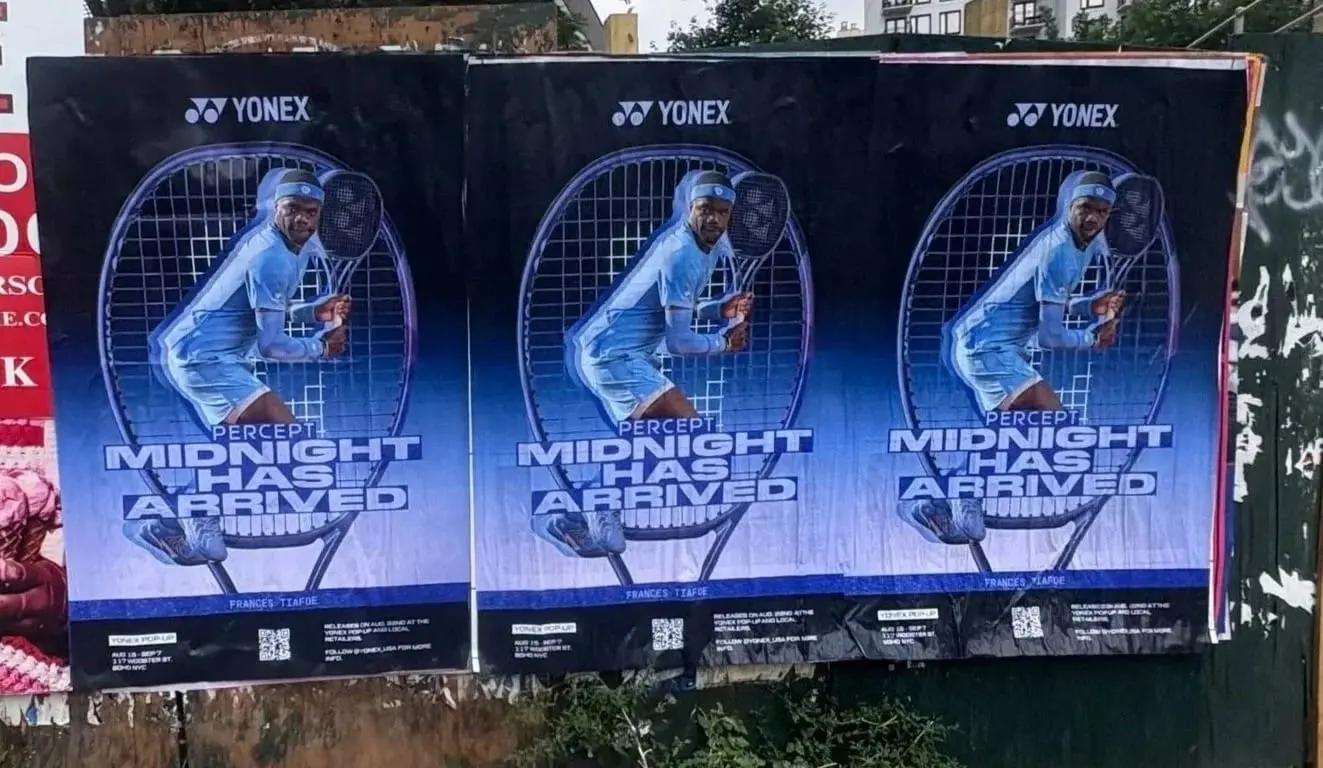
48x48 ground piece
- Size
- 48" x 48"
- Use
- Forecourts, retail entries, event entrances
- Run
- 25 to 200+ hits

Sidewalk stencil advertising puts your brand underfoot: a custom-cut stencil, from a 6x60 strip to a 48x48 piece, sprayed onto the pavement in chalk or temporary paint that fades instead of staining. We call them sidewalk tattoos: stencil advertising people walk on, from 25 hits around one pop-up to 200+ across a city.
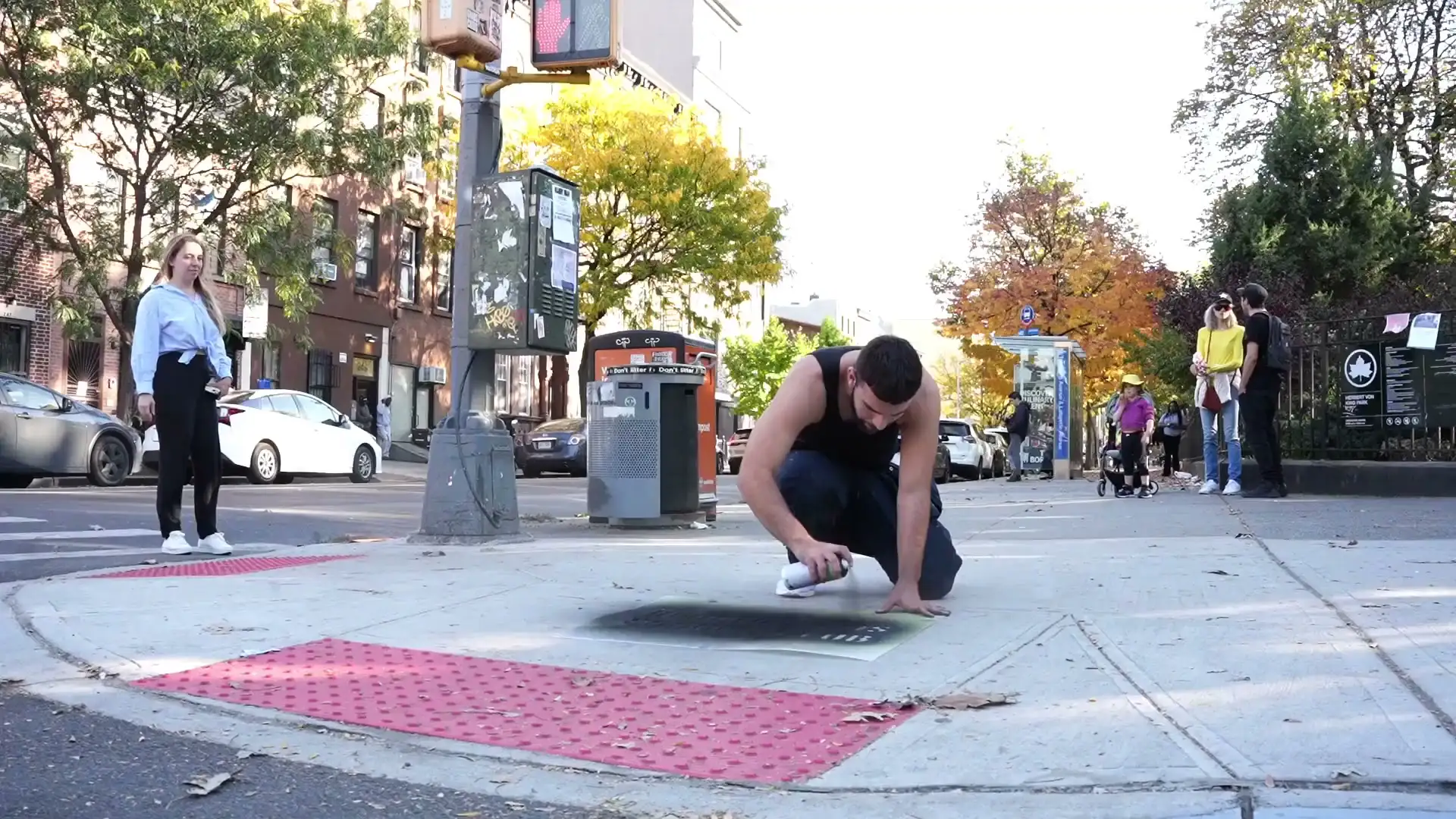
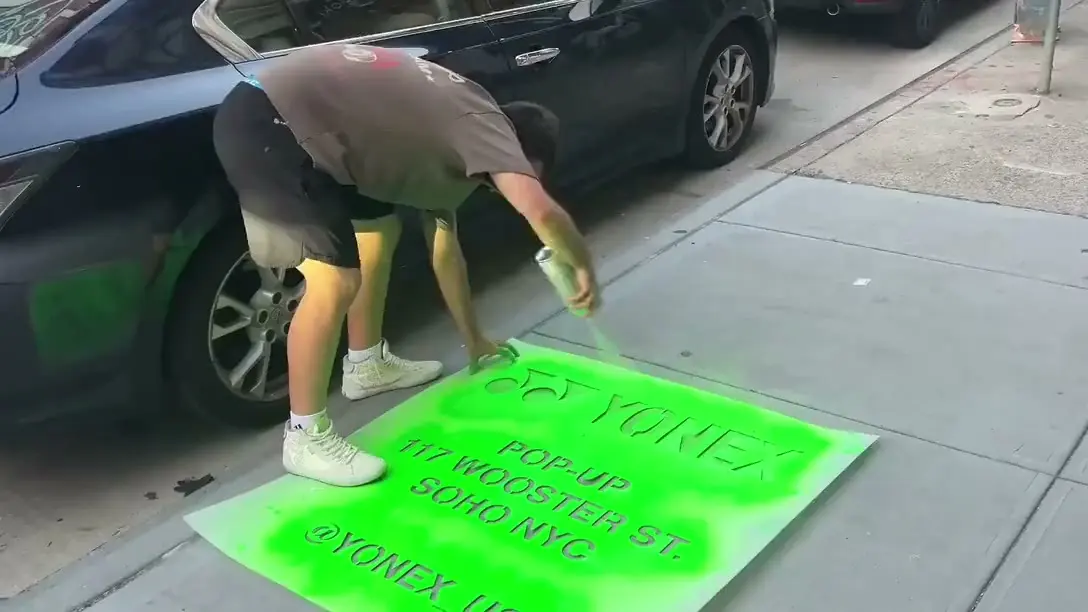
People stop, pull out their phones and post it.
A stencil gets people looking down: subway exits, shopping streets, nightlife blocks and event entrances. Repeat it and the sidewalk tells the story one hit at a time, so by the time people reach the pop-up they already know the name. We design the stencil with you, then the crew sprays the mapped spots while the streets are quiet, so the first commuters walk right over it.
Sidewalk stencils are a form of outdoor advertising where custom-cut designs are sprayed directly onto sidewalks, pavements, or other concrete surfaces using eco-friendly, temporary marking paint. It is sidewalk advertising in the literal sense: the pavement carries the ad. Unlike posters or billboards, stencils live at ground level, which makes them impossible to ignore. They're bold and designed to catch attention in high-traffic areas like subway exits, shopping districts, nightlife hubs, and event spaces. A stencil is a conversation starter that gets people looking down, pulling out their phones, and sharing your brand with the world.
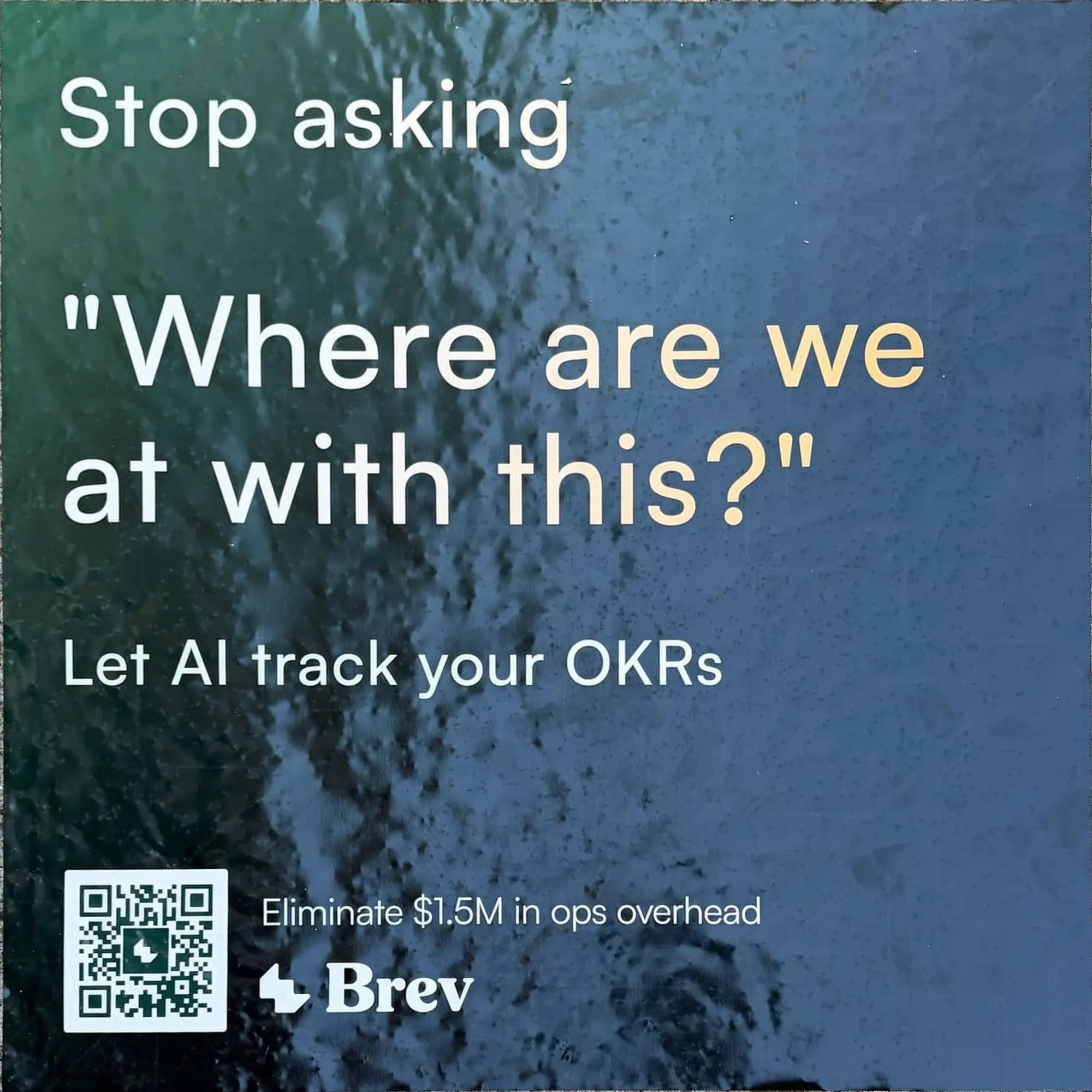
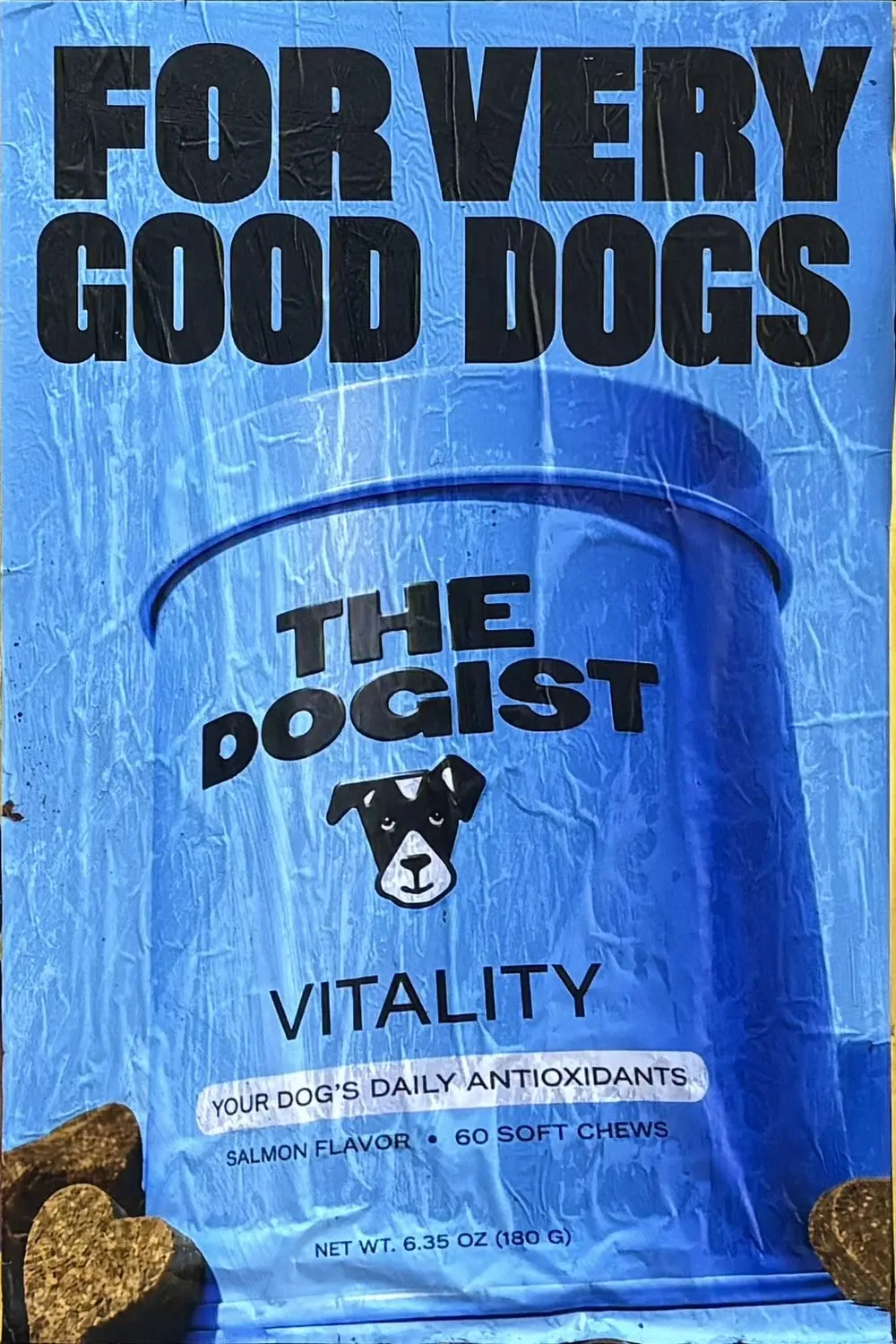
Also from the crew: Wheat pasting · Custom posters · Takeaway sample posters
Stencils run from compact 6-inch pieces to 48x48 inch ground pieces that anchor a plaza or a venue entrance. Long 6x60 inch strips carry a line of copy or an arrow along a route. A mid-size square piece reads clearly at walking pace without blocking the path.
We help you set the scale against the goal, the budget and the size of the area you want to cover.
Sidewalk chalk advertising gives a stencil presence without permanence: spray chalk and water-based marking chalk are bold enough to get noticed, temporary enough for a launch week. Some spray chalk stays visible for about a week; some water-based chalk is made to last up to 30 days, depending on surface, weather and foot traffic.
Clean graffiti, sometimes called reverse graffiti, is pressure-washed messaging: the stencil is made by cleaning the sidewalk rather than coating it with paint. Only water is used to spray away the dirt and reveal a crisp, temporary message.






Tap what fits, add a city, send. We reply within 24 hours on business days.
Brands we've tattooed the streets for

















A sidewalk stencil is a custom-cut template used to spray your brand's message, logo or artwork directly onto the pavement with eco-friendly, temporary paint. The stencil is laid flat on the ground and sprayed through to leave a clean, crisp impression, putting your message right where people are walking.
It depends on foot traffic, weather and the paint. Most placements last from a few days to a couple of weeks before they fade naturally, and chalk-based paint usually lands around one to two weeks at most. We use temporary, non-toxic paints that fade over time without damaging the surface.
In high-foot-traffic spots: subway exits, busy intersections, shopping streets, nightlife blocks and the approaches to venues, stores and pop-ups. Every location is mapped before install, and every hit is photographed and pinned to a placement map so you know exactly where your campaign lives.
Absolutely. We work with you to design stencils that are bold, legible at walking pace and on-brand: a logo, a call to action, a date and address, a directional arrow or a full graphic. Sizes run from compact 6-inch pieces to 48x48 inch ground pieces and long 6x60 inch strips.
It depends on your goals, budget and the area you want to cover. Some brands do 25 to 50 hits for a local activation around one store or event, while others do 100 to 200+ for a citywide takeover. We help you pick the scale that gets the most visibility for the spend.
Professional-grade, eco-friendly temporary marking paints, including chalk-based and water-based formulas, made to fade naturally rather than stain. They come in a range of colors, hold up to weather for the length of the campaign and can be removed sooner if needed.
Through foot traffic, social media engagement and visibility in the targeted neighborhoods. You get photo documentation and a placement map of every hit within 48 hours. Many clients also track response with a short URL, a QR code, a hashtag or in-store mentions tied to the stencil.
Yes. Stencils are made for driving awareness and foot traffic to pop-ups, launches and events. They act as visual breadcrumbs that guide people straight to your door, and they create shareable moments that help the event travel online. Pair them with wheatpaste posters on nearby walls for a full takeover.
Because street-level marketing is all we do. Our crew handles everything, from design and location scouting to execution and the digital gallery, with clean, crisp hits every time. We've worked with top-tier brands to turn city sidewalks into sidewalk tattoos, and we'd love to do the same for you.
It is sidewalk stencil work sprayed in spray chalk or a water-based marking chalk: a custom-cut stencil, a bold mark on the pavement, and a medium built to wear away with weather and foot traffic. Brands use it for short windows like events, store openings and product drops, where the message should feel current and leave no permanent footprint.
A brand message sprayed onto the sidewalk in chalk through a custom-cut stencil, so it sits right in the walking path and fades in a few days to a couple of weeks instead of staining the pavement.
From compact 6-inch pieces up to 48x48 inch ground pieces, plus long 6x60 inch strips for a line of copy or an arrow along a route. Mid sizes like 24x24 read clearly at walking pace without blocking the path. Each stencil is cut for the spot it is going on.
Six things: the number of hits, the stencil size, the number of colors, how many cities, any surface prep, and the timeline. A 25-hit run around one pop-up and a 200+ hit citywide takeover sit at very different budgets. Tell us the goal and the neighborhoods and we scope the run to fit.
Your goal, city and dates. We map the routes.
Stencils cut to size, 6x60 to 48x48.
Chalk or temporary paint, 25 to 200+ hits.
A digital gallery within 48 hours.
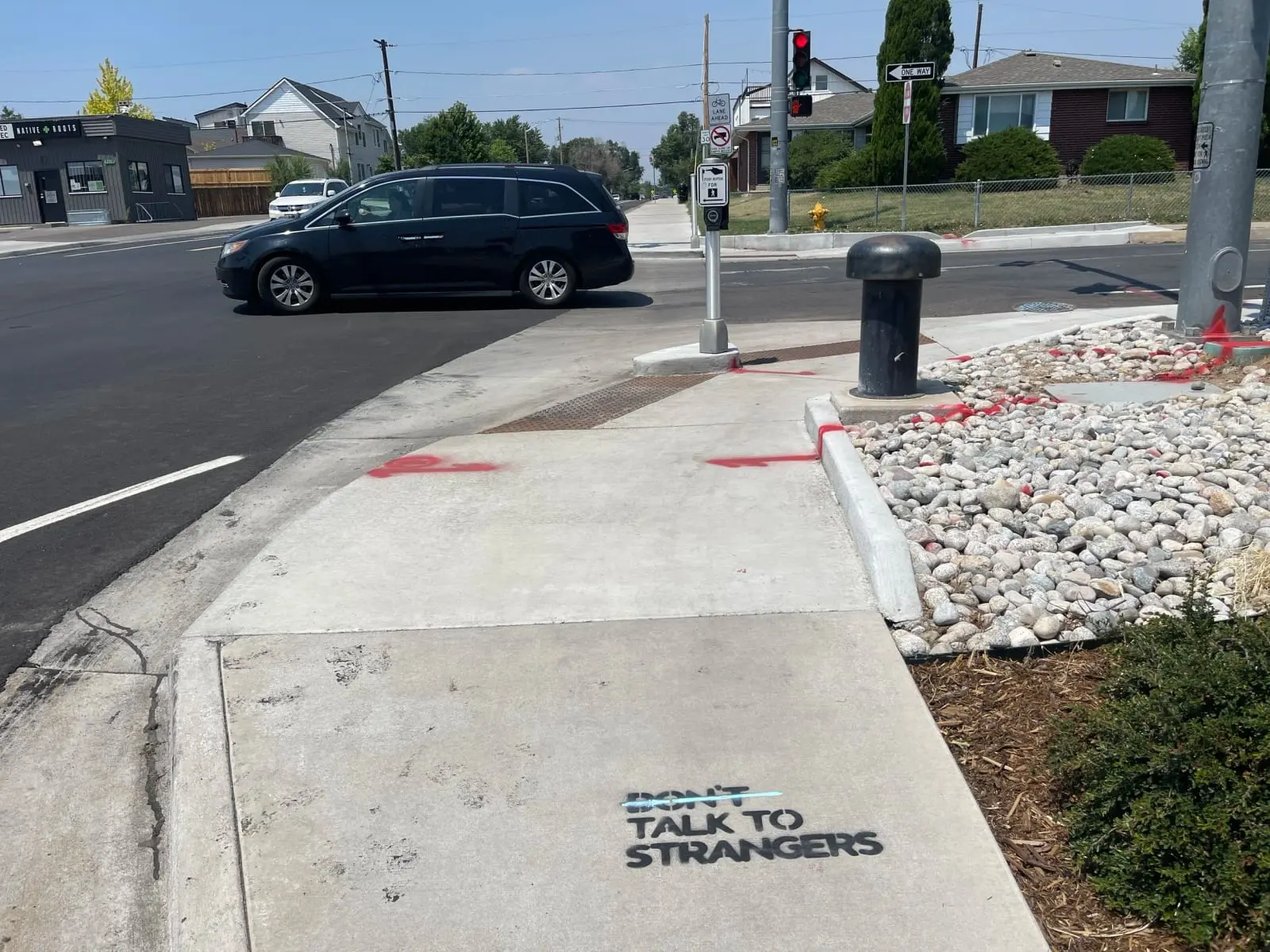
Send the concept and the spot you want people to find. We map every approach, pick the size, 6-inch pieces up to 48x48, and set the count: 25 hits around one pop-up or 200+ for a city.
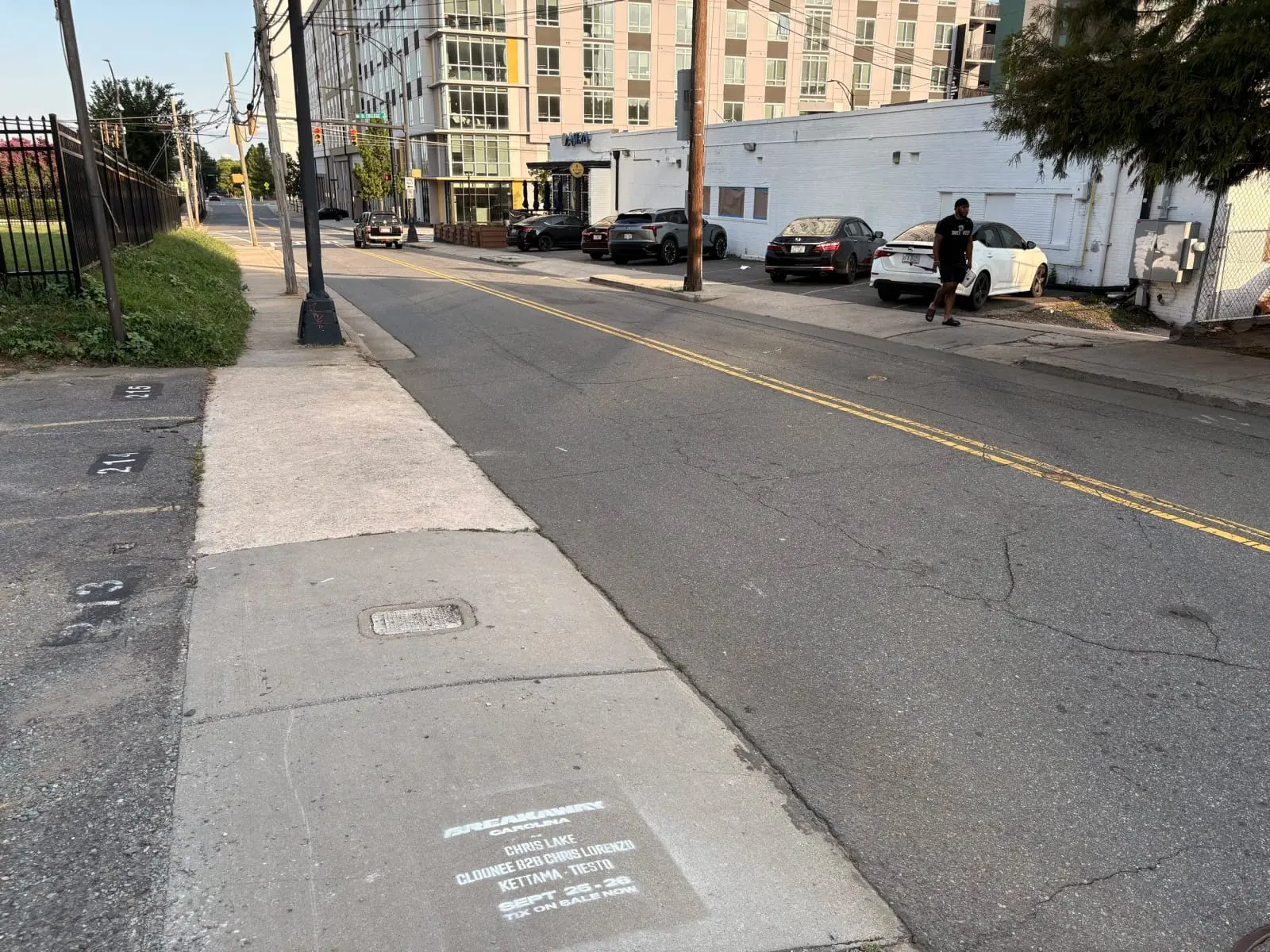
Your artwork is cut into stencils sized for each spot and checked for clean edges at walking pace. We match chalk-based or water-based temporary paint to your colors and to the surface.
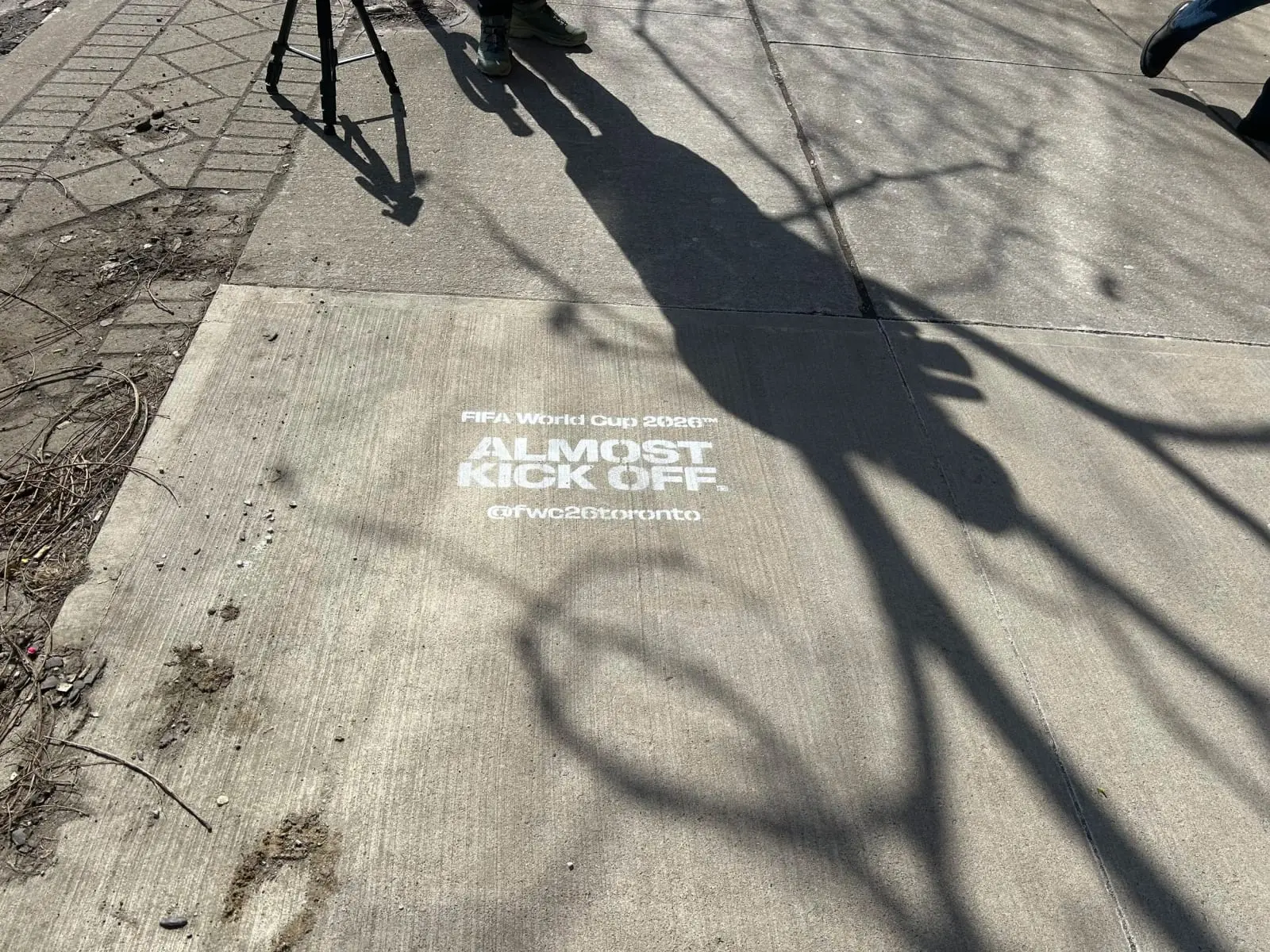
Crews hit the mapped spots while the streets are quiet: lay, spray, lift, move. By the morning rush your brand is underfoot on every approach, and the first commuters walk right over it.
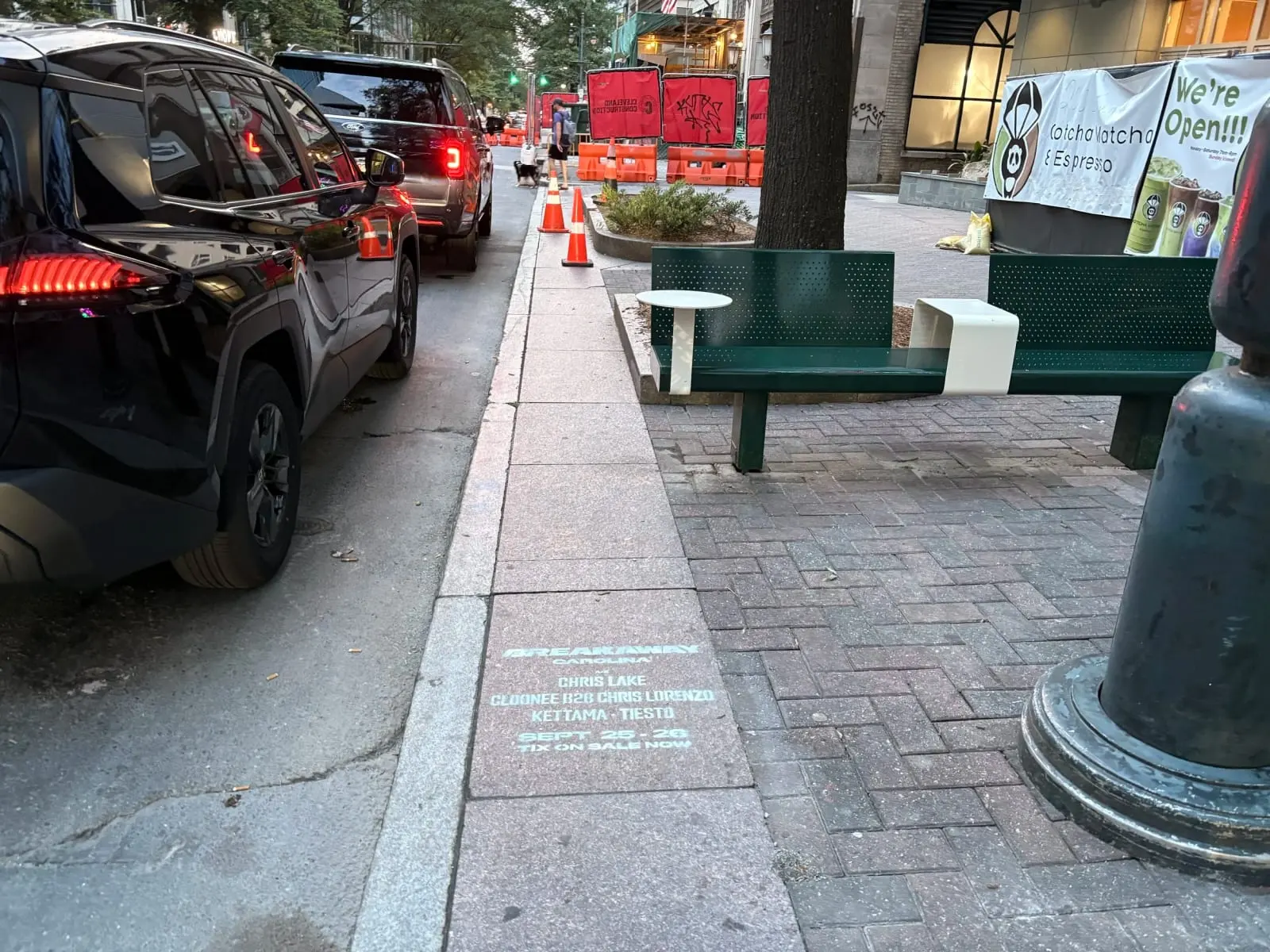
Every hit is photographed and pinned to a placement map, delivered within 48 hours, with an honest read on how long each spot should hold in that weather and foot traffic.
Sidewalk rules are set city by city.
Some cities treat any marking on a public sidewalk as a violation even when it washes away, and permission from property owners is often required.
Temporary by design
We use temporary chalk-based or water-based paint that fades without damaging the surface, and before anything is cut you hear what each spot on your route allows.
City rules vary
Los Angeles is the clearest example. Municipal Code 28.04 bars painting or marking any sidewalk, curb or public fixture, with an administrative penalty of up to $100 for a first violation in a calendar year, $250 for a second and $500 for a third. Other cities range from a chalk exemption to a graffiti charge, so every market gets its own read.
Chalk stencil advertising, or sidewalk chalk advertising, is sidewalk stencil work done in spray chalk or a water-based marking chalk. The custom-cut stencil is the same; the medium is built to wear away. It reads bold on concrete, sits right in the walking path, and fades with weather and foot traffic instead of staining the surface.
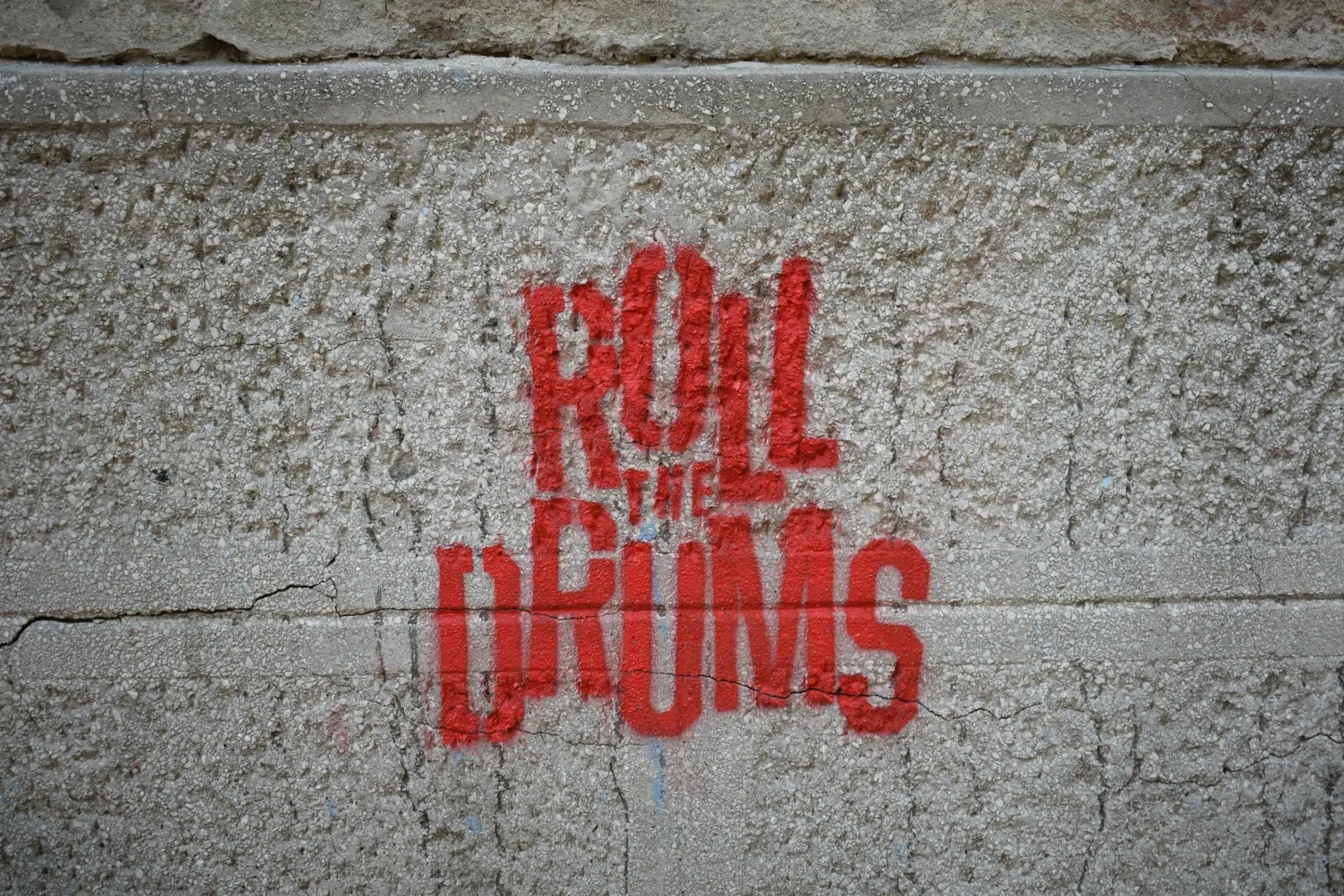
Brands pick chalk when the moment is short and the route matters: a weekend event, a store opening, a product drop, a screening, a pop-up that runs for days rather than months. It goes down fast across many spots in a narrow window and leaves no permanent footprint when the campaign is over. How long it holds depends on the product, the surface and the weather. The full breakdown is in how long chalk stencils last.
Most of our ground work uses chalk-based or water-based temporary marking paint. It is built to fade, not to stain, and it can be removed sooner if a property owner or the city asks. Colors range from clean white to full brand palettes, and the paint holds up to weather for the length of the run.
Expect a few days to a couple of weeks. Chalk-based paint usually lands around one to two weeks at most, and a packed corridor wears it faster than a quiet one. That short life is the point: a stencil feels current because it is. Why the medium matters is covered in why stencils are so unique, especially the chalk paint, and the full format comparison in the real lifespan of posters, stencils and snipes.
| Material | Typical visibility | Cleanup | Best use |
|---|---|---|---|
| Spray chalk | Up to about a week in some cases | Fades with rain and foot traffic; power washing or brushing clears it sooner | Weekend events, one-night launches, short pop-ups |
| Water-based marking chalk | Up to 30 days, depending on surface, traffic and weather | Power washing or a wire brush | Product launches, art openings and retail pushes that need a longer run |
Both ranges come from the city guidance and product specs cited in our chalk paint breakdown. Rain, heat and heavy foot traffic shorten every one of them.
One stencil gets a glance. A trail of them gets people moving. We plan a breadcrumb run backward from the door: the pop-up, the store or the venue entrance is the last hit, and every stencil before it sits on a real approach, at subway exits, corners and crosswalks, pointing the same way.
Each hit has one job. The logo makes people look down, an arrow or a "this way" line turns them, and the date and address close the loop. A trail usually mixes sizes: long 6x60 inch strips carry the arrows along the curb, mid-size pieces mark the corners, and a 48x48 inch ground piece owns the entrance itself.
Around a single pop-up, 25 to 50 hits is usually enough for the walk itself to become the ad. When the launch needs walls as well as ground, run the trail alongside wheat paste posters on the blocks around it.
We do not throw stencils down at random. Each placement is mapped before the crew heads out, then every hit is photographed and pinned to a placement map, delivered within 48 hours. You know exactly where your campaign lives.
Want to measure more than visibility? Tie the stencil to a short URL, a QR code, a hashtag or an in-store mention. Foot traffic, social posts and those trackable touches tell you what the ground did.
We price the run, not a rate card. Every stencil quote comes down to the same six inputs:
Send the neighborhoods, the date and the artwork, and we scope the run to your budget before anything is cut. Ready? Plan your Sidewalk Tattoo.
Stencils are strongest next to wheat paste. On a pop-up block, stencils on the sidewalk point the way while wheatpaste posters carry the artwork on the walls nearby. Posters hold eye level, stencils hold the ground, and together they make a block feel taken over. More on that pairing in how wheat pasting and sidewalk stencils fuel pop-up success.
Stencil pages for 21 cities in the US and Canada, plus every state. Anywhere else, including internationally, email us.
Most asked: stencil advertising in NYC, from SoHo to Williamsburg.
See every state below, or every city we cover. We also offer stencils internationally, including Europe. Email info@sidewalktattoos.com.
Sidewalk Tattoos offers stencils in the following states: Alabama, Alaska, Arizona, Arkansas, California, Colorado, Connecticut, Delaware, Florida, Georgia, Hawaii, Idaho, Illinois, Indiana, Iowa, Kansas, Kentucky, Louisiana, Maine, Maryland, Massachusetts, Michigan, Minnesota, Mississippi, Missouri, Montana, Nebraska, Nevada, New Hampshire, New Jersey, New Mexico, New York, North Carolina, North Dakota, Ohio, Oklahoma, Oregon, Pennsylvania, Rhode Island, South Carolina, South Dakota, Tennessee, Texas, Utah, Vermont, Virginia, Washington, West Virginia, Wisconsin, and Wyoming.