
Street Marketing for Real Estate: Engage Future Movers Early
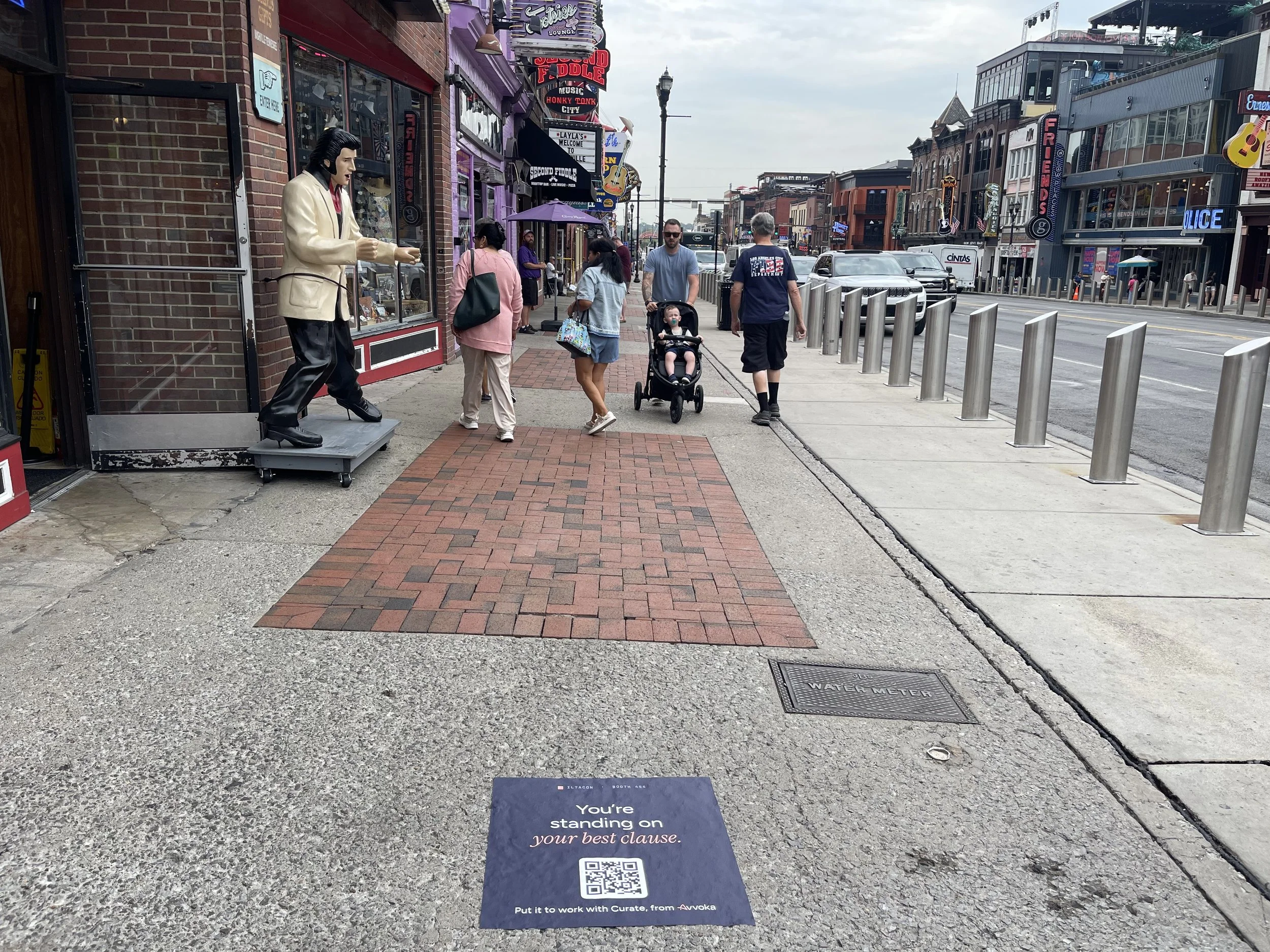
Avvoka sidewalk decal with a QR code by sidewalktattos
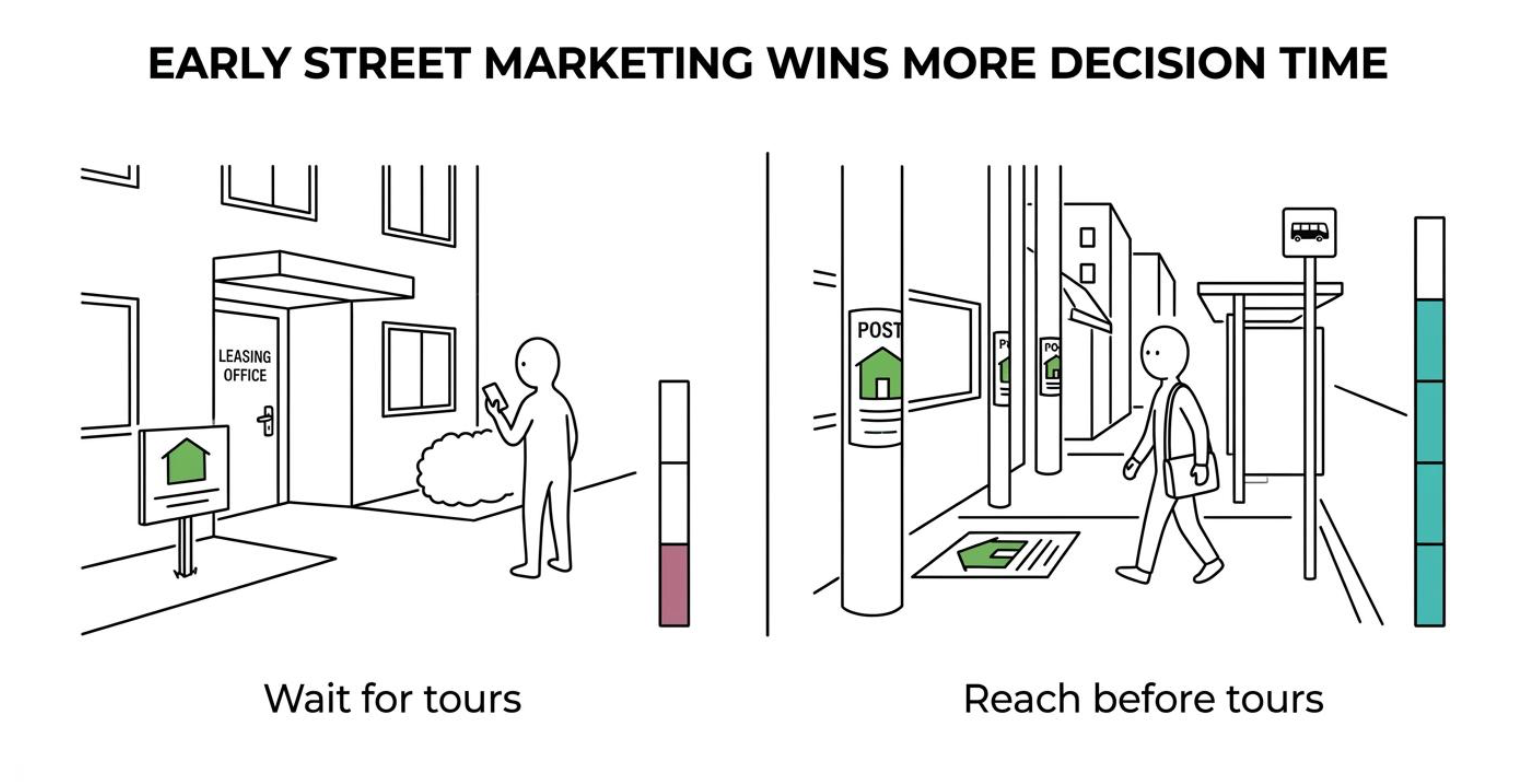
Real estate marketing often focuses on people who are already nearby. That makes sense when the goal is local awareness, but it misses a bigger opportunity.
Many future renters, buyers, and relocating professionals are still living somewhere else when they begin paying attention to neighborhoods, commute times, amenities, and price signals. If a property, development, or brokerage waits until a prospect books a tour, a large share of the decision window is already gone.
Street marketing gives real estate brands a way to show up earlier, in public space, where future movers already live, work, and commute.
Why early real estate marketing changes the competitive window
Home search behavior leaves more room for early brand influence than many campaigns assume. The National Association of REALTORS® reported that in 2024, 43% of home buyers said their first step was looking for properties on the internet. The same report found buyers spent a median of 10 weeks searching for a home, and 86% used real estate agents during the process.
That search window matters. It means people are not making a housing decision in a single moment. They are collecting signals over time, comparing neighborhoods, building price expectations, and narrowing options long before a lease is signed or a closing date is set.
Zillow has also reported a median search period of 3 to 4 months in its research, which points in the same direction: housing decisions take time. Some buyers contact an agent first. Others start with search portals, saved listings, or neighborhood research. Either way, there is a meaningful period when awareness can still be shaped.
Street Marketing by sidewalktattos
This is one reason out-of-home keeps gaining attention in purchase-focused media plans. OAAA and Winterberry Group reported that 98% of respondents incorporate out-of-home into purchase-driven initiatives, and 86% expect their out-of-home investment to increase over the next two years. Real estate belongs in that conversation because it is one of the clearest high-consideration purchases in the market.
Street placements for future movers and relocation audiences
A future resident rarely starts the process by standing in front of the exact building they will choose.
That simple fact changes how real estate marketers should think about reach. A campaign for apartments in one neighborhood may need to appear in the next neighborhood over, near a commuter rail station, in a district full of renters likely to trade up, or in another city entirely if relocation is part of the demand mix.
Street marketing works well here because it can be mapped block by block instead of bought as broad, citywide exposure. Placements can follow transit-adjacent foot traffic, storefront routes, nightlife corridors, campus edges, or event zones where likely movers already pass through daily.
After that geographic logic is in place, the message starts working harder.
Transit adjacency: station exits, bus corridors, rideshare pickup zones, commuter footpaths
Lifestyle matching: cafés, gyms, grocery runs, weekend retail streets, cultural districts
Decision moments: open-house weekends, housing fairs, move-in season, campus traffic peaks
Relocation feeders: neighborhoods where renters are being priced up, families are seeking more space, or professionals are considering a shorter commute
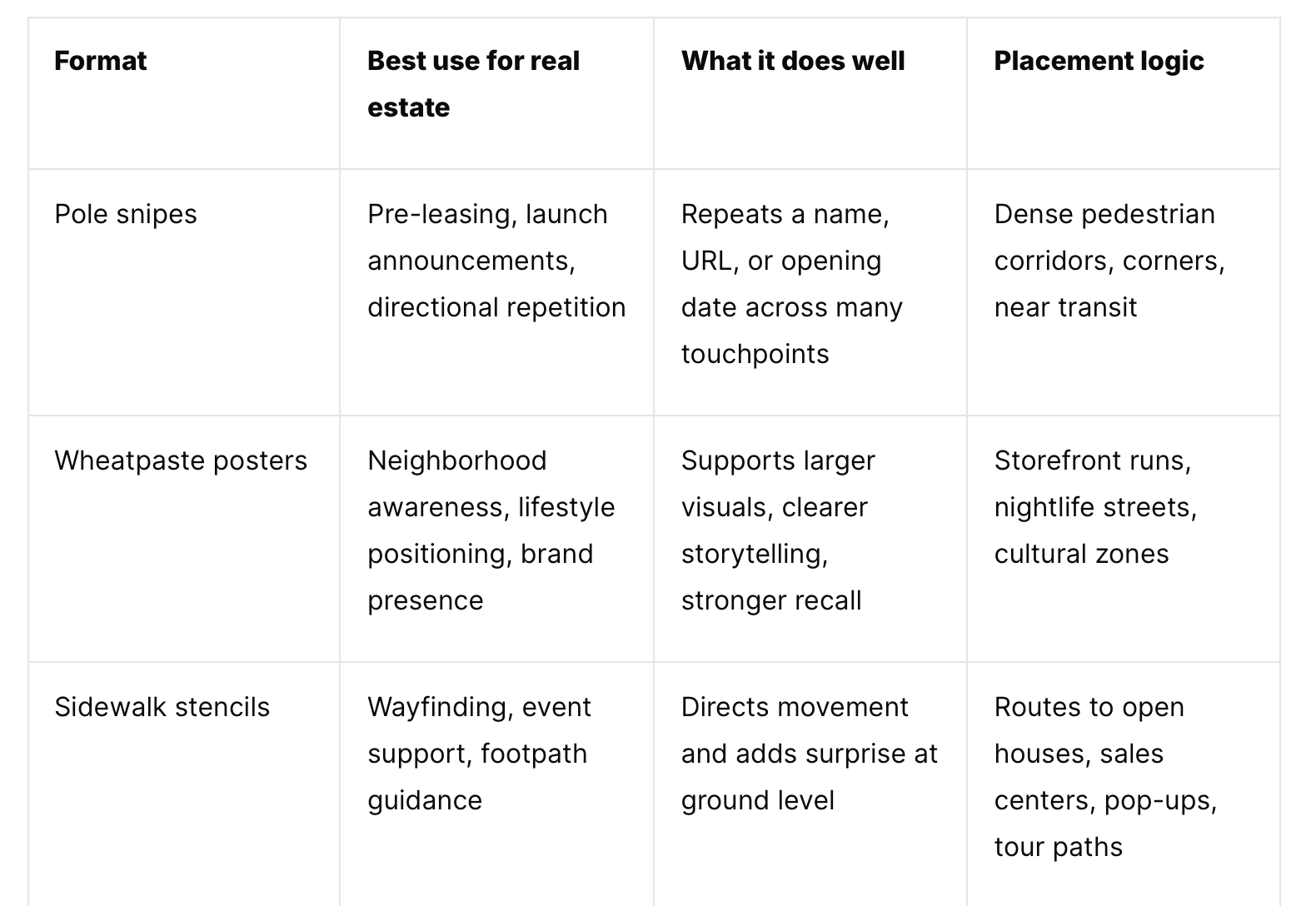
Pole snipes, wheatpaste posters, and sidewalk stencils for real estate
Different street formats do different jobs. The best campaigns use that to their advantage instead of forcing one message into one placement type.
Pole snipes and poster clusters are excellent for repetition. Wheatpaste installations create larger visual presence and stronger neighborhood takeover energy. Sidewalk stencils can guide people along a route, creating a breadcrumb-trail effect toward a leasing office, pop-up showroom, open house, or sales gallery.
Marketing strategy by sidewalktattos
At Sidewalk Tattoos, wheat pasting posters and sidewalk stencils are core formats, and they are especially effective when combined. Posters establish presence; stencils extend that presence into motion. The result feels less like a single ad and more like a visible footprint in the neighborhood.
Mapped neighborhood targeting in street marketing for real estate
Real estate is local, so placement strategy should be local too.
A mapped street campaign is not just “post around the city.” It is a deliberate plan built around the blocks that reflect target resident behavior. That could mean streets used by young professionals after work, weekend shopping areas where higher-income renters spend time, or transit routes connecting one borough to another.
This is where street-level execution becomes more precise than many people expect. A campaign can be built around a specific retail strip, a set of blocks near a train line, or a corridor that connects a current neighborhood to a desired one. It can also be documented with photos and geo-tags so the rollout is visible, trackable, and easier to report back to stakeholders.
That matters for brokers, developers, leasing teams, and agencies that need more than a creative idea. They need proof of placement and a plan that matches the local market.
Connecting street marketing with online home search behavior
Street marketing does not compete with online home search. It feeds it.
When buyers and renters see a property name, neighborhood claim, or visual identity several times in public space, they are more likely to notice it again online. That can shape search behavior before a person ever calls an agent or schedules a showing. Since so many buyers begin with internet property research, offline exposure can become the spark that sends them to a listing page, landing page, or search portal.
This is especially relevant for people who are actively browsing. Zillow Research has reported that 55% of buyers who installed a home-search app never uninstalled it by the time of survey completion. That suggests a market full of people who are not just passively interested. They are carrying search intent with them every day.
For real estate marketers, the practical takeaway is straightforward: street placements should be easy to remember and easy to search. If the name is forgettable, the offline impression fades. If the URL is too long, it gets lost. If the message is vague, the prospect moves on.
Real estate creative elements that improve street campaign recall
A strong street campaign for housing does not try to explain every amenity, floor plan, and financing option in one poster. Public-space media works best when the message is clear at a glance.
The goal is to create a mental shortcut. A person should be able to remember the property name, the neighborhood, and one strong reason to care. Then they can search the rest when they are back on their phone.
One clear promise
Memorable property or community name
Neighborhood-specific language
Simple landing page or URL
Strong photo, rendering, or visual identity
Availability window or opening date
There is also value in saying less. “Studios in Logan Square” may work better on the street than a long line about curated interiors, artisanal finishes, and lifestyle perks. Brevity gives the message room to stick.
Real estate street marketing use cases that fit this approach
This strategy is not limited to one kind of property.
It works for multifamily pre-leasing, condo launches, student housing, mixed-use developments, brokerage branding, neighborhood repositioning, and relocation marketing. A new rental property can target renters in adjacent neighborhoods. A downtown development can market to suburban commuters who are tired of long travel times. A student housing brand can appear along campus-adjacent walking routes before leasing season peaks.
Street marketing is also useful when a project needs cultural fit, not just visibility. Public-facing placements become part of a neighborhood’s visual rhythm through repetition block by block. That can make a campaign feel grounded in place rather than dropped in from above.
A few common scenarios stand out:
Multifamily pre-leasing: build awareness before model units open
Condo launches: create premium neighborhood presence around preview events
Student housing: reach foot traffic near campus, transit, and nightlife routes
Relocation campaigns: put one market in front of people still living in another market
Multi-city street marketing for relocation-focused real estate campaigns
Some of the best real estate opportunities live outside the target ZIP code.
Developers in growth markets, rental communities near major employers, and brokerages serving incoming residents often need to reach people who have not moved yet. That is where multi-city street activations can be especially valuable. A brand can show up in feeder markets while also building local presence near the destination property.
Sidewalk Tattoos supports campaigns across major U.S. cities and international markets, which is useful when a real estate push needs reach beyond one neighborhood. A relocation campaign can run in New York and Miami, or in Chicago and Austin, while keeping the visual system, placement strategy, and reporting structure consistent.
Fast launch options for real estate street activations
Timing matters in housing. Leasing windows open quickly, market conditions shift, and event calendars move.
That is why activation speed has real value. Sidewalk Tattoos offers fast execution, often within 48 to 72 hours, with mapped placements, photo documentation, and street-culture execution built for visibility at ground level. Campaigns can use wheat pasting on its own, sidewalk stencils on their own, or a combined rollout that creates both presence and direction.
If your audience has not moved yet, your media plan should not wait for them to arrive. Contact Sidewalk Tattoos to get started with a real estate street marketing campaign built to reach future residents early.
Reach out for more information :
929.678.0235
