
Case Study: HunterBlu Blankets Jefferson County, Colorado, From Sidewalks to Street Poles
snipes install by sidewalktattos
Some campaigns are built around a single high-profile location. This one needed reach, repetition, and a street presence that felt impossible to miss.
HunterBlu came in with a clear objective: cover Jefferson County, Colorado with a message that lived at every level of the pedestrian experience. The plan answered that goal with three formats working together across the same geography. There were 100 sidewalk stencils at 24x24, 100 floor graphics at 24x24, and 480 snipes at 8.5x11 placed on street poles throughout the county.
That added up to nearly 700 individual placements, but the real story was how those placements behaved as one campaign.
Jefferson County street advertising scale made local density the right move
Jefferson County is not a small, single-node market. According to the U.S. Census Bureau, the county had an estimated 578,533 residents in 2024 and 257,957 housing units. That matters because a county of that size does not reward scattered effort. If a brand wants to feel present, the campaign needs to show up again and again across different routes, neighborhoods, and commercial corridors.
That was the logic behind the HunterBlu activation.
Instead of treating the county like one giant canvas with random placements, the rollout treated Jefferson County as a series of connected movement zones. Busy walkways, neighborhood commercial strips, street-pole corridors, and foot-traffic pockets each had a job to do. The campaign was designed so people could meet the message in more than one setting, often within the same outing.
HunterBlu campaign planning used three street-level formats for one message
The strongest part of this case study is how cleanly the media mix mapped to real-world behavior. Sidewalk stencils and floor graphics gave the campaign presence at ground level, right where pedestrian attention naturally drops during movement. Snipes brought the message upward, wrapping poles block after block and extending the visual field well beyond a single step path.
The media plan looked like this:
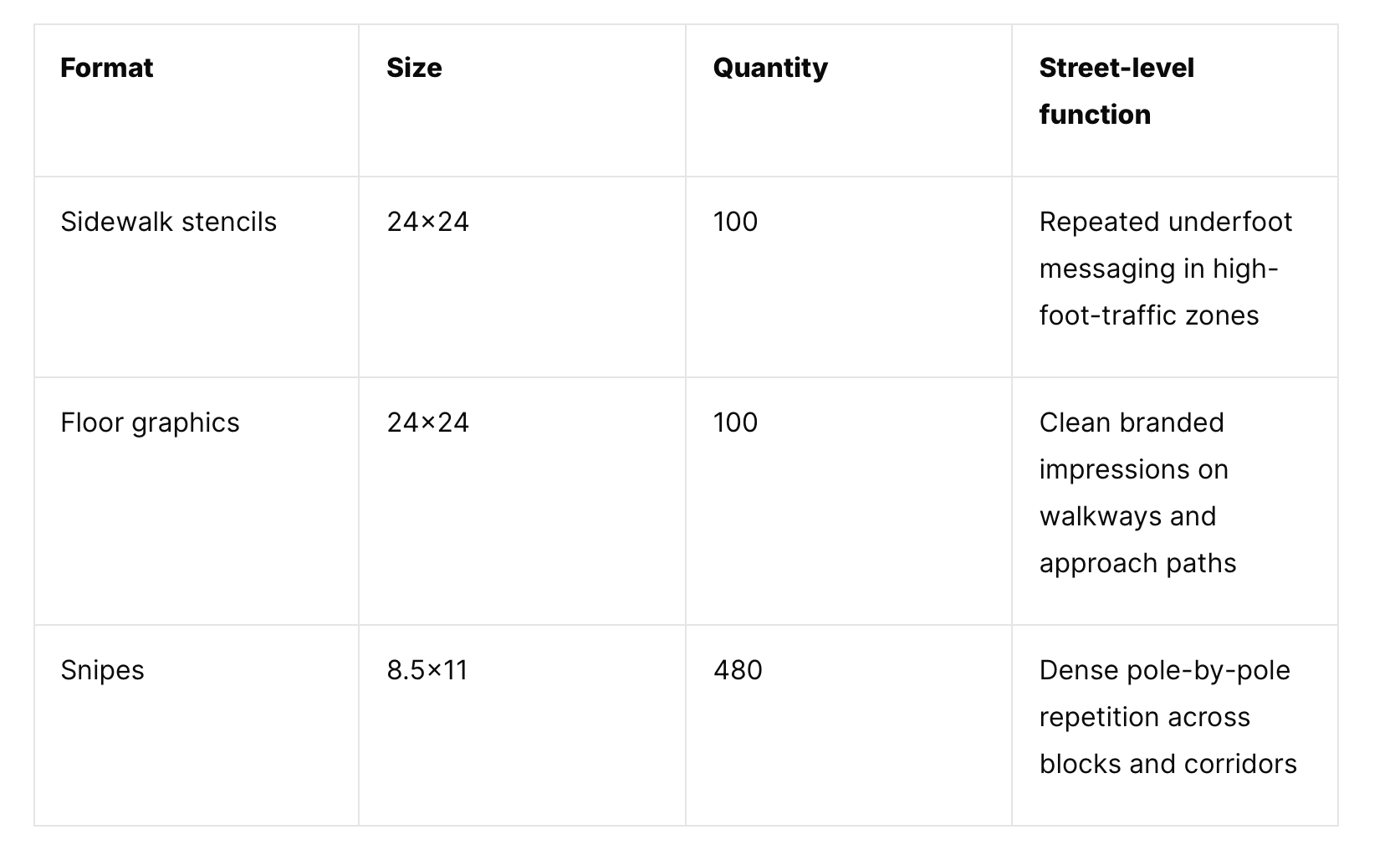
format , size and quantity for street level marketing
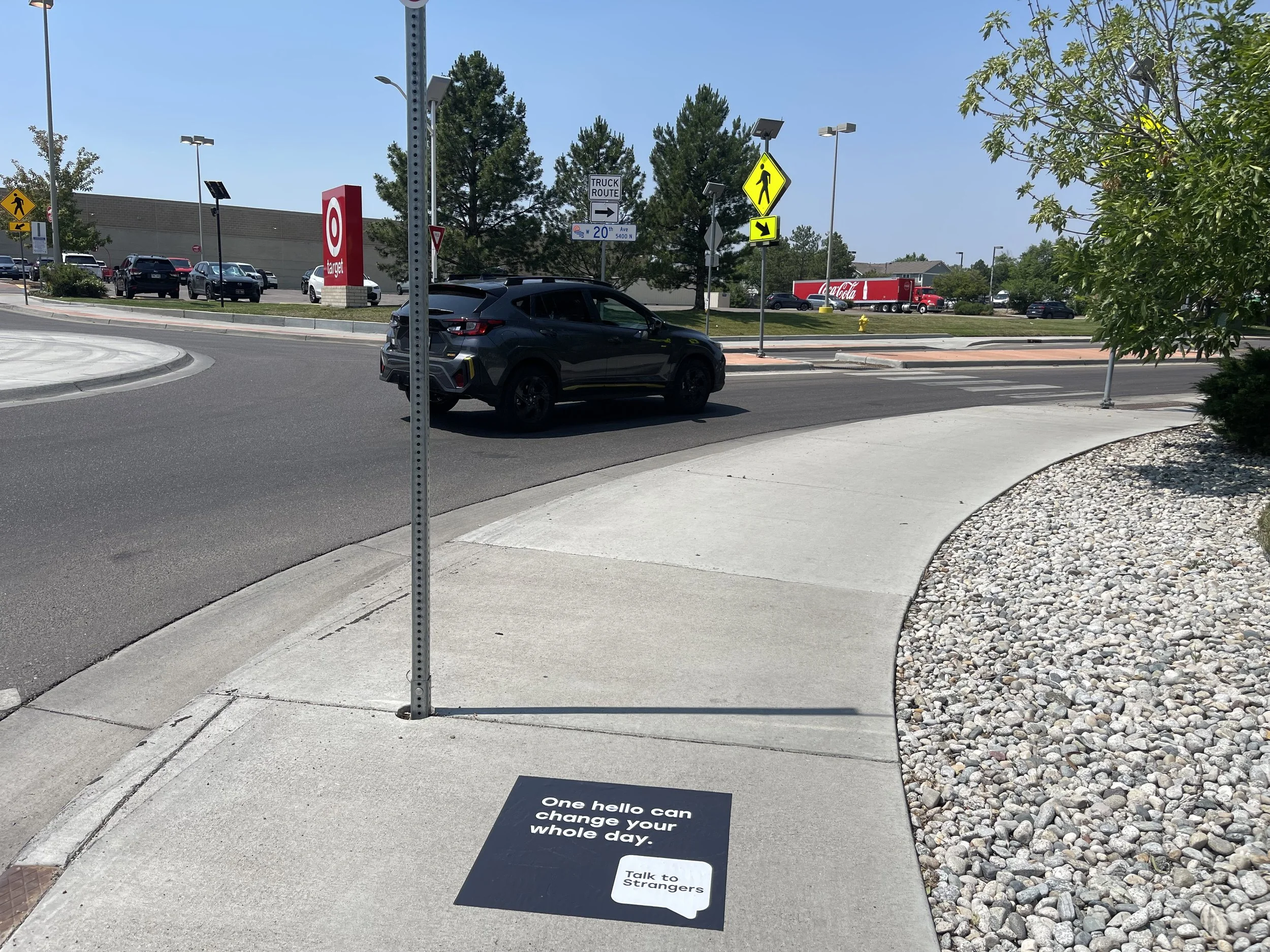
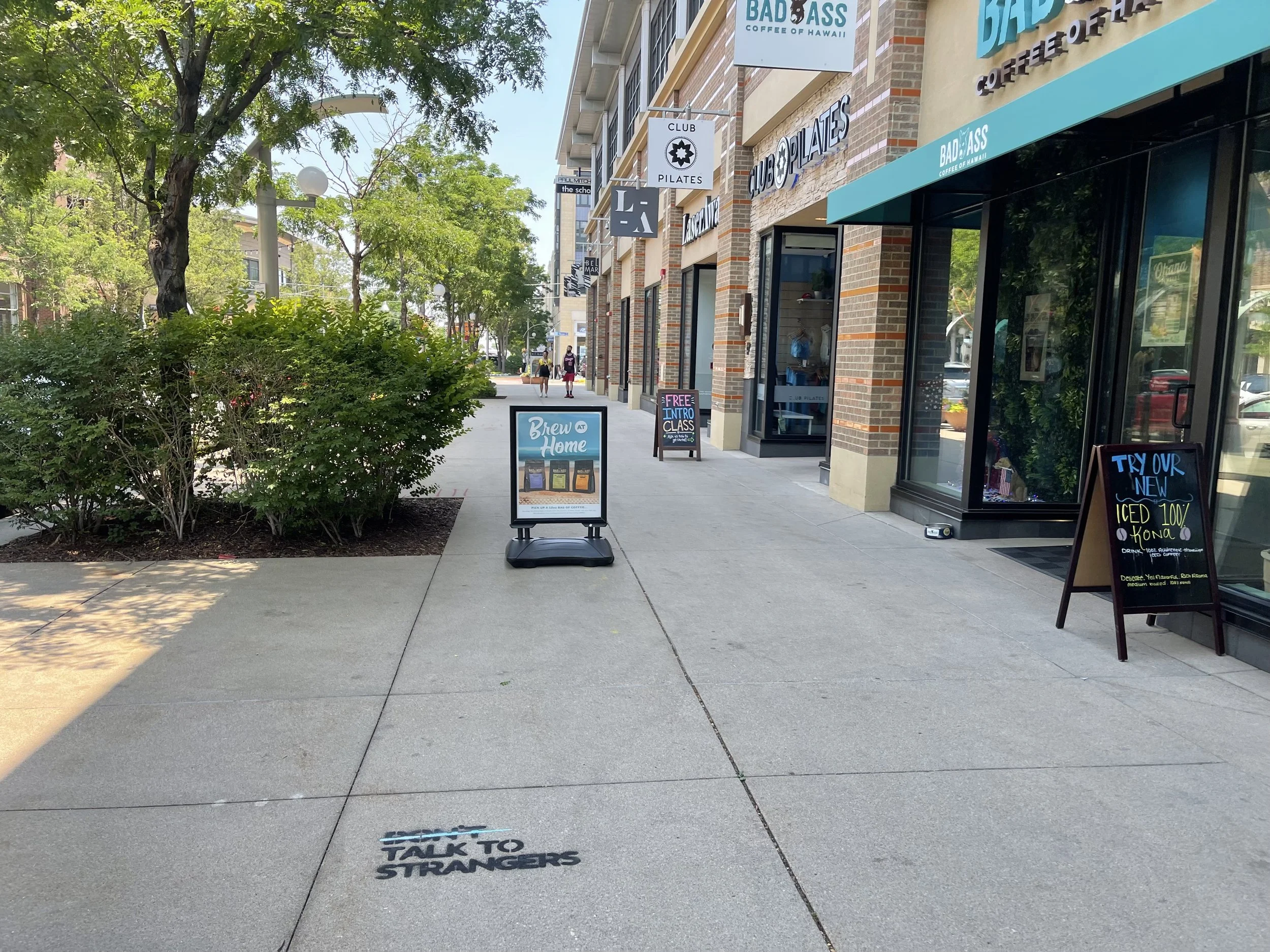
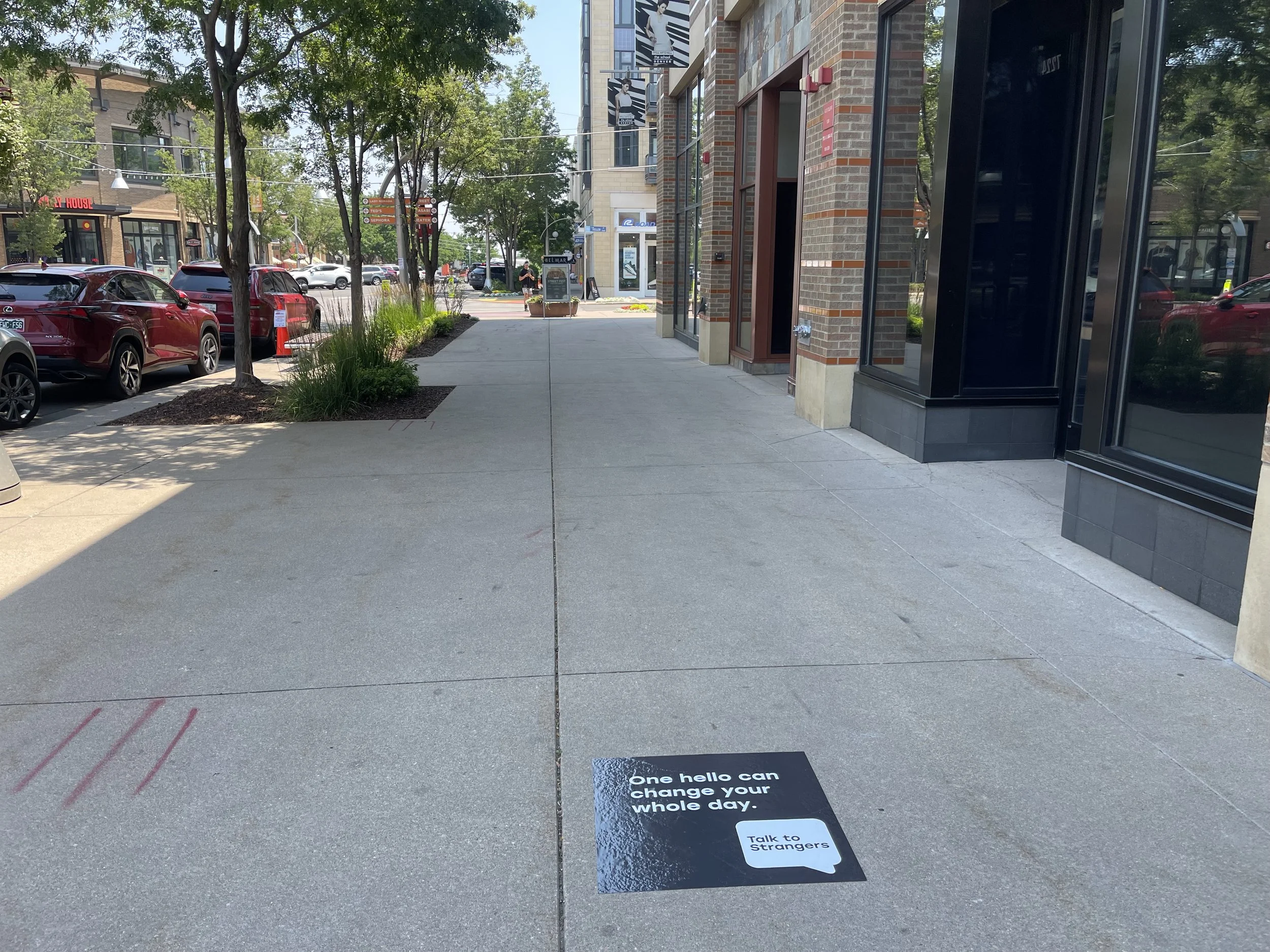
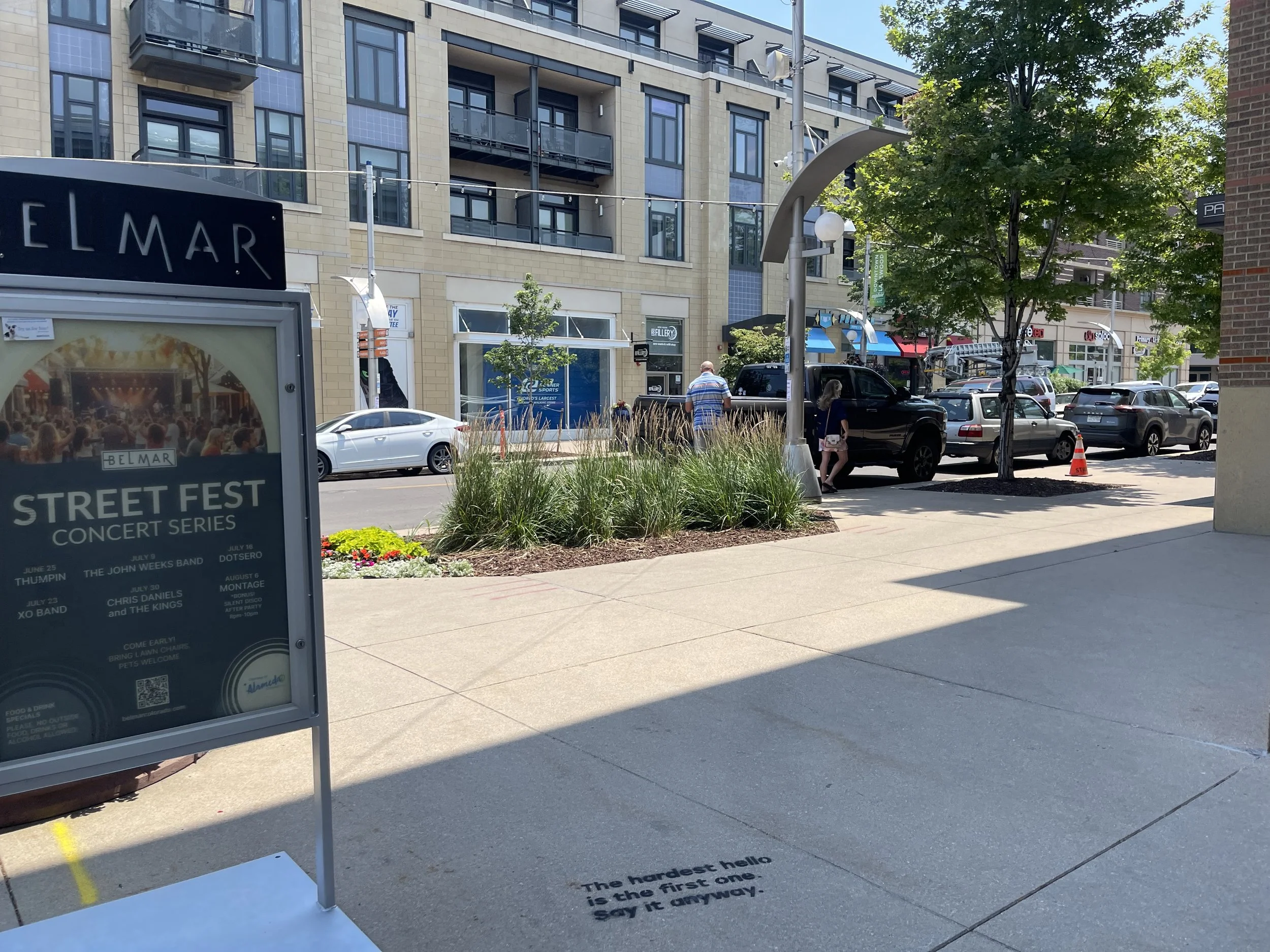
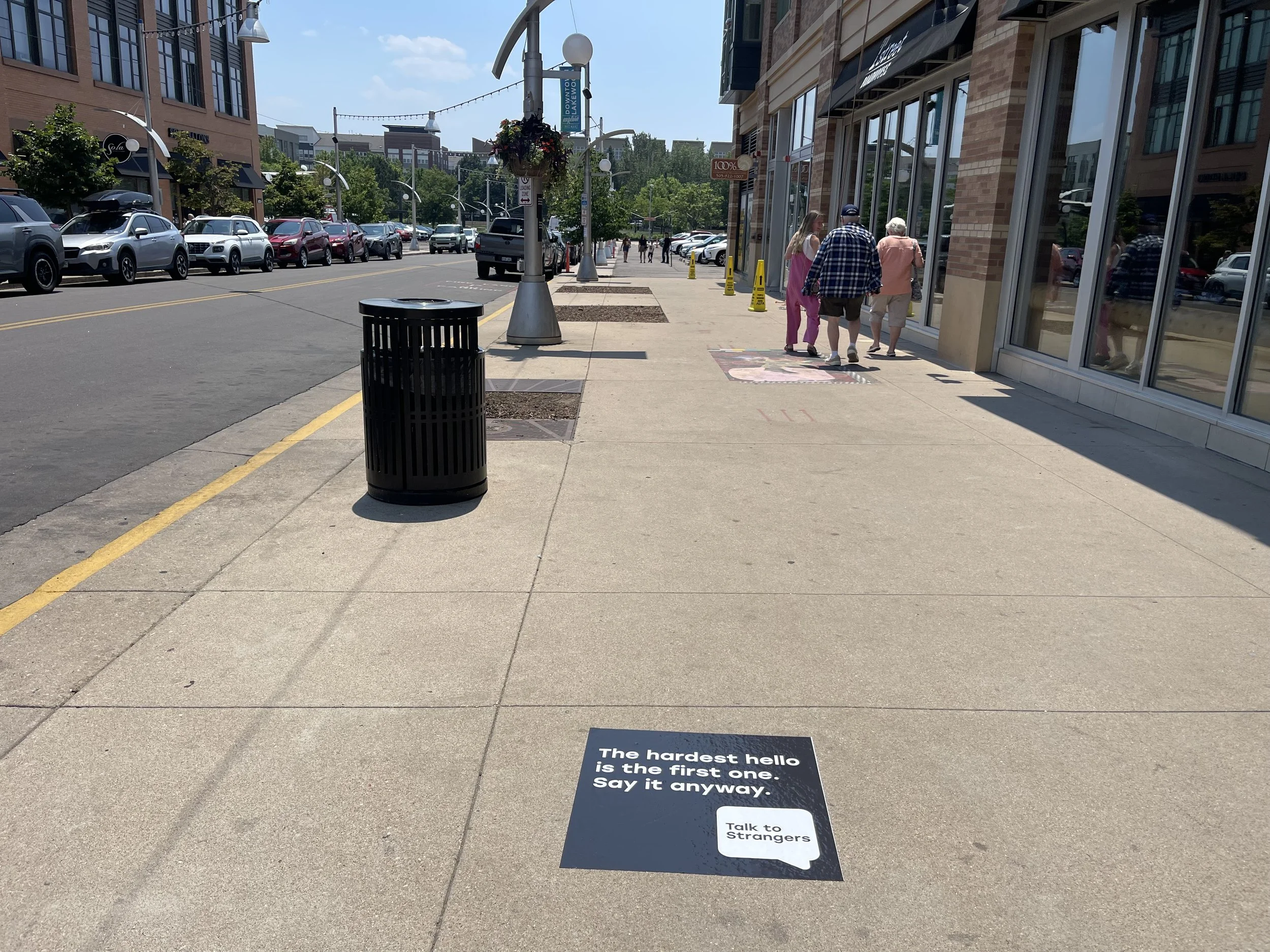
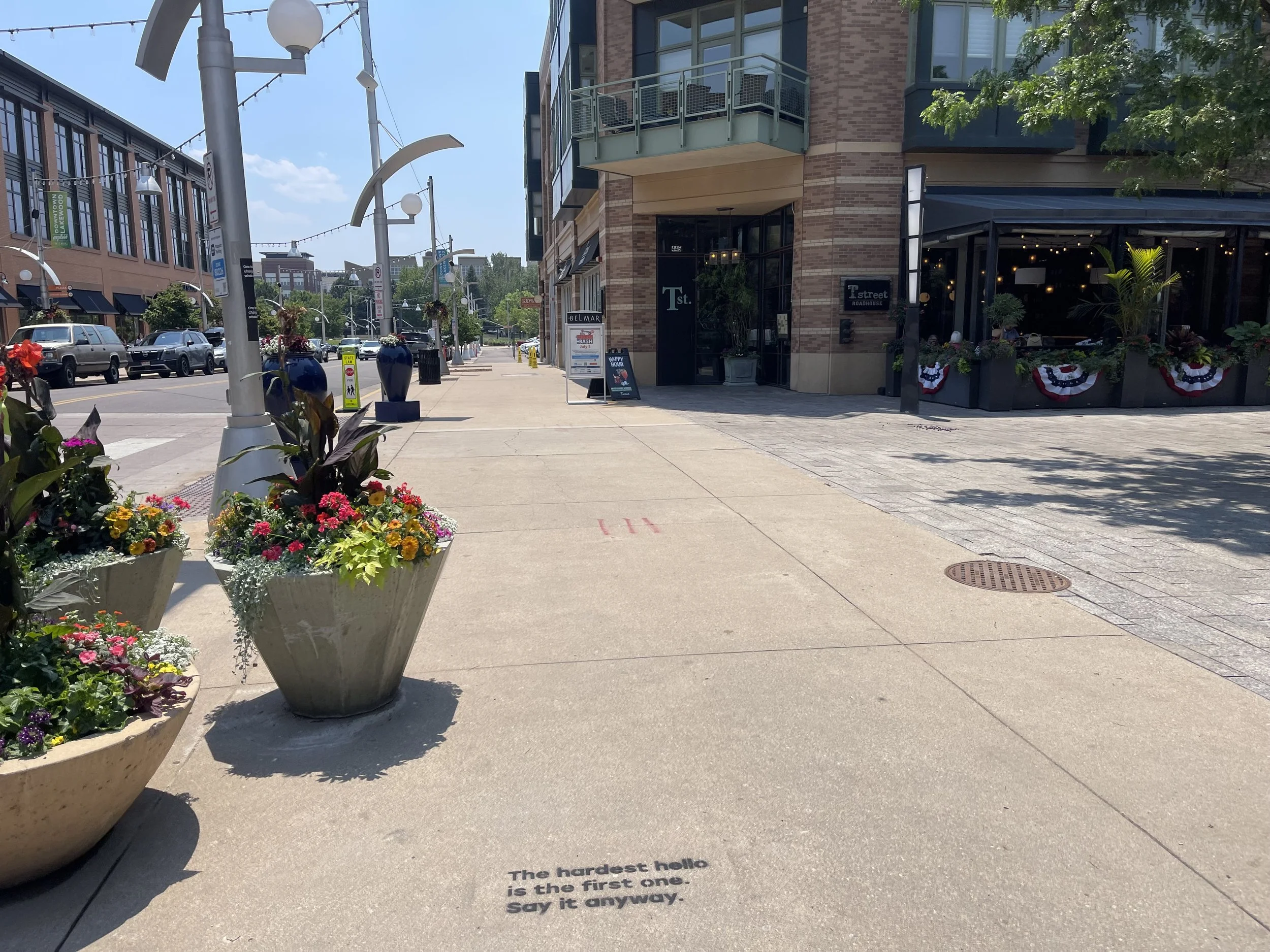
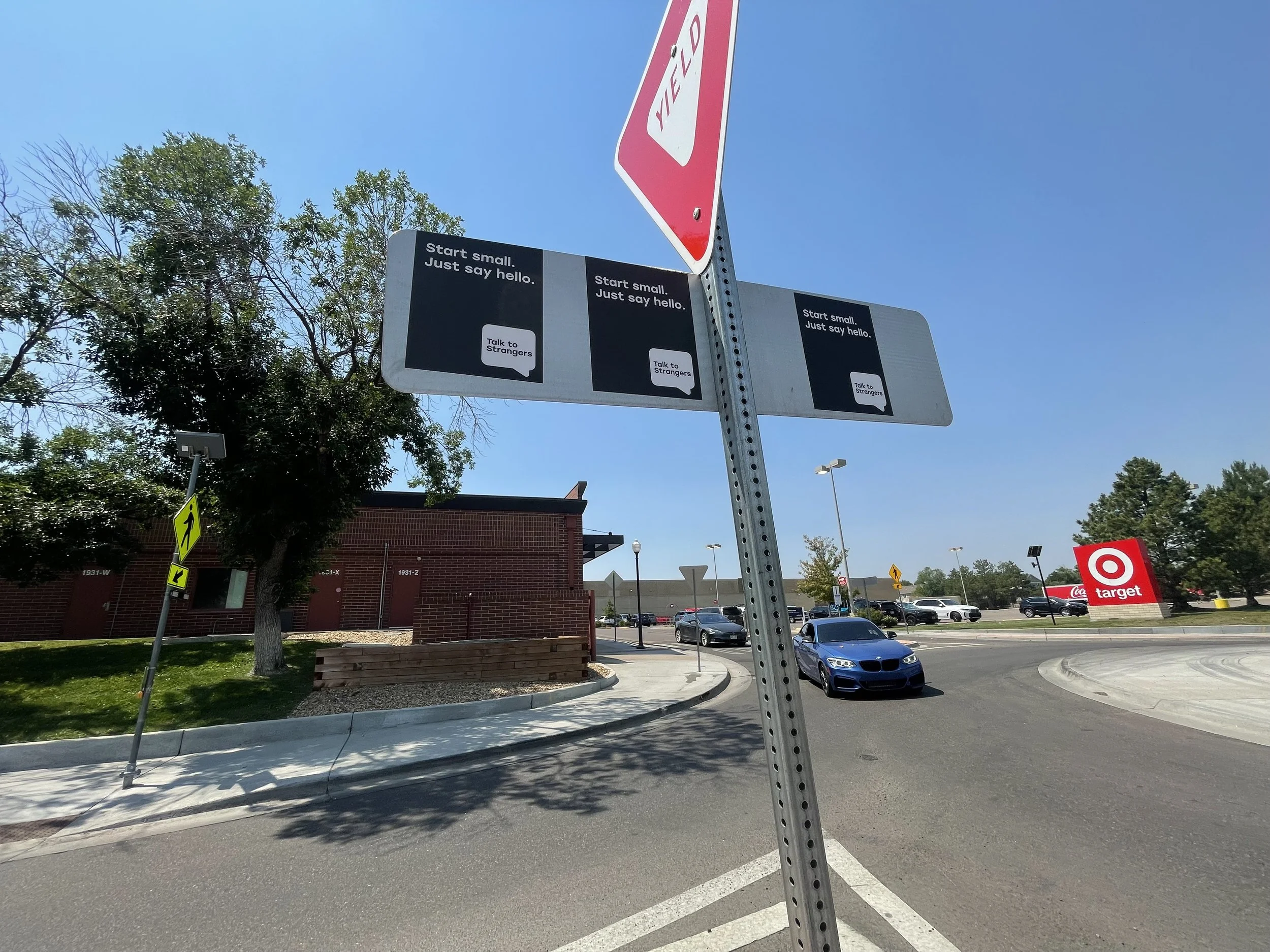
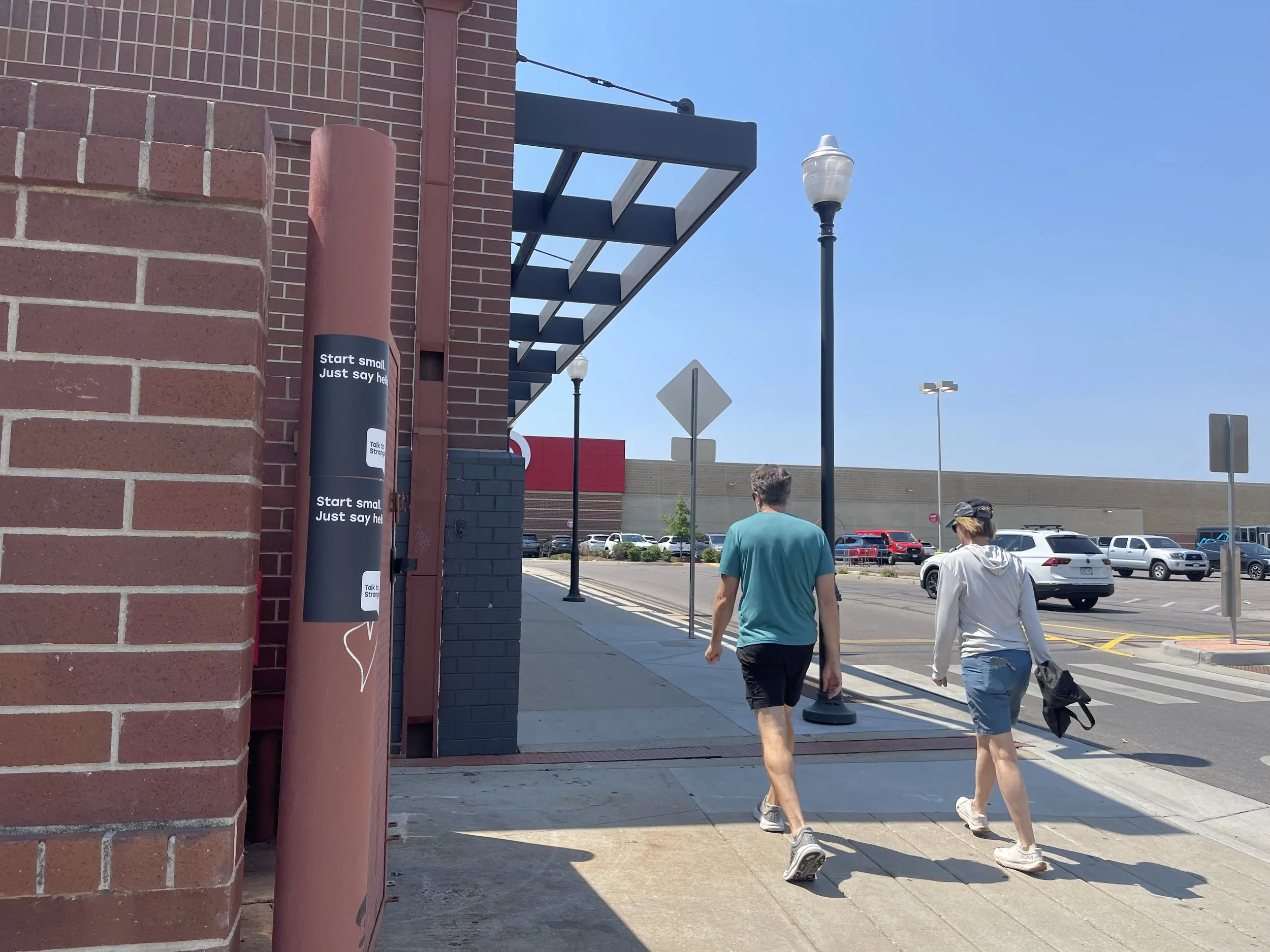
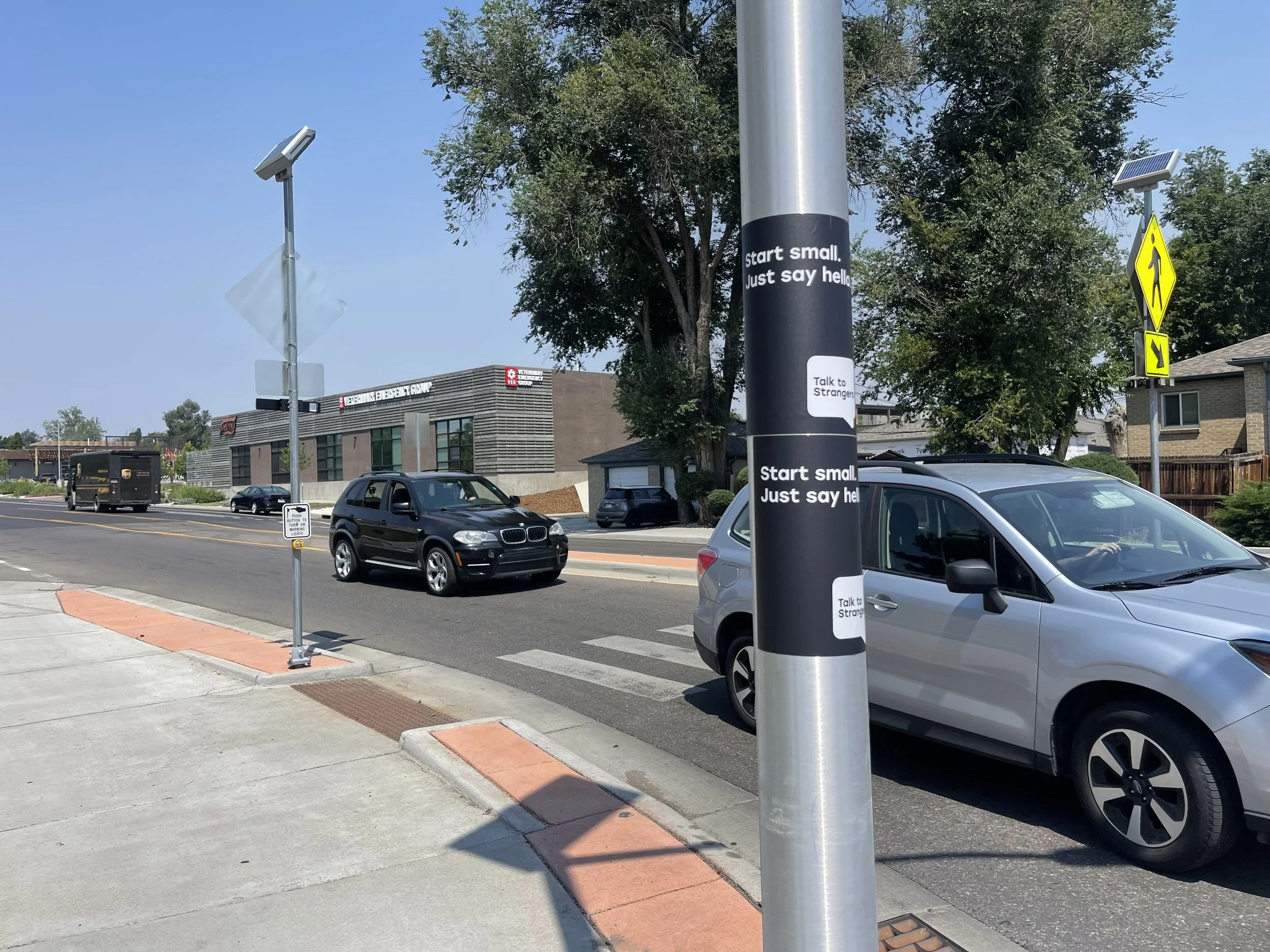
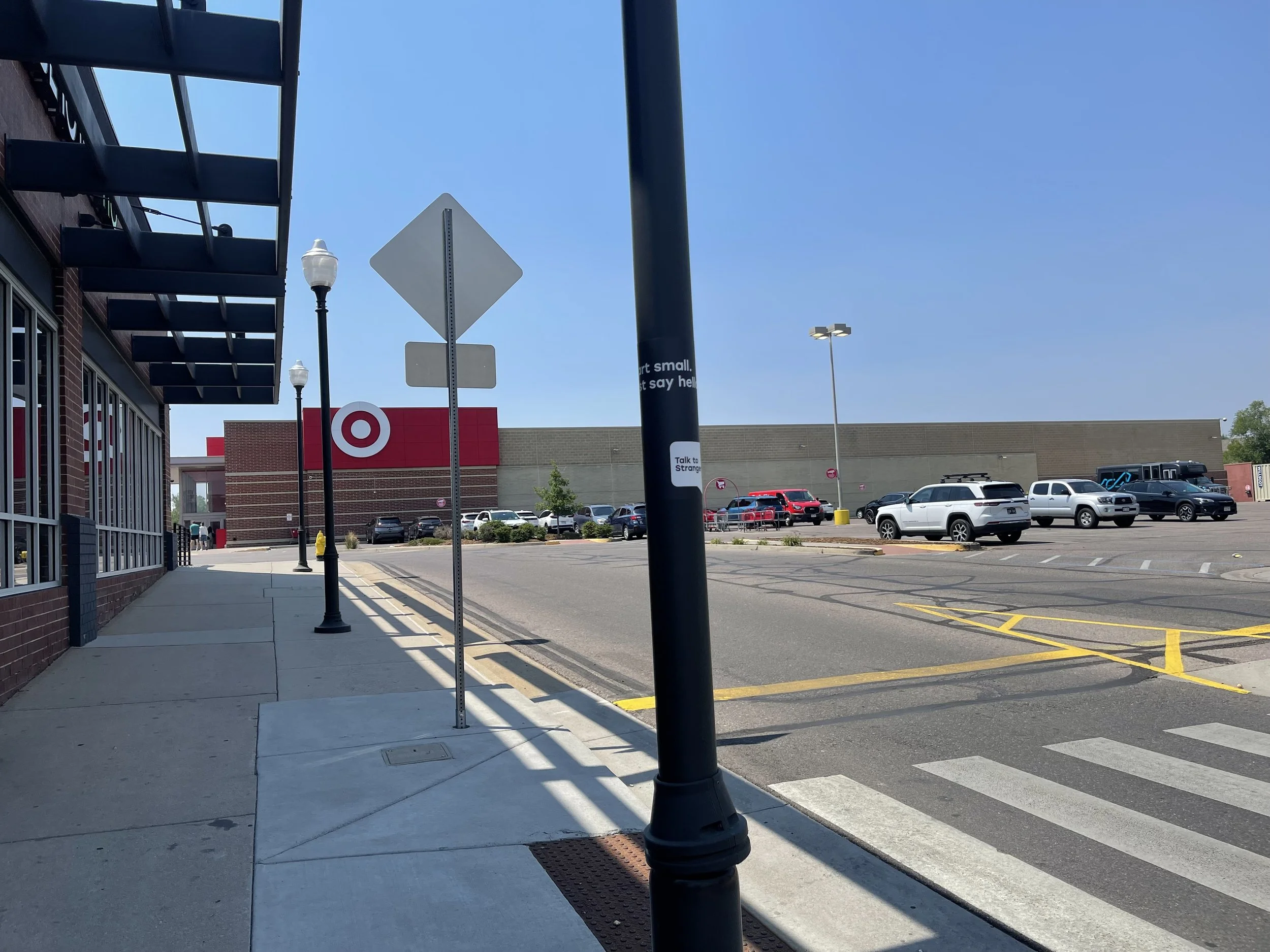
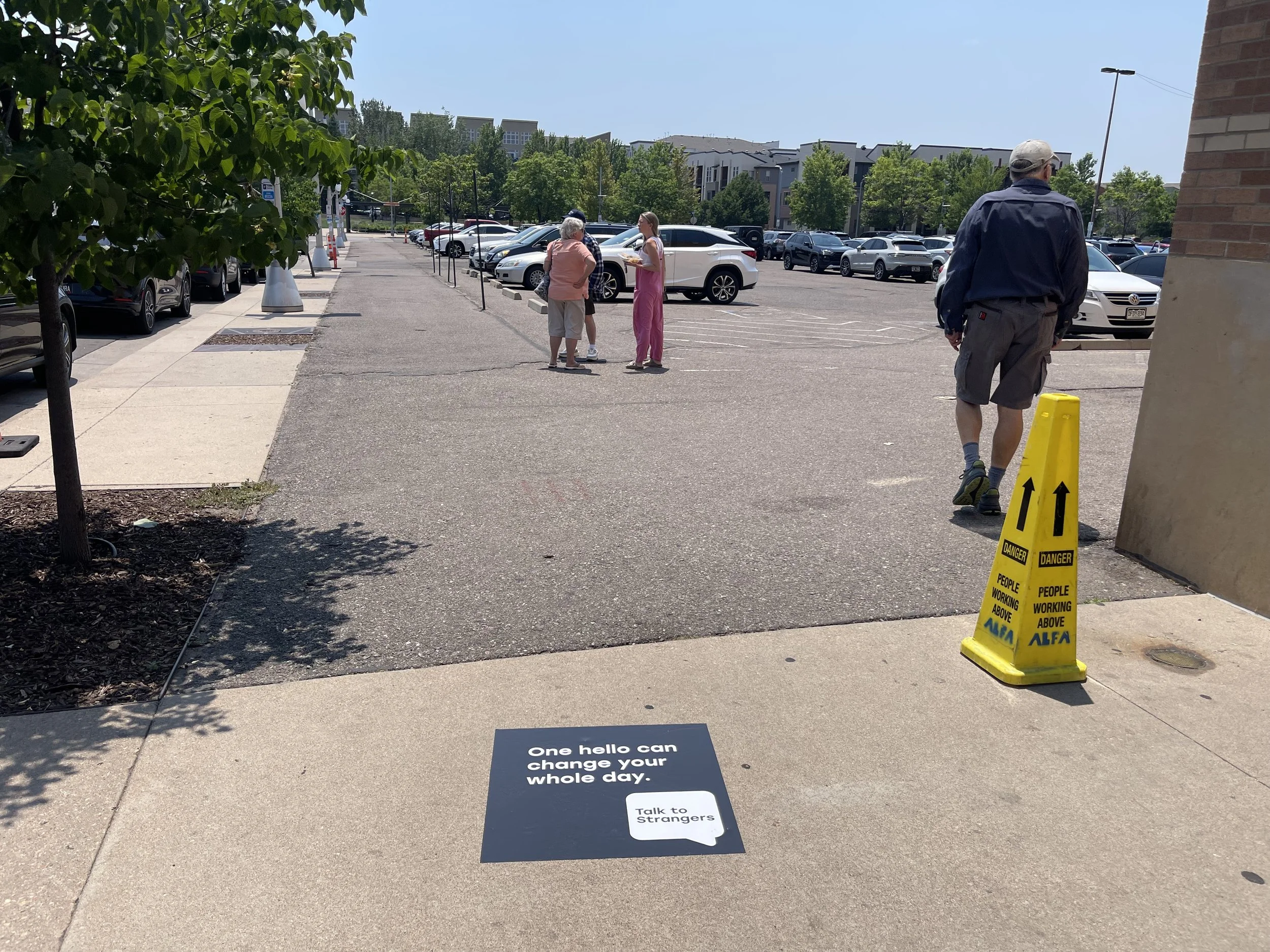
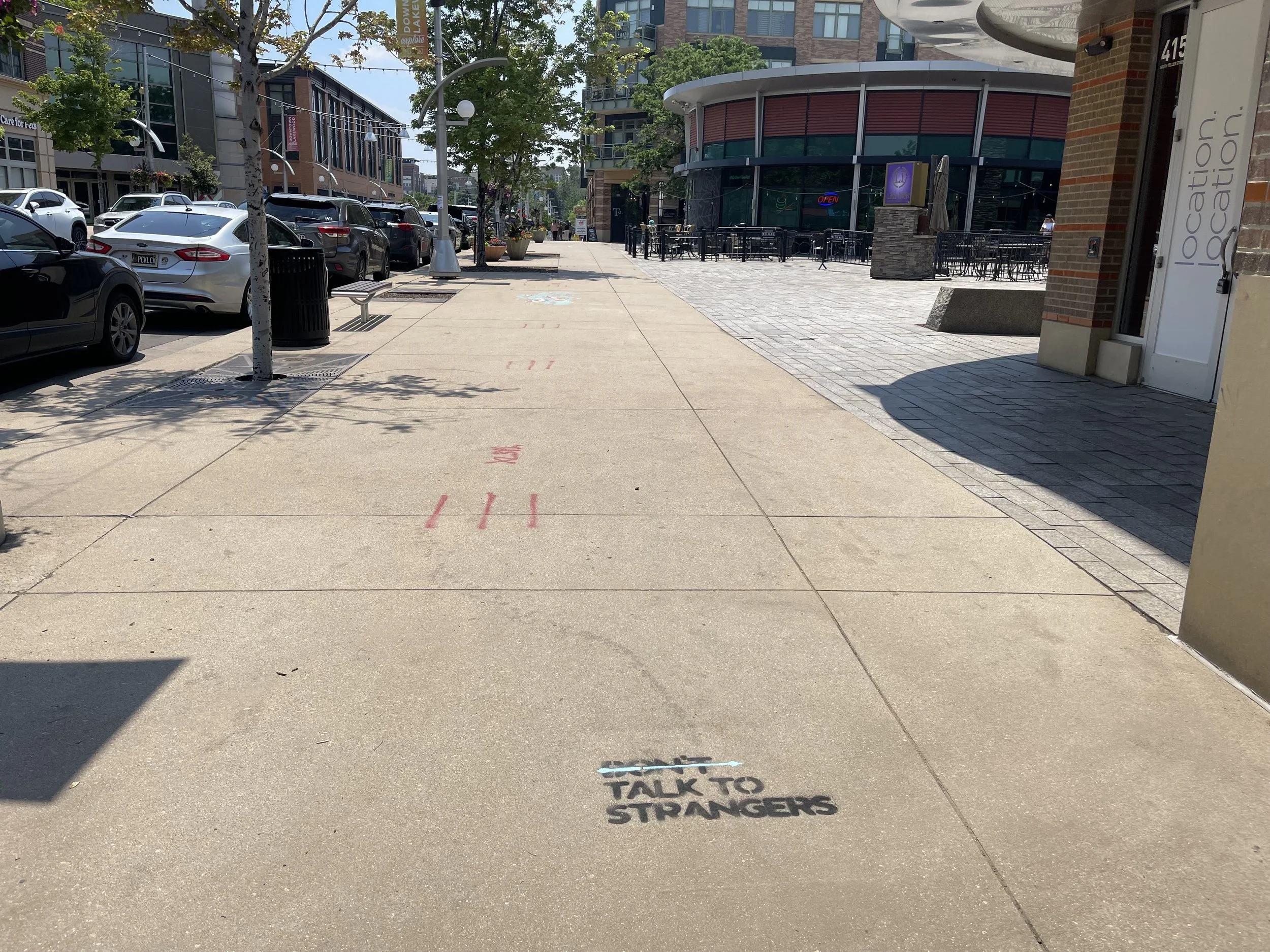
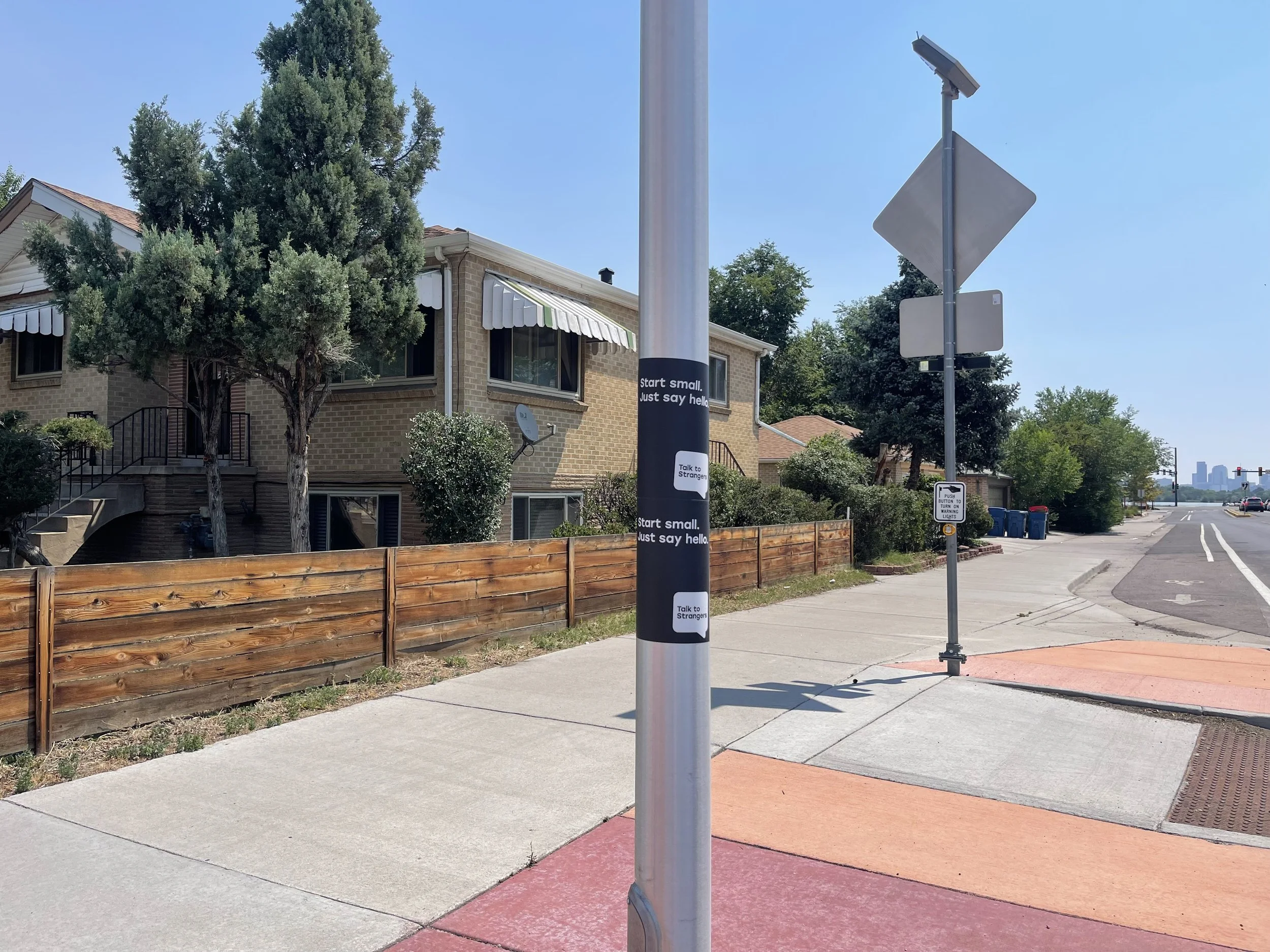
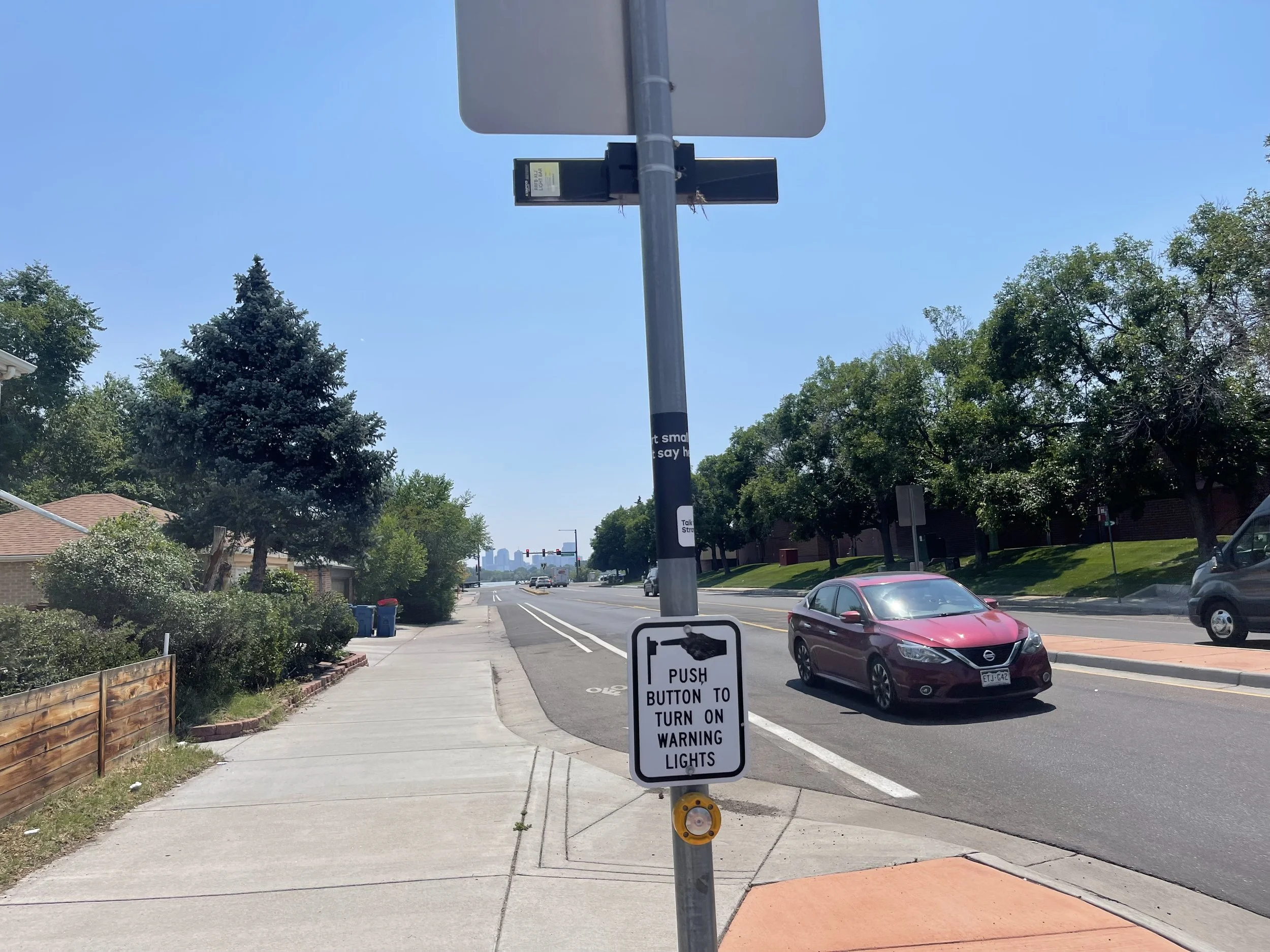
Each format did something different, but none of them worked alone. The result was a campaign that felt layered rather than duplicated.
After the planning phase, the rollout priorities were straightforward:
coverage across Jefferson County
repetition along active pedestrian routes
varied height and sightline placement
strong density without visual redundancy
full documentation and map-based reporting
That mix is what made the campaign feel bigger than the raw numbers alone.
Sidewalk stencil placement strategy focused on underfoot attention
Sidewalk stencils are direct. They meet people where they are already looking while walking, waiting, crossing, or slowing down near corners. For HunterBlu, the 24x24 stencil format gave enough space for a bold, readable mark without asking too much from the pavement.
Placement mattered more than volume by itself. A stencil in the wrong block is just paint on concrete. A stencil near active crossings, retail approach paths, transit-adjacent foot traffic, or neighborhood nodes can become part of the rhythm of movement. That is where smart field judgment came in.
Installers did not treat every sidewalk the same. They worked through the county with a practical eye for flow, spacing, and visibility. That meant looking at where pedestrians naturally compress, where sightlines open up, and where a ground hit could reinforce other nearby placements instead of competing with them.
The stencil strategy followed a few on-the-ground rules:
High-footfall corners: strong for first impressions and repeat passersby
Retail approach zones: useful where people slow before entering stores or plazas
Crosswalk adjacencies: ideal for brief attention pauses
Route continuity: better to build a visual chain than isolate single hits
That is what turned 100 stencil placements into a real county-wide signal instead of a loose collection of marks.
Floor graphics added cleaner branded impressions on walkways
If stencils carried raw street energy, the floor graphics added polish.
The HunterBlu campaign used another 100 placements in the same 24x24 footprint, but these hits served a different visual purpose. Floor graphics can deliver a crisp branded image on walkways where the surface supports it and where the campaign benefits from a sharper, more finished appearance.
This mattered because the activation was not trying to say one thing in one tone. It was trying to feel present across multiple street conditions. In some places, the right move was a stencil with a more native street feel. In others, a floor graphic gave the brand a cleaner read while still staying in the pedestrian zone.
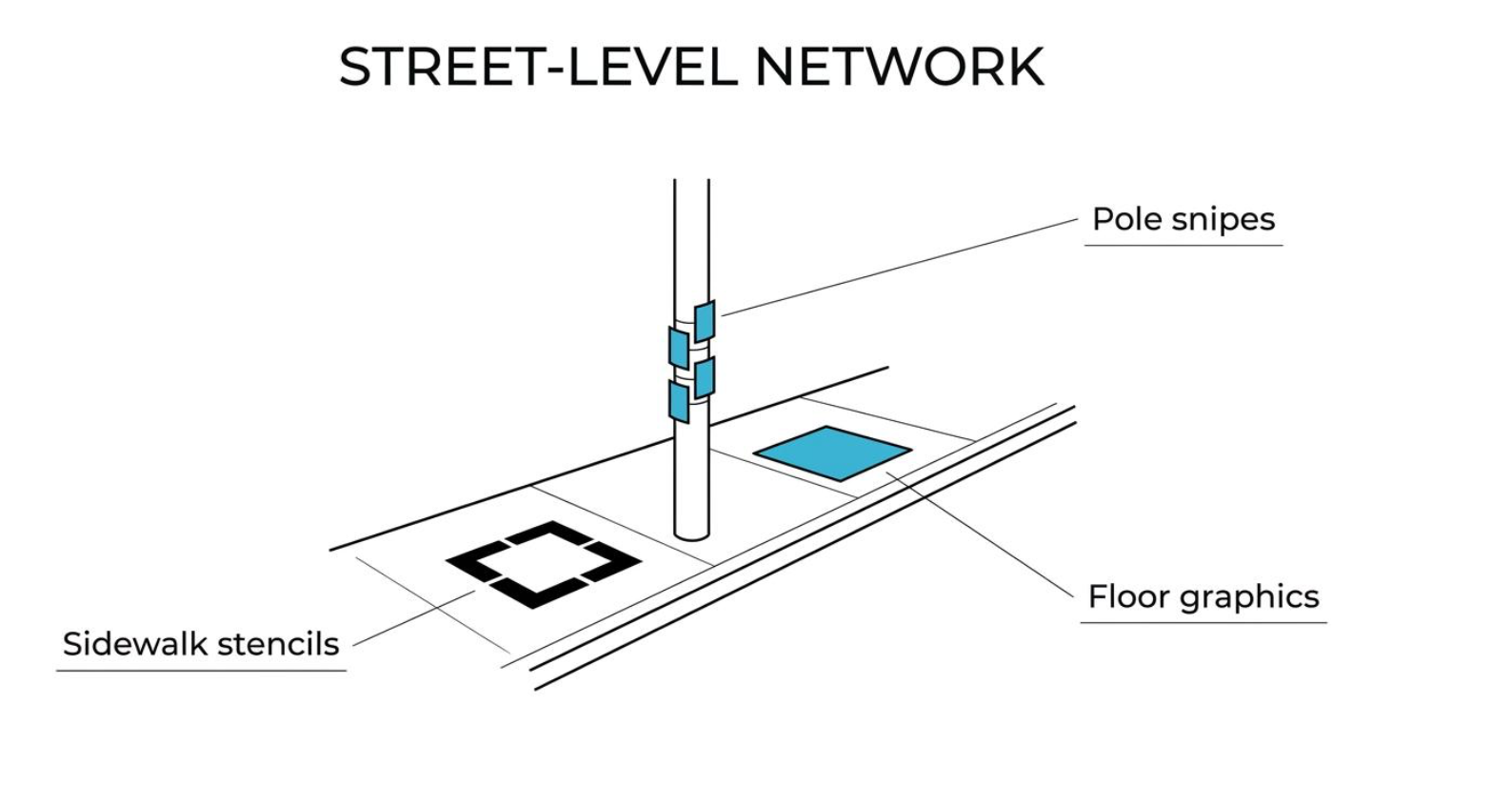
Connecting Advertisement throughout the neighborhood
That distinction is easy to miss when people talk about “street marketing” as if every surface should be handled the same way.
For HunterBlu, installers used the format where it made the most sense:
approach paths near commercial foot traffic
cleaner walkway sections with good surface quality
areas where readability benefited from a crisp edge
placements that paired well with nearby pole snipes
Used well, floor graphics can act like punctuation marks. They do not have to dominate the block. They just need to land exactly where they will be seen.
Street pole snipe rollout created block-by-block repetition across Jefferson County
The 480 snipes gave this campaign its scale.
A single snipe is small. A corridor full of them is a statement. At 8.5x11, these placements were not about size. They were about multiplication. Street poles offered the perfect framework for that strategy because they create natural repetition points along sidewalks, intersections, commercial strips, and connector streets.
This is where the “blankets the county” idea became real.
Rather than relying on a few oversized hero moments, the HunterBlu rollout built density through frequency. One pole leads to the next. One block feeds into another. That kind of repetition works especially well when the goal is memory rather than novelty. People may not stop and study each placement, but they register the campaign as present, active, and everywhere.
The field team’s judgment mattered here too. Pole campaigns work best when spacing feels intentional. Too sparse, and the message disappears. Too clustered in the wrong area, and the activation loses geographic breadth. The sweet spot is a distributed rhythm that creates local saturation while still spreading across the market.
A few strengths made the snipe layer especially effective:
Scale through repetition: hundreds of small placements reading as one system
Vertical visibility: a higher sightline than sidewalk formats
Block continuity: strong performance on walking and driving routes
Flexible density: easy to stack impact in selected corridors
This was one of the densest multi-format rollouts in the campaign, and the snipes were the connective tissue.
Multi-format street advertising worked because each placement had a different job
The easiest mistake in outdoor activation planning is to assume more formats automatically means more impact. That only works when every format solves a different visibility problem.
HunterBlu’s Jefferson County campaign did exactly that. The sidewalk stencils caught attention underfoot. The floor graphics added a cleaner branded read in the right pedestrian settings. The snipes extended the campaign vertically and geographically, turning individual placements into corridor-wide presence.
That meant the campaign could do three things at once:
reach people close to the ground
reinforce the message at eye level
carry the brand across blocks instead of pinning it to one spot
It also gave the county rollout a more natural look. Street environments are varied. A single media type rarely fits every condition. A mixed-format plan can respond to those differences without losing visual unity.
Geotagged campaign documentation turned street placements into a mapped asset
Execution is only half the value in a campaign like this. Proof matters.
Every HunterBlu placement was documented with geotagged photos and compiled into a full map, giving the campaign a record of where each format landed across Jefferson County. That transforms an activation from a story someone tells into a street asset someone can review, verify, and report on.
For brands and agencies, that kind of documentation changes the conversation. Instead of vague claims about coverage, there is a traceable footprint. Teams can see where density built up, where formats clustered, and how the rollout spread through the county. It also helps connect planning with future buying decisions, since documented placement patterns can shape the next campaign.
This kind of reporting is especially useful when a campaign covers a broad county rather than one downtown pocket. Jefferson County is large enough that visual proof becomes part of the operational value. Without mapping and geotagged images, the scale is hard to fully grasp.
With it, the nearly 700 hits become visible as a system.
Nearly 700 placements made HunterBlu feel present at every street level
There is a big difference between “a lot of placements” and “a campaign that feels unavoidable.”
HunterBlu landed close to 700 total placements across Jefferson County by combining 100 sidewalk stencils, 100 floor graphics, and 480 snipes into one coordinated rollout. That is what made the activation interesting. It was not a pile of disconnected installs. It was a street-level network.
Underfoot, the campaign showed up in the walking path. On the walkway, it sharpened into branded impressions. On the poles, it multiplied into corridor-wide repetition. Each layer supported the others, and the county itself became the frame.
That is the power of a well-built street campaign. It does not rely on one perfect location. It creates momentum across many of them, until the market starts to feel covered.
Reach out for more information :
929.678.0235
