
Case Study: Taking Breakaway Music Festival to the Streets of Charlotte
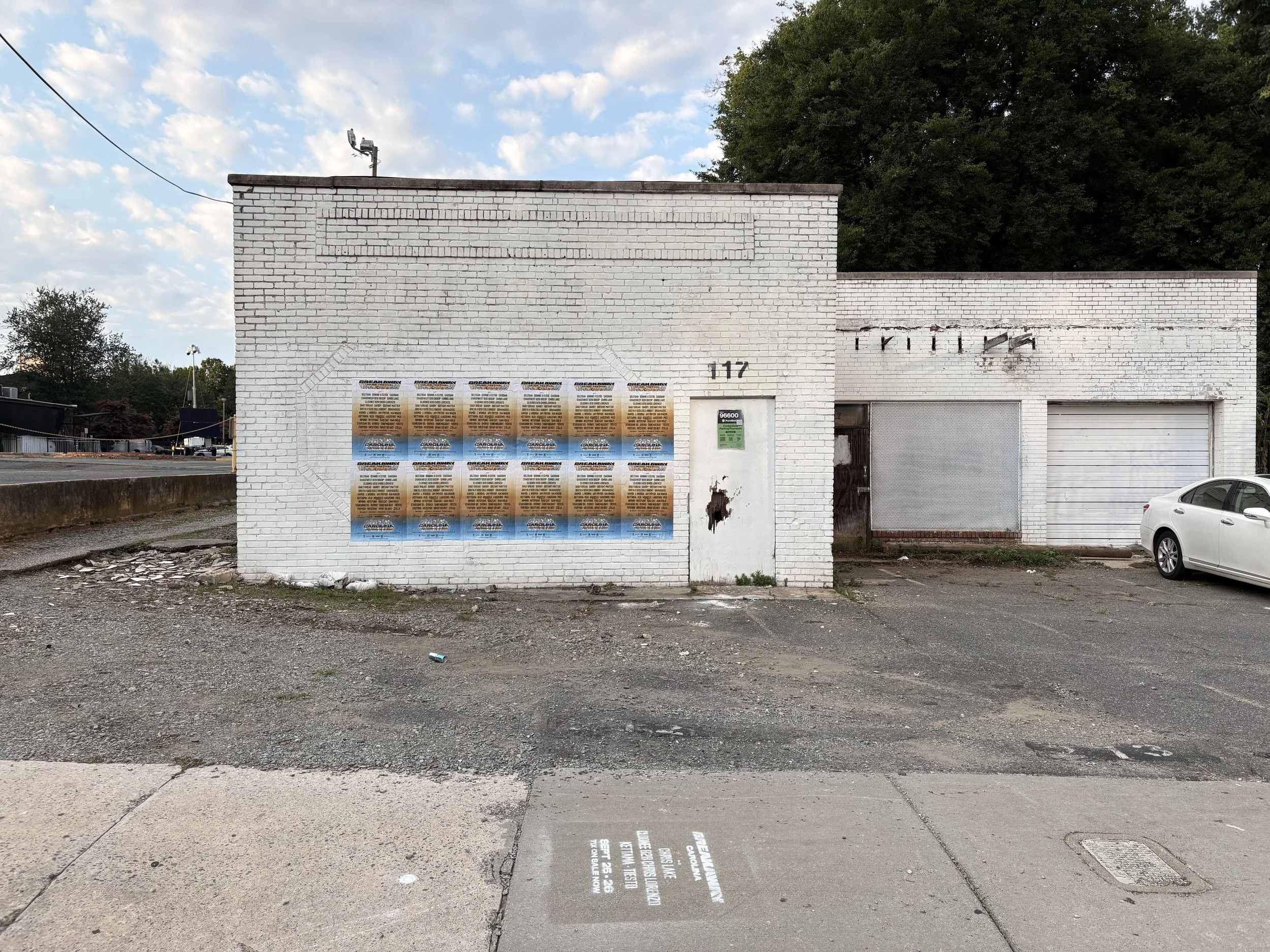
Breakaway Music Festival campaign by sidewalk tattos
Festival marketing gets sharper when people can see it on the way to work, on the walk to dinner, and in the stretch between one neighborhood and the next. That was the thinking behind this Charlotte activation for Breakaway Carolina. Rather than treating the festival as a message that belonged only online, the campaign pushed it into daily movement patterns across the city.
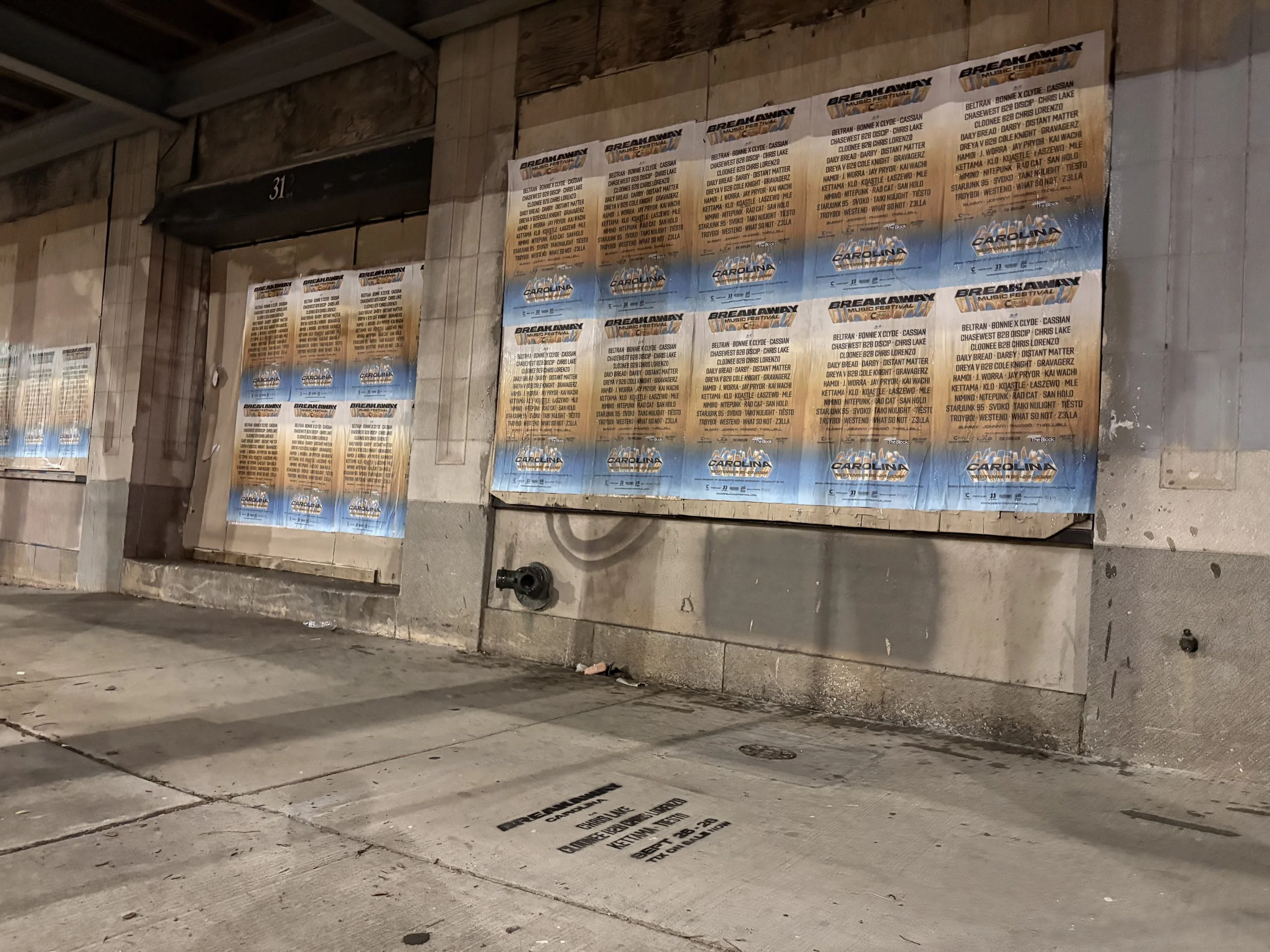
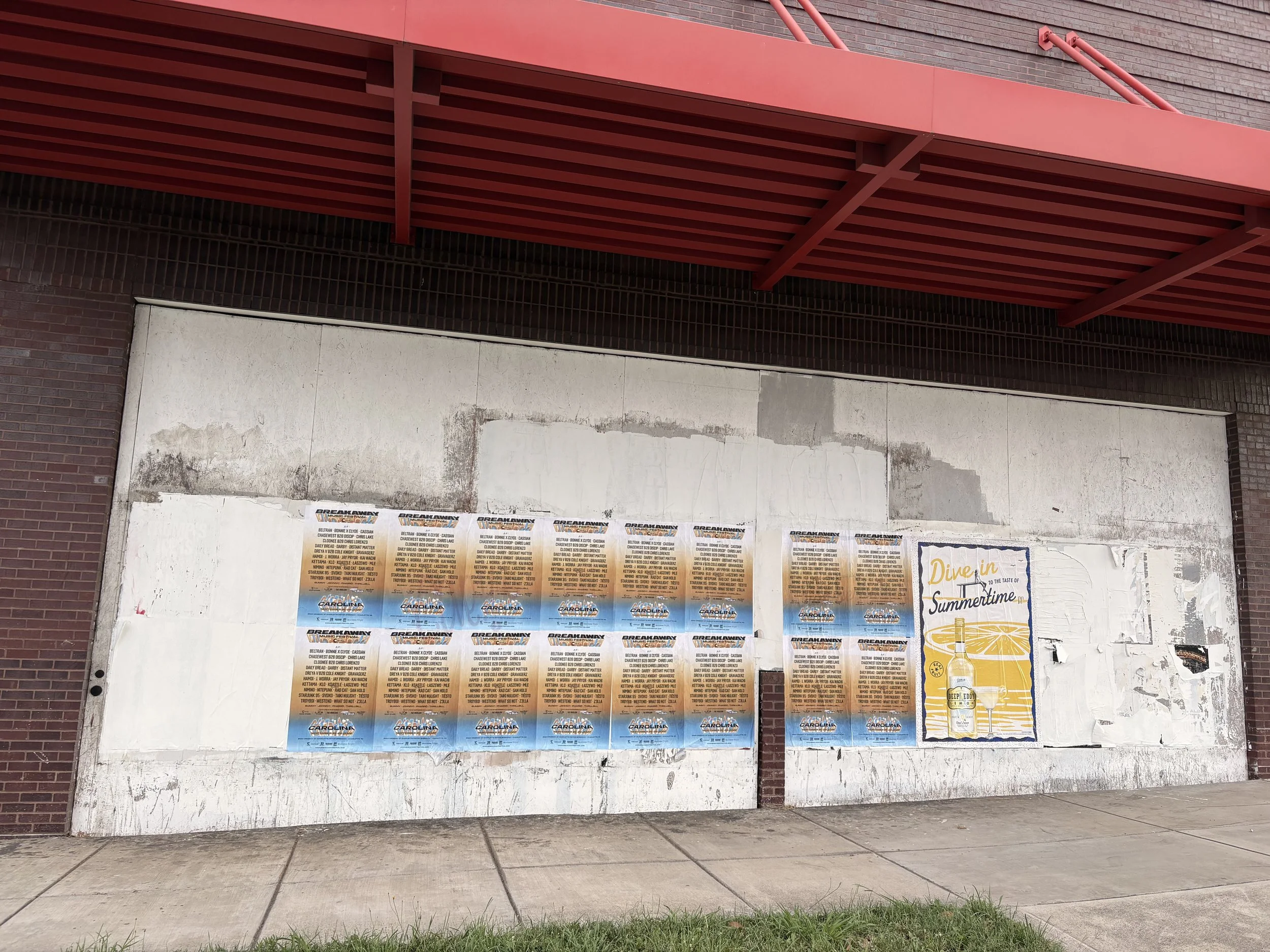
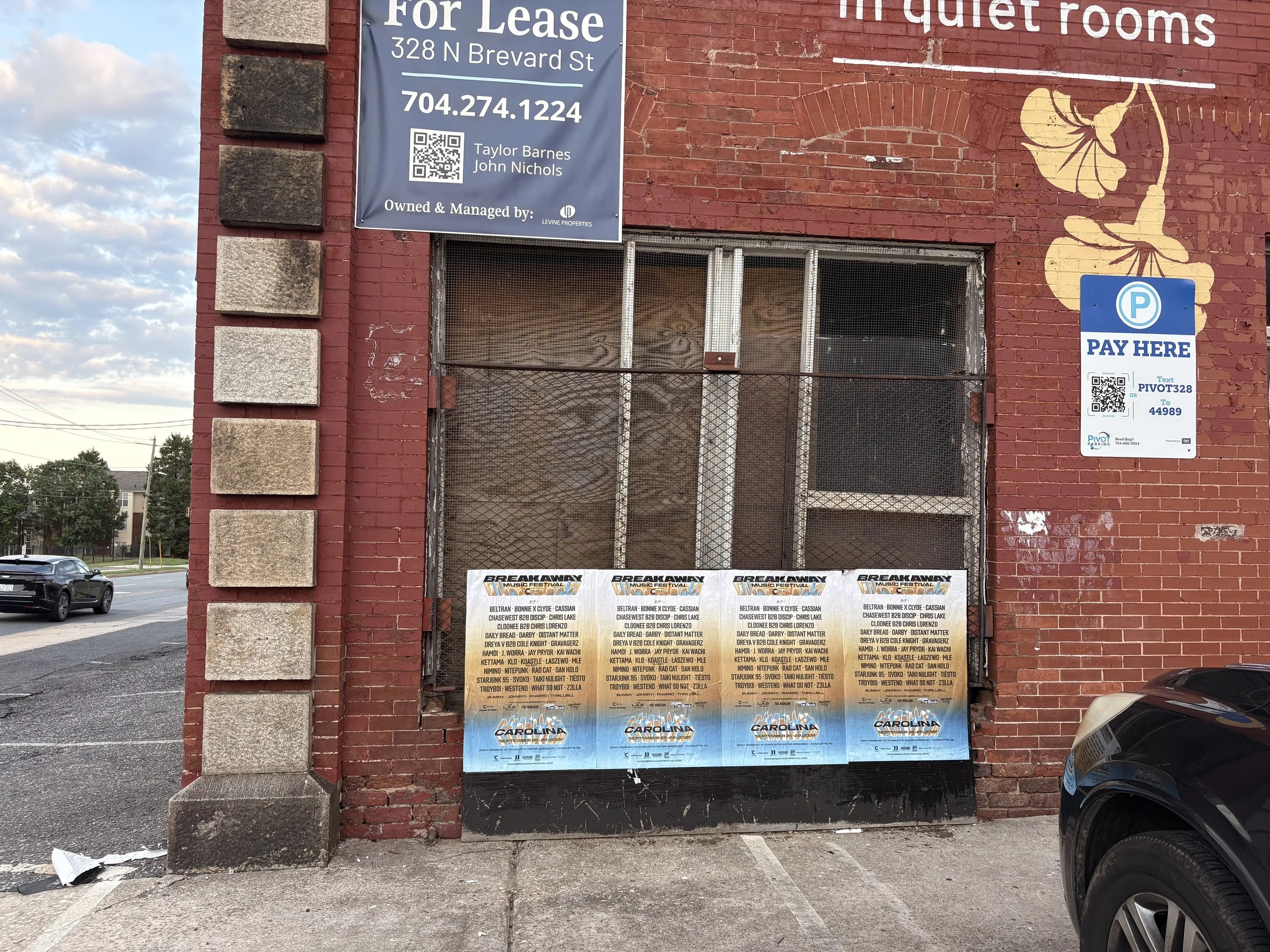
The result was a focused street-level rollout: 100 wheatpaste posters and 40 sidewalk stencils placed across key pedestrian zones, with a footprint that reached from the Rail Trail to university-oriented corridors. The goal was simple and ambitious at the same time: make Breakaway feel present before attendees ever reached the venue.
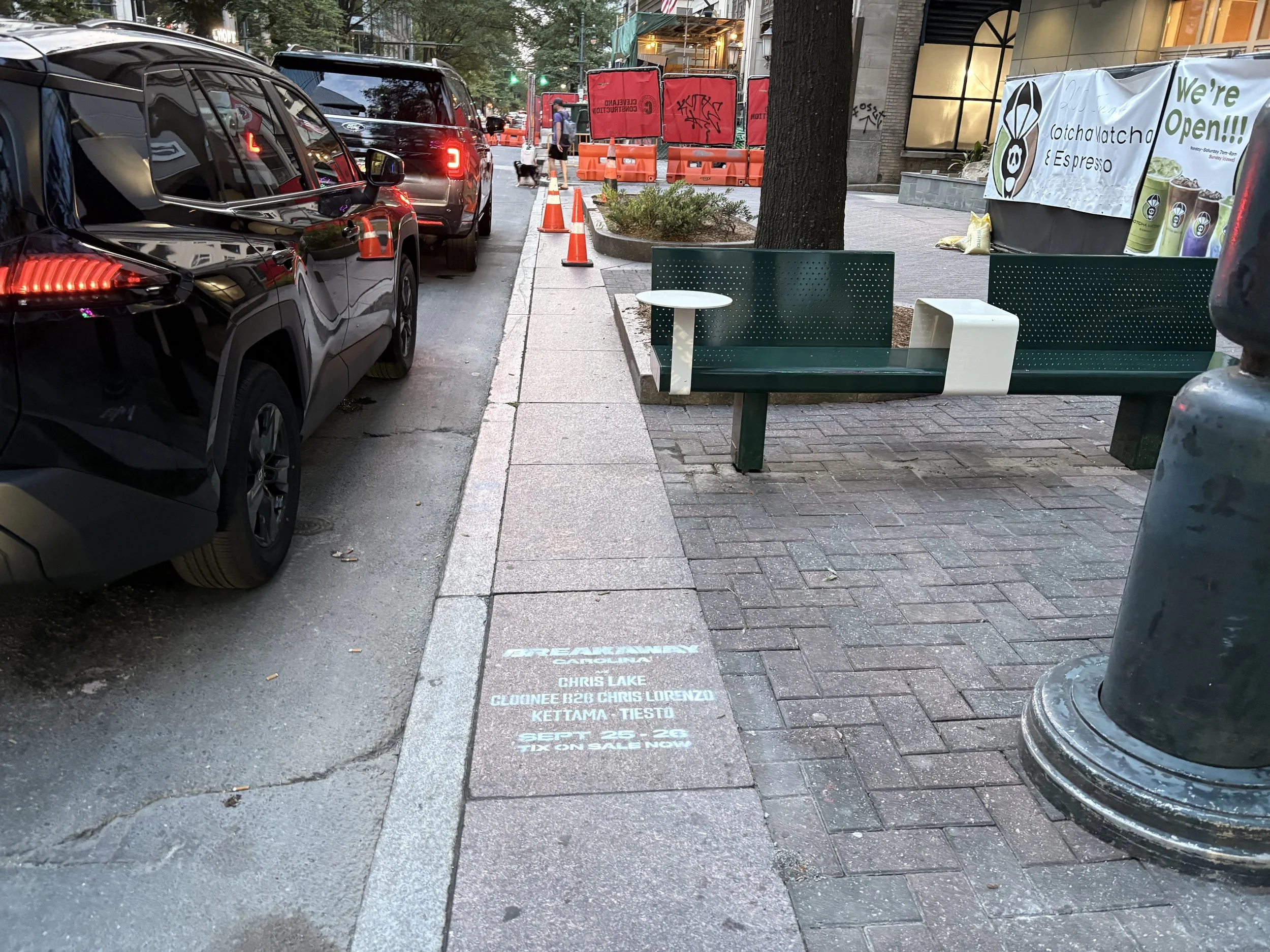
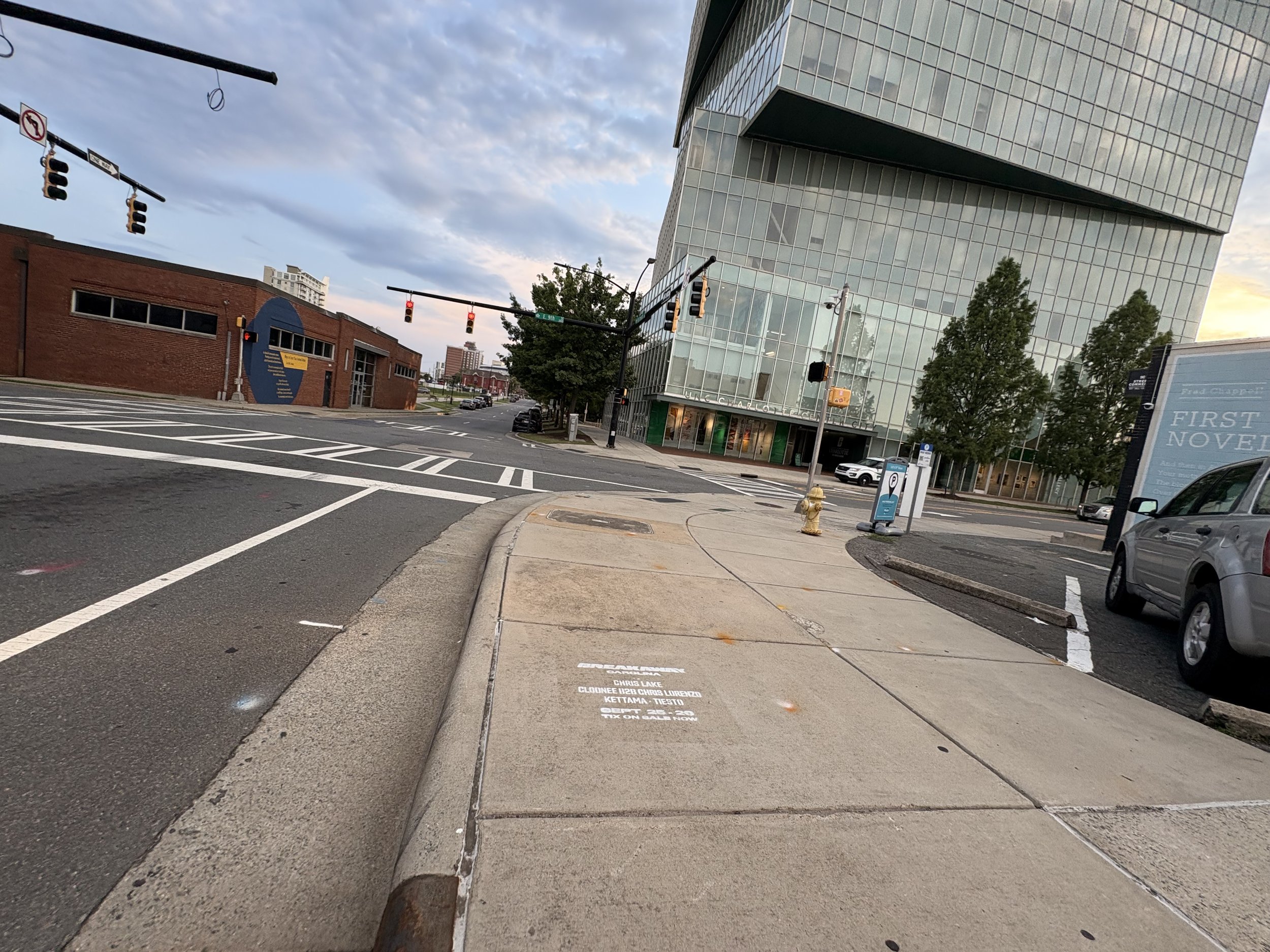
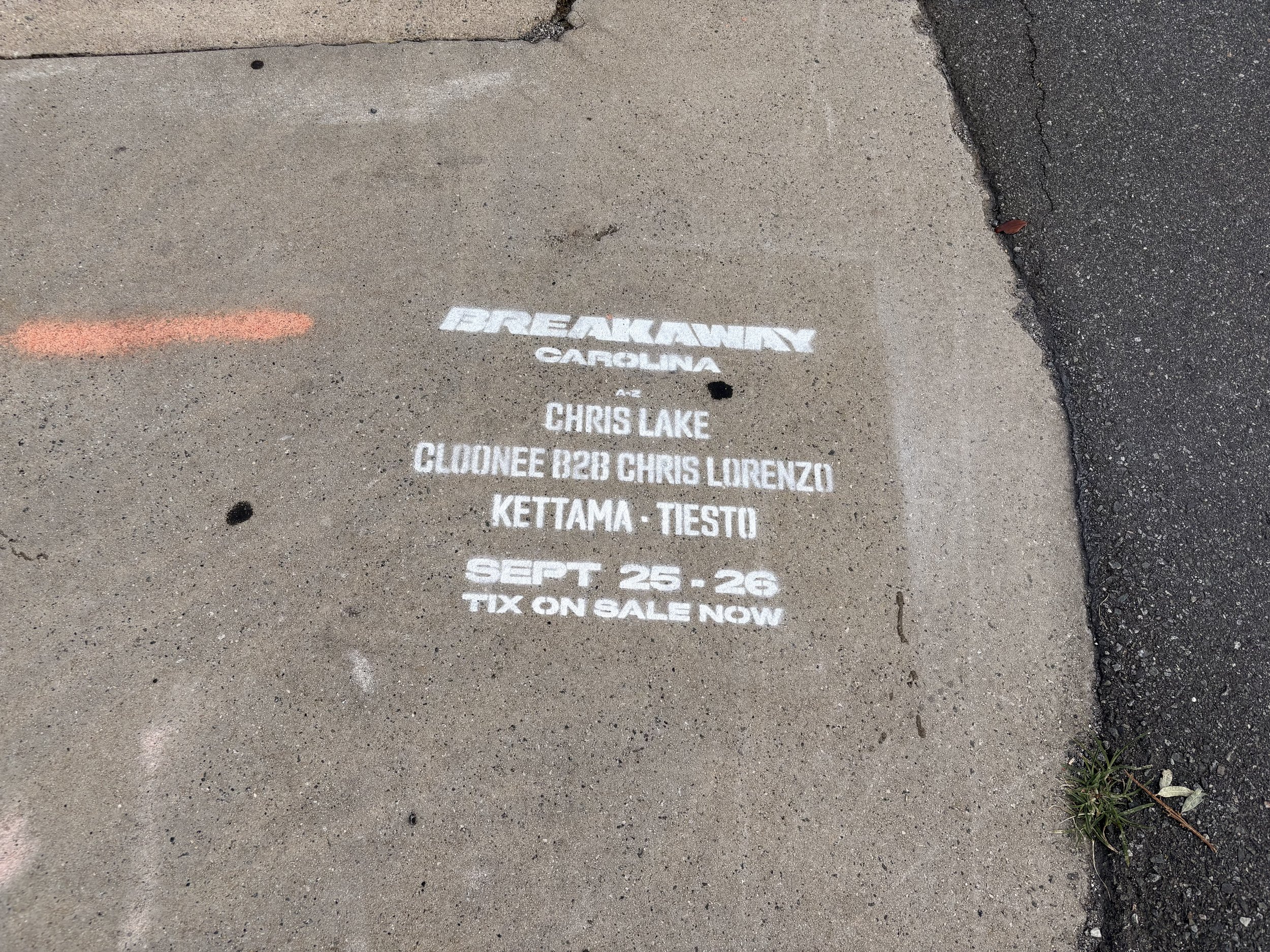
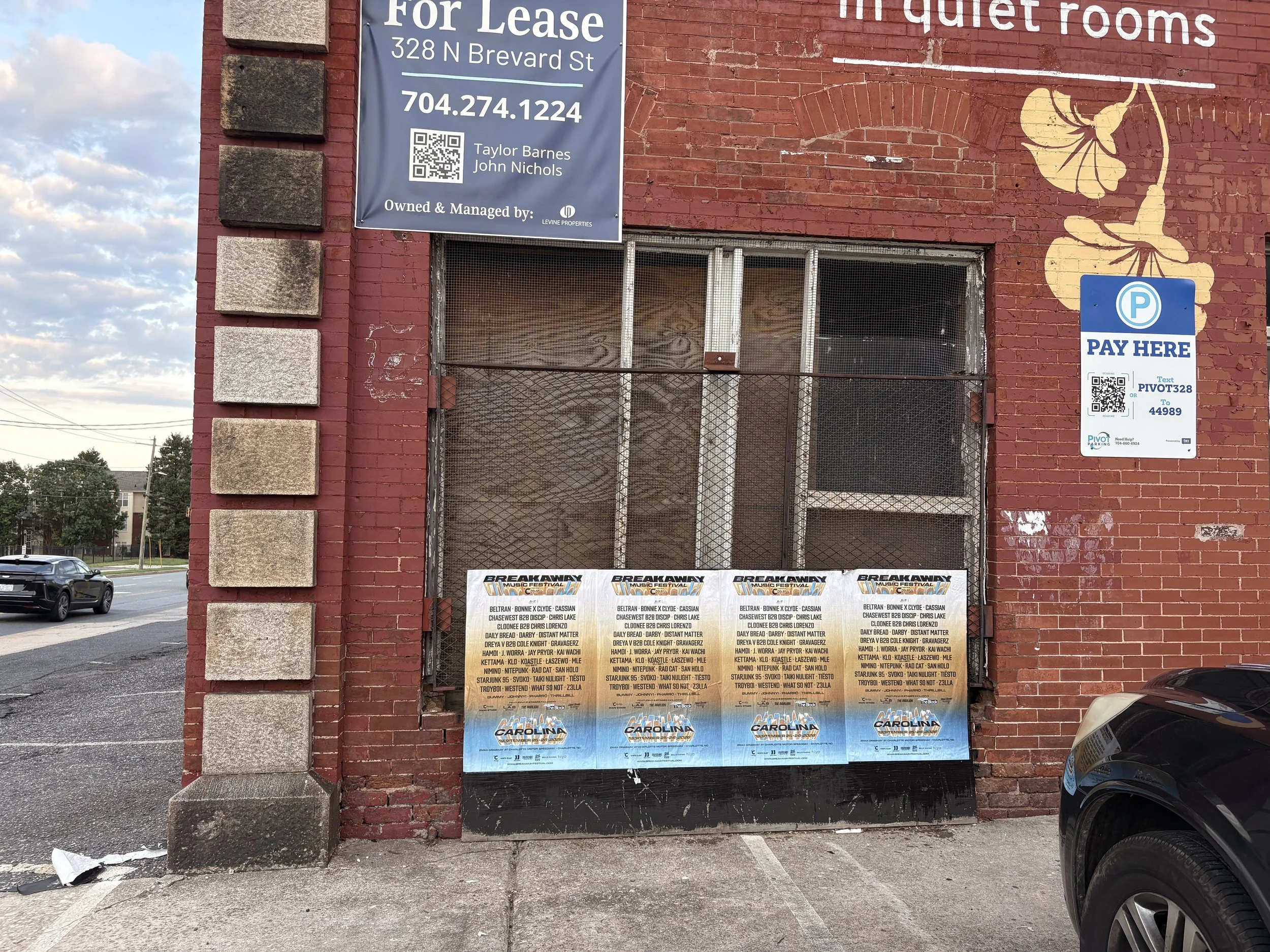
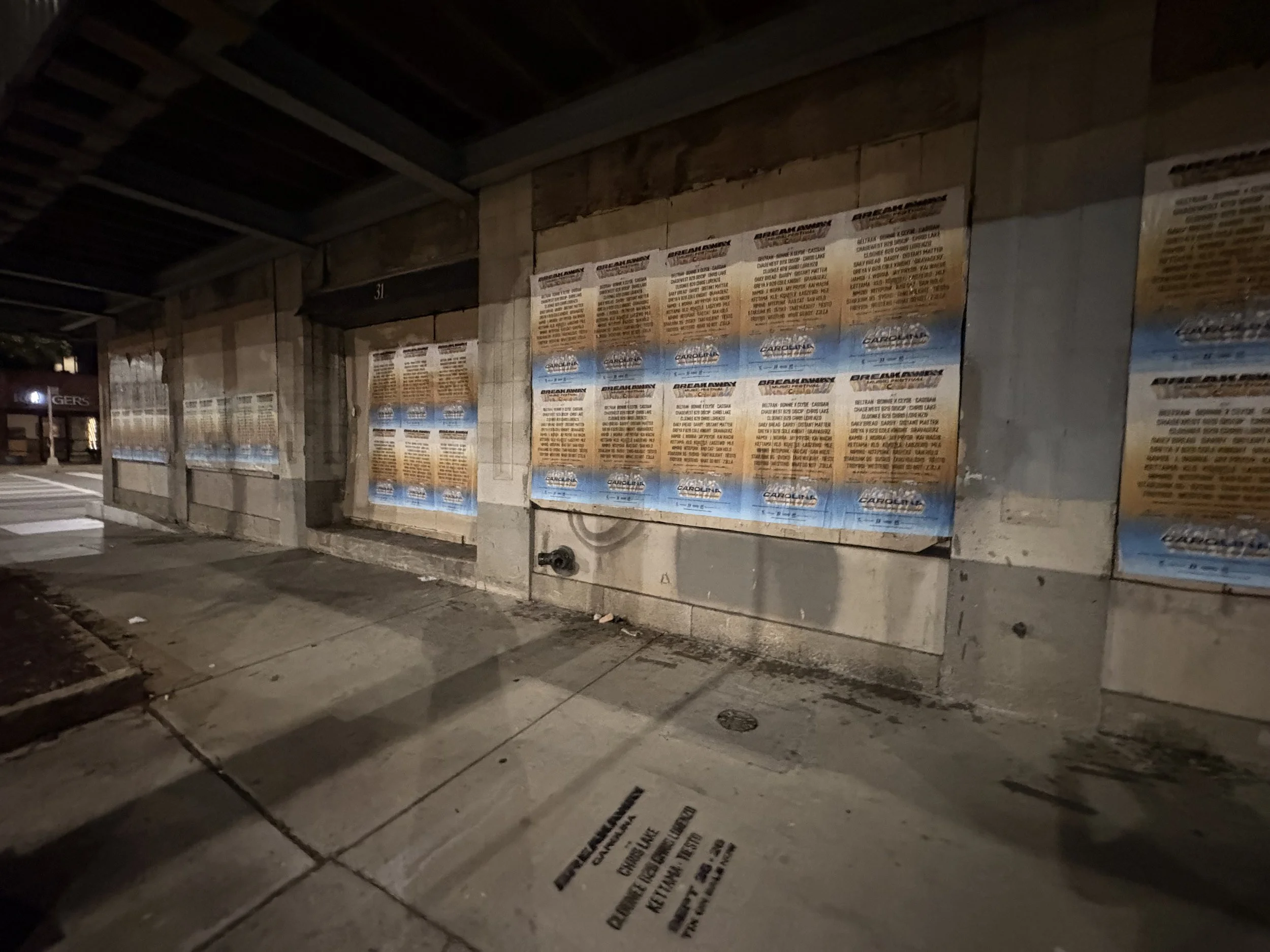
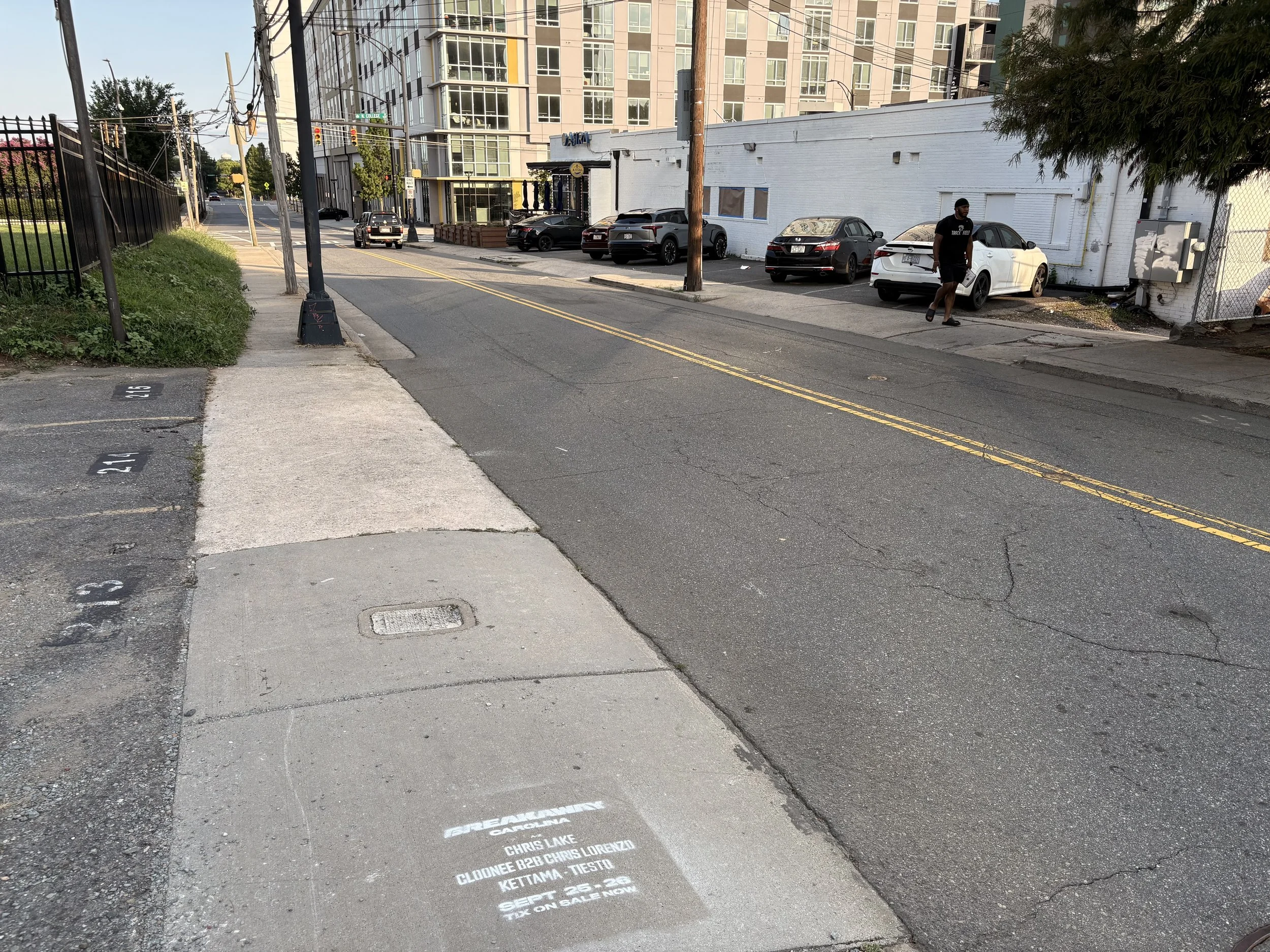
Charlotte street marketing context for Breakaway Carolina
Breakaway Carolina already had a strong event anchor. The festival is scheduled at zMAX Dragway Grounds at Charlotte Motor Speedway, with official event hours listed as 3pm to 11pm on Friday, September 25 and Saturday, September 26, and the event is marked 18+, with some ticket tiers noted as 21+. That kind of schedule matters because it tells you who is likely to be moving through Charlotte in the days leading up to the festival and what kind of city zones deserve attention.
For a music festival, awareness is not only about broad reach. It is about building frequency around the right people in the right places. Charlotte offers that opportunity in a very direct way. South End, Uptown connectors, nightlife blocks, transit-adjacent routes, and campus-oriented areas all create moments where a festival message can show up naturally and repeatedly.
Street media also has a strong attention case behind it. According to the Out of Home Advertising Association of America, benchmark analysis cited by OAAA found out-of-home advertising produced higher consumer ad recall than several other major media channels, including live and streaming television, podcasts and radio, print, and online executions. That does not mean street work replaces every other channel. It means physical presence still matters, especially when a campaign wants memory, momentum, and citywide visibility.
The Charlotte footprint was built around places where festival energy could feel current, visible, and socially relevant.
South End foot traffic
Rail Trail visibility
Uptown pedestrian connectors
University-area movement
Nightlife corridors
Campaign scope: 100 posters and 40 stencils across Charlotte
The campaign combined two formats that work best together when a brand wants both scale and repetition. Posters gave Breakaway a larger visual block in the streetscape. Stencils delivered frequent, eye-level reminders in places where people slow down, wait, cross, or gather.
Here is the activation in a simple view:
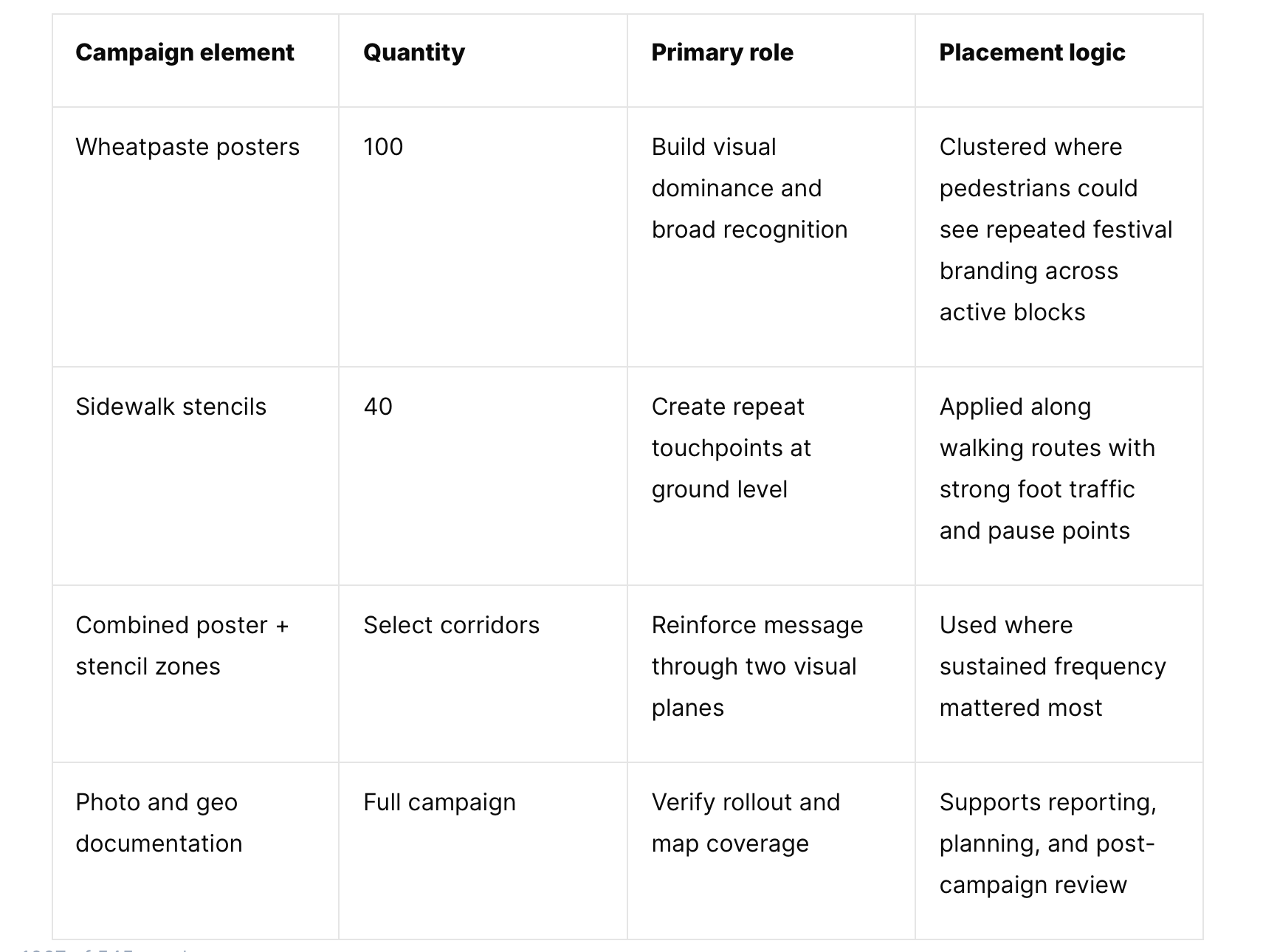
campaign size and details by sidewalktattos
Those numbers mattered because density matters. A lone poster can be seen. A network of posters starts to feel like a takeover. The same is true for stencils. One stencil can be a prompt. Forty placed with intent become a rhythm that follows the audience through the city.
This is where street marketing becomes more than a creative add-on. It becomes media planning with texture. The city is not treated like background. It becomes the frame that gives the message credibility and urgency.
Charlotte placement strategy from the Rail Trail to university foot traffic
The placement plan centered on a practical question: where does a festival audience already move before the gates open? In Charlotte, that answer includes the Rail Trail, South End activity zones, transit-linked walking paths, and university-oriented routes where younger audiences are highly visible.
Sidewalk Tattoos has long treated Charlotte as a city of distinct pedestrian behaviors rather than one undifferentiated market. South End carries lifestyle and nightlife traffic. Uptown corridors create business-day and event-day visibility. Arts and social districts support cultural relevance. Campus-adjacent routes add frequency among younger consumers who are often highly responsive to live event promotion.
For Breakaway, the route from the Rail Trail to the university was not just a geographic line. It was a behavioral map. It let the campaign sit inside the routines of people likely to care about the event, whether they were already ticket holders, still deciding, or simply part of the broader social scene that helps a festival feel talked about.
That placement logic looked like this:
Rail Trail clusters: repeated poster visibility in one of Charlotte’s most active pedestrian environments
Transit connectors: impressions where people pause, wait, and notice ground-level media
Nightlife blocks: stronger relevance in areas where music, plans, and social activity already intersect
University corridors: a natural fit for an event with an 18+ audience base
Cross-neighborhood repetition: multiple sightings that help move a campaign from awareness to recall
Good street campaigns respect how people actually move. They do not assume a person will stand still and study a message. They build for glance value, repetition, and context.
Why wheatpaste posters and sidewalk stencils fit music festival promotion
Music festivals benefit from media that feels immediate. That is one reason wheatpaste and stencil work fit the category so well. Posters create scale fast. They read from a distance, photograph well, and can anchor a block with strong visual identity. Stencils do something different. They are closer, faster, more intimate. They catch the eye at foot level and often create a second or third reminder after a poster impression has already landed.
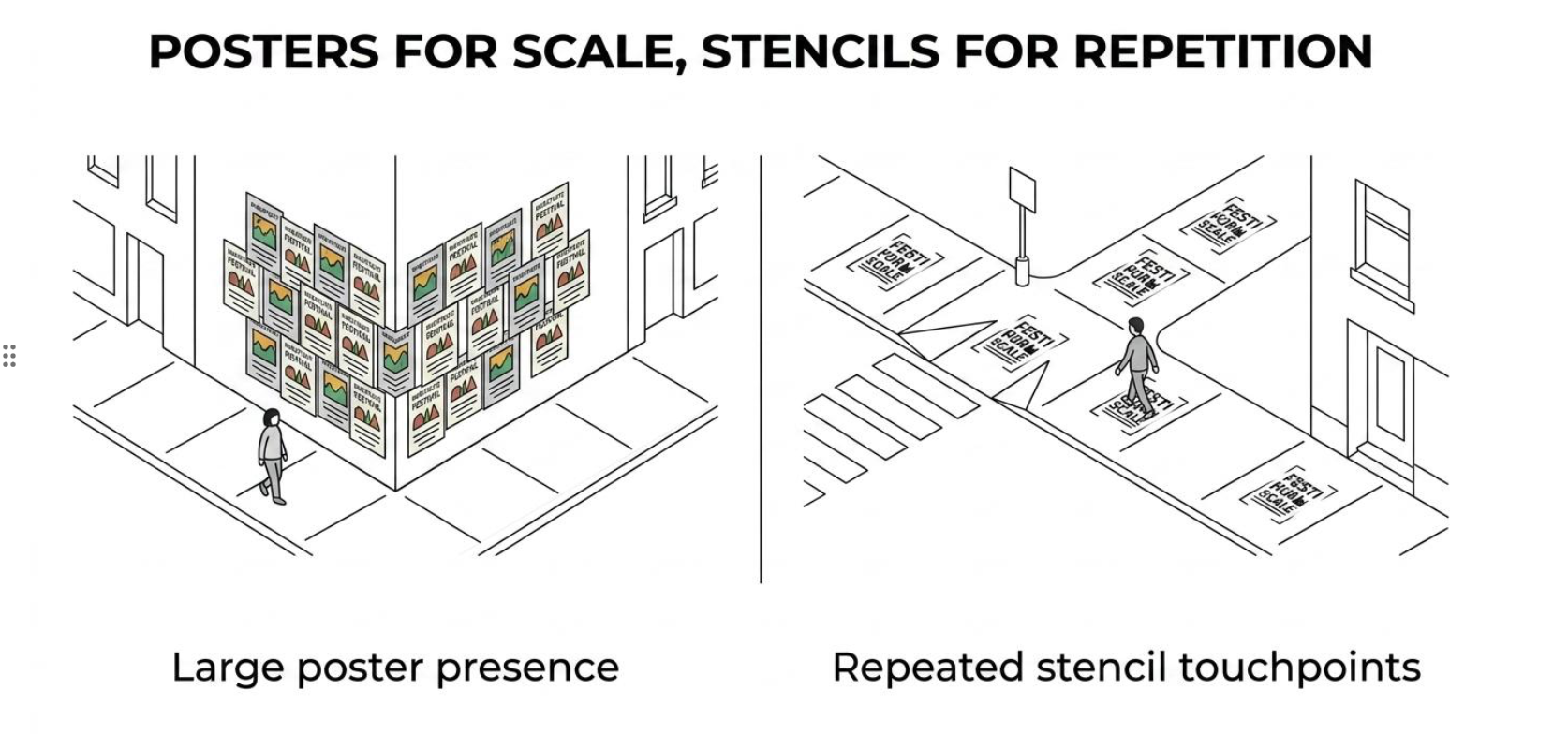
Posters and stencils installs by sidewalktattos
Together, the formats do not compete. They stack. One says, “This is happening.” The other says, “This is happening here, right now, and people around you are seeing it too.”
Festival promotion works best when it feels native to the city.
That matters in Charlotte, where different neighborhoods carry different energies. A campaign that is too polished can feel detached. A campaign that is too scattered can feel forgettable. Wheatpaste and stencils offer a better balance. They bring a sense of scale while keeping the message grounded in real pedestrian space.
The combination also gives brands practical advantages:
Big visual blocks
Repeat exposure at street level
Fast activation timelines
Flexible neighborhood coverage
Strong photo documentation value
Street-level execution for a Charlotte festival campaign
Execution quality is what separates a real takeover from random placement. For a campaign like this, planning starts with route mapping, production readiness, and a clear view of where format density should be highest. Charlotte is especially well suited to this kind of work because different districts can be covered quickly when the campaign is organized with intent.
Sidewalk Tattoos often works on activation timelines in the 48 to 72 hour range when materials are ready and the planning window is tight. That speed matters for event marketing. Festival pushes often happen close to on-sale moments, lineup reveals, or final attendance pushes. Street media has value partly because it can move with that pace.
Poster installation also depends on visual discipline. A hundred posters should not feel like a hundred isolated acts. They should read like one connected statement spread across the city. The same goes for stencil deployment. Forty stencils work best when spacing, direction, and neighborhood context are considered together rather than one at a time.
Documentation and reporting for Charlotte wheatpaste and stencil campaigns
For brand teams and agencies, visibility is only half the story. Verification matters too. That is why mapped placement and geo-tagged photo documentation are a core part of serious street campaigns.
Documented coverage gives marketers a clear record of where the campaign ran, how consistently it was installed, and which neighborhoods carried the heaviest presence. It also helps street media connect back to the broader launch plan. A festival campaign can coordinate with paid social, influencer pushes, ticketing moments, creator content, and PR without guessing whether the physical layer actually showed up where it was supposed to.
There is also a strategic benefit here. When out-of-home recall is already strong as a channel attribute, disciplined reporting helps brands think about street media as a measurable media layer rather than an aesthetic extra.
What this Breakaway Charlotte activation shows for event marketers
This campaign made a strong case for using Charlotte’s pedestrian geography as part of the media plan, not just the backdrop. Breakaway Carolina had a defined venue, defined dates, and a clearly social audience. That gave the street rollout a focused job: make the festival visible in the districts where interest could build through repetition and proximity.
The lesson is not that every event needs the same numbers or the same route. It is that event promotion gets more persuasive when media shows up where people already have momentum. Posters and stencils work well because they meet people in motion. They turn a city into a sequence of reminders.
For marketers planning live events, tours, launches, or cultural moments in Charlotte, a few principles stand out:
Match format to behavior: posters for scale, stencils for repetition
Build around movement: Rail Trail, nightlife, transit, and campus routes each support a different kind of attention
Use density with purpose: a takeover feeling comes from clustering, not scattering
Document everything: mapped photos make the campaign easier to review, share, and build on
There is also a wider takeaway for brands outside the festival space. Charlotte rewards campaigns that respect neighborhood identity while still thinking at city scale. When street activations are mapped well, executed quickly, and placed where audiences are already active, they can turn a short promotional window into a visible cultural moment.
That is exactly what this Breakaway Carolina rollout set out to do: take the energy of the event and place it directly into the daily pathways of Charlotte, one poster wall and one sidewalk stencil at a time.
Reach out for more information :
929.678.0235
