
Competitor Adjacent Placement: Why the Sidewalk Outside Your Rival Is the Smartest Spot You Can Buy
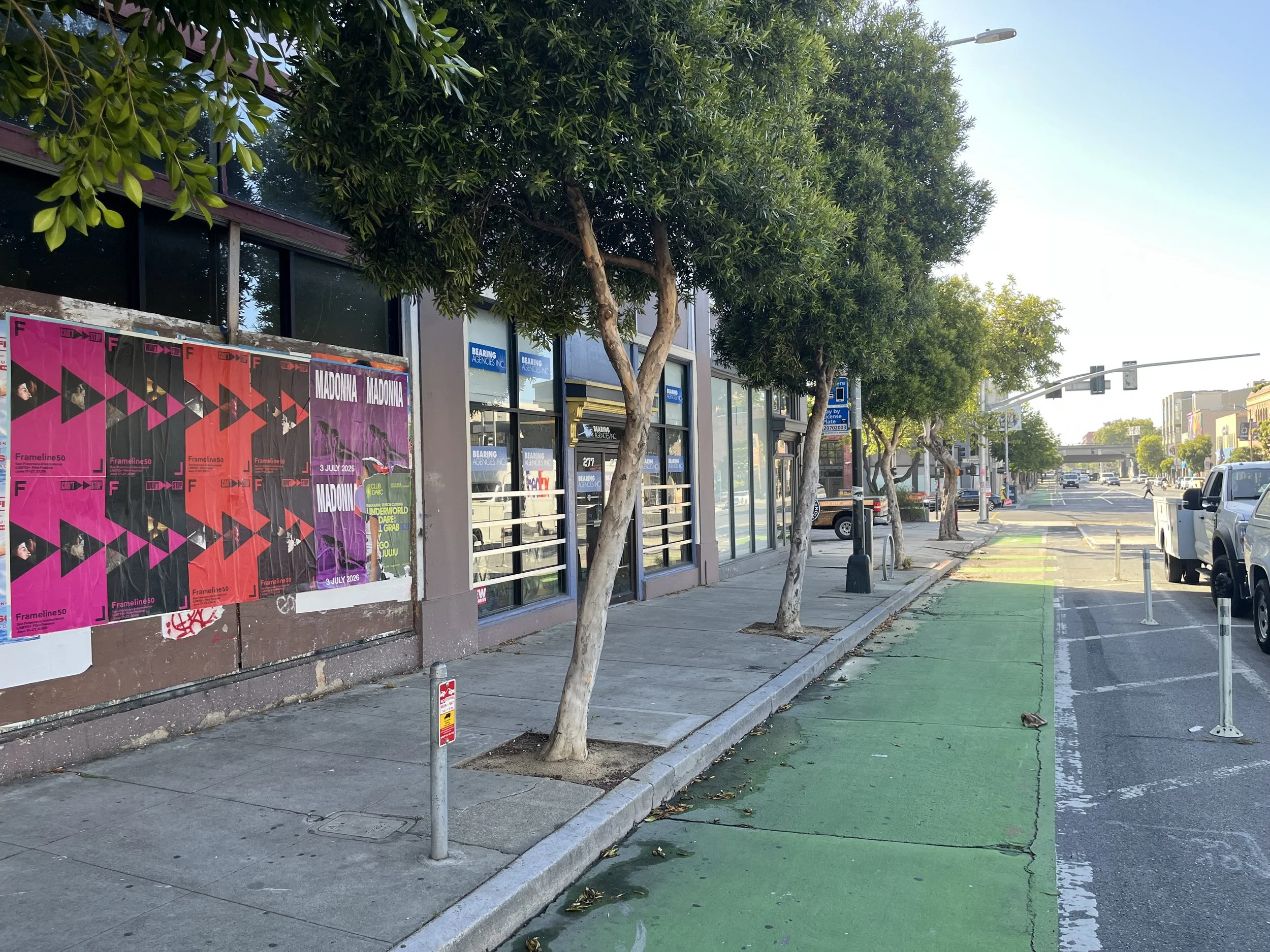
Wheatpaste posters install by Sidewalktattoos,
Retail attention is expensive when it is bought in broad strokes. It gets far more efficient when a brand places its message where purchase intent is already active, where people have chosen to walk, wait, browse, and compare. That is the case for competitor adjacent placement: show up beside the store that already trained the crowd to care.
If a rival has foot traffic, line spillover, a busy corner, or a famous retail block, that location is not just their advantage. It is a ready-made audience cluster. Sidewalk stencils and wheat paste poster installs can turn that cluster into media, right on the pedestrian path where attention is naturally high.
The block next door can outperform a much larger buy placed miles away.
Competitor Adjacent Placement Captures Shoppers at Decision Time
Most media spends money to create relevance. Competitor adjacent placement starts with relevance already in place. People standing outside a rival store are not abstract impressions. They are active category shoppers. They have already sorted themselves by interest, budget, style, urgency, or curiosity. That makes the sidewalk outside a competitor one of the few places where targeting and timing meet in plain view.
This matters because shopping decisions are often less fixed than marketers assume. A customer may walk into one store and still compare two or three brands in their head. They may leave empty-handed. They may browse, check a price, then continue down the block. A street-level message placed just before, during, or after that moment can enter the choice set while it is still flexible.
Street Ad strategy by sidewalktattoos
Competitor adjacent placement is not only about interception. It is also about reframing. A stencil on the path to a store can suggest a better value, a different aesthetic, an event nearby, or a limited release a few doors away. A wheat paste wall can create enough presence to make a challenger brand feel larger, more current, and impossible to miss.
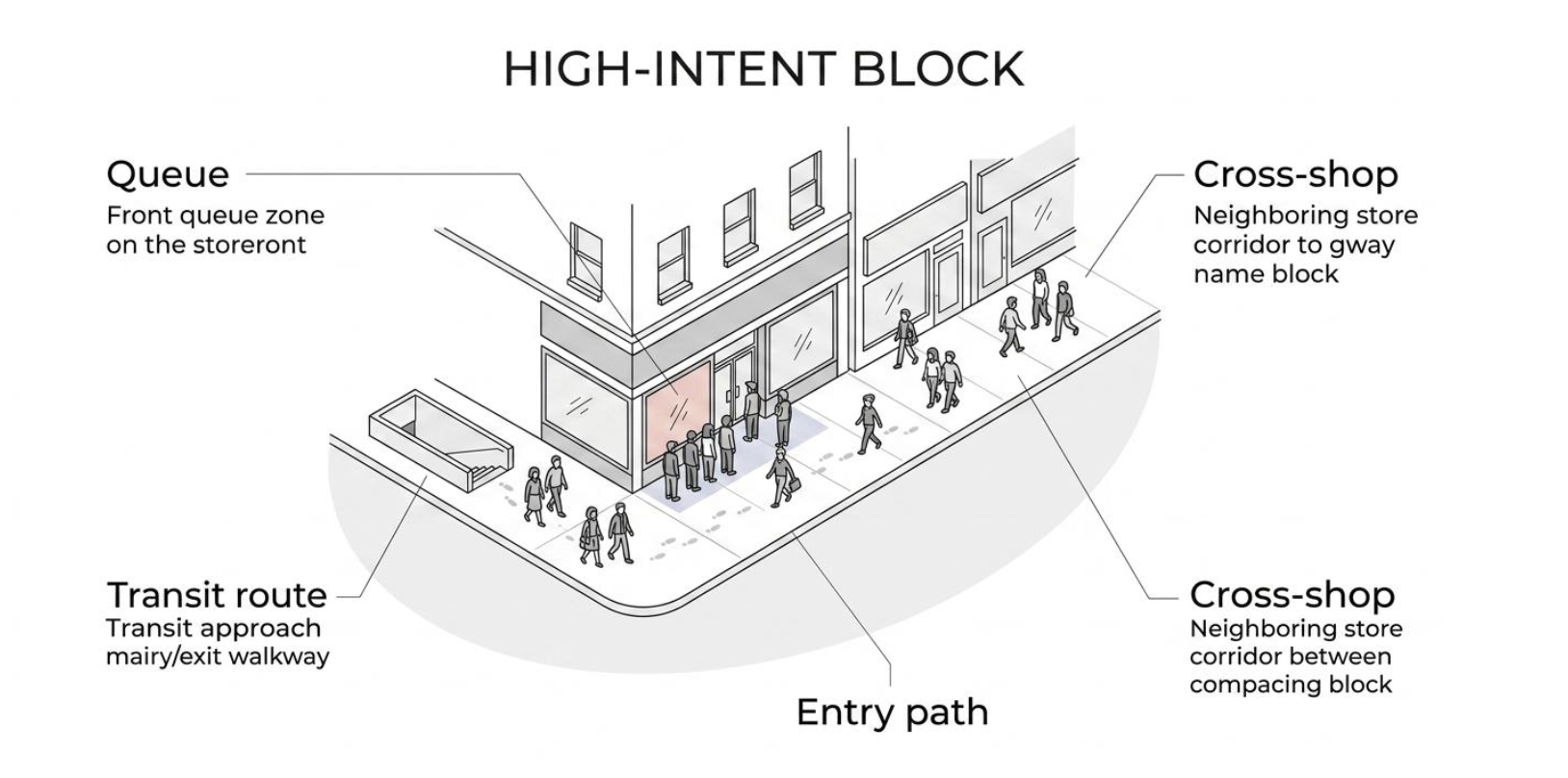
That usually means focusing on a few high-value pedestrian moments:
Queue moments: idle attention while people wait outside
Entry and exit paths: a final comparison point before or after a visit
Transit routes: exposure as people walk from subway exits, parking, or bus stops
Corner visibility
Cross-shopping blocks
Retail Proximity Data Supports Street-Level Advertising
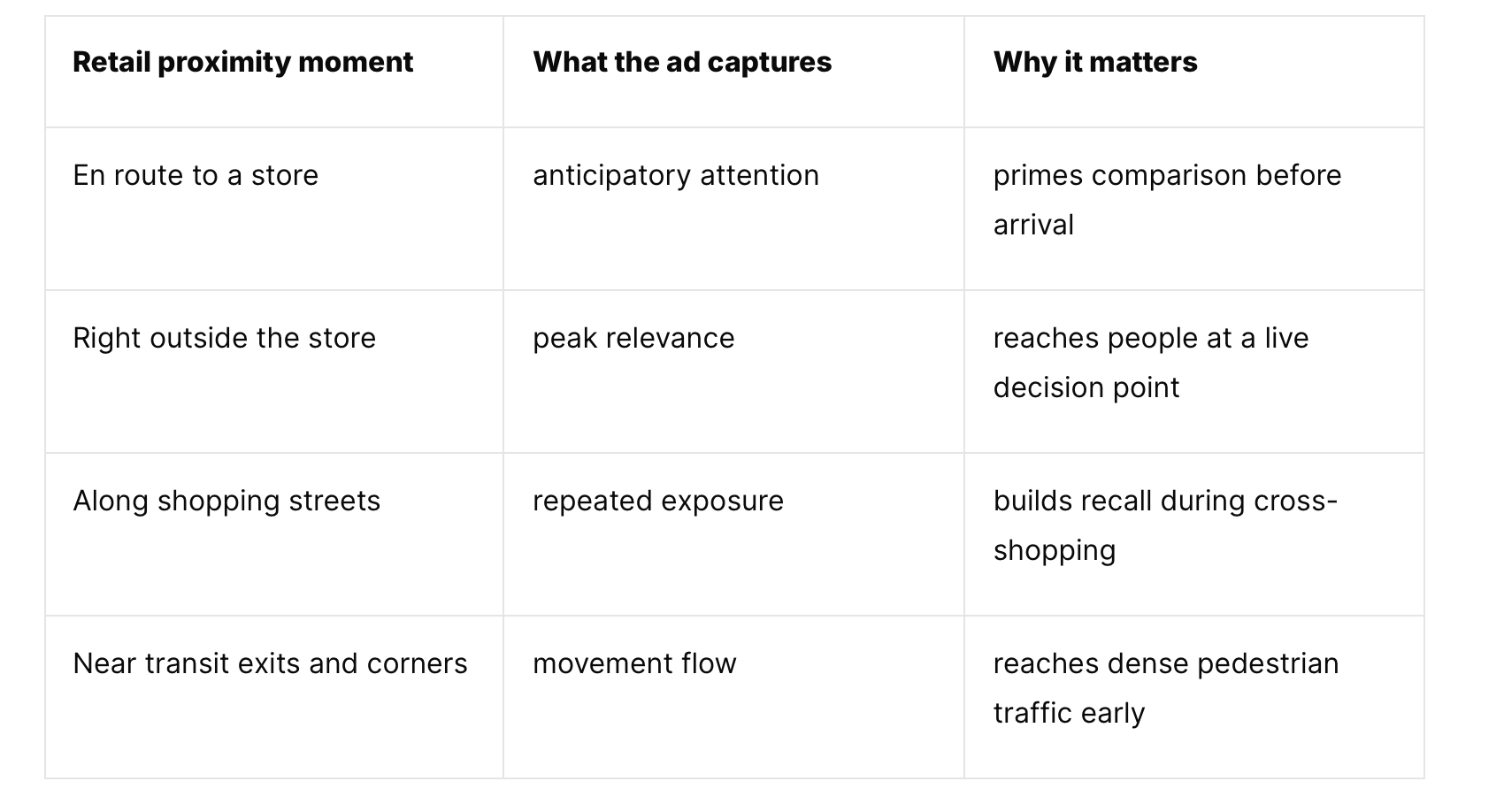
Research on out-of-home advertising supports the idea that retail proximity matters. According to OAAA and Morning Consult, 68% of consumers said they notice OOH ads while en route to retailers, and the same share said they notice ads very close to or right outside a store. That is a strong argument for buying media where store intent is already present, not only where general foot traffic happens.
The same research found that 42% of consumers reported OOH ads directly impact their in-person shopping decisions. Another result is just as useful: 75% of adults said they notice OOH ads once inside a store. That points to a larger pattern. Retail decisions are shaped across the full approach zone, from the walk there to the immediate exterior to the shopping district itself.
Industry guidance around pedestrian formats supports that pattern too. Pedestrian-facing OOH has long been positioned in shopping, tourist, and downtown areas, near businesses and entertainment venues. The logic is simple. Proximity lifts noticeability because the ad and the action live in the same environment.
Wheatpasting purpose by Sidewalktattoos
A media plan built around these moments is less about casting a wide net and more about buying intent in motion.
Sidewalk Stencils and Wheat Pasting Win the Block Next Door
Not every format works well in a competitor-adjacent strategy. Street-level formats do, because they sit in the same visual plane as the shopper. They are seen while walking, waiting, glancing up from a phone, or turning a corner. That creates a more direct relationship between message and movement.
Wheat pasting does something different. It creates visual mass. A coordinated poster run on walls near a retail corridor can make a brand feel present across the whole district, not just at one address.
Together, the formats cover both motion and impact. The stencil meets the shopper at their feet. The poster owns the wall. On a competitor-heavy block, that combination can turn a rival’s traffic into a shared attention zone.
The appeal is practical too:
Fast deployment
Strong repetition on a single block
Temporary materials
High visibility near retail foot traffic
The format choice should match the behavior on the ground. Dense shopping streets may call for poster concentration. Sidewalks with obvious approach routes may favor stencil repetition. A launch with a short run time often benefits from both.
Competitor Store Targeting Requires Better Location Mapping
The idea sounds simple, but execution separates a smart placement from a wasted one. Not every sidewalk outside a rival is equal. The strongest locations are usually the ones where people slow down, queue, turn, or exit transit. A store may have a famous address and still underperform as a street buy if the real pedestrian current moves one block over.
That is why mapping matters. A good competitor-adjacent plan looks at store entrances, line overflow, corners, adjacent coffee stops, parking edges, subway exits, and the short paths people take between neighboring retailers. It studies not only where the shopper is, but where the shopper hesitates.
This is also where local street knowledge has real value. Retail districts have micro-zones. One frontage gets sunlight and pause time. Another gets rush-through traffic. One side street catches the after-work crowd. Another feeds weekend browsing. The best campaigns read those patterns block by block.
A strong placement review usually answers a few basic questions before any install goes live:
Where do people pause: outside the entrance, by the curb, or at the crosswalk
Where does traffic originate: transit exits, parking, nearby anchors, or event routes
What can own the route: repeat stencils, poster clusters, or a combined takeover
How will it be documented: mapped locations, photos, and geo-tagged proof
Measuring Competitor Adjacent OOH With Photo and Geo Documentation
Street work gets stronger when it is treated like accountable media rather than a one-off visual stunt. Competitor-adjacent campaigns are especially measurable because they are tied to known retail destinations and defined walking routes. The placement logic is visible. The route can be mapped. The coverage can be photographed.
That is one reason documented execution matters. Sidewalk Tattoos builds campaigns around mapped placements, photo proof, and geo documentation, which gives brands a clear record of where each stencil or poster run appeared. For teams working across several cities, that turns a street activation into something far easier to manage and report.
The operational side matters as much as the creative side. Fast rollout windows can be a major advantage when a competitor opens a pop-up, a new product drops, or an event spikes neighborhood traffic for only a few days. Sidewalk Tattoos has published case material showing rapid activations around busy intersections, subway exits, and shopping streets, along with multi-city wheat pasting runs completed on compressed timelines. That kind of speed makes competitor adjacency viable even when the opportunity window is short.
Good reporting also helps sharpen the next wave. When placements are mapped and documented, teams can compare blocks, adjust density, and double down on the paths that produce the strongest street presence.
Best Uses for Competitor Adjacent Street Activations
This strategy is not only for direct rivals in the narrow sense. It works anywhere a nearby business has already assembled the right audience. A sneaker launch can sit near a sportswear cluster. A beauty brand can target a cosmetics corridor. A fintech app can place outside a conference venue where the target customer is already on foot and alert to offers.
It works best when the message is crisp and the destination is close. Street-level media excels at moving people a few steps, a few doors, or a few blocks. That makes it ideal for launches, openings, pop-ups, and challenger brands that need to borrow attention from an established retail rhythm.
A few common use cases stand out:
Popup retail: pull shoppers from a better-known block to a temporary location nearby
Product drops: own the area around a rival on launch week
Event promotion: intercept category fans before they reach a competing venue
New market entry: appear bigger, faster, and more present from day one
Entertainment releases
When the audience is already standing in the right place, the smartest move is often not to chase them elsewhere. It is to meet them on the sidewalk, at eye level and stride level, with creative built for the block. If that is the kind of targeting you want, contact Sidewalk Tattoos to target smart.
Reach out for more information :
929.678.0235
