
Locked Out of Traditional Ads: How Regulated Industries Use the Street Instead
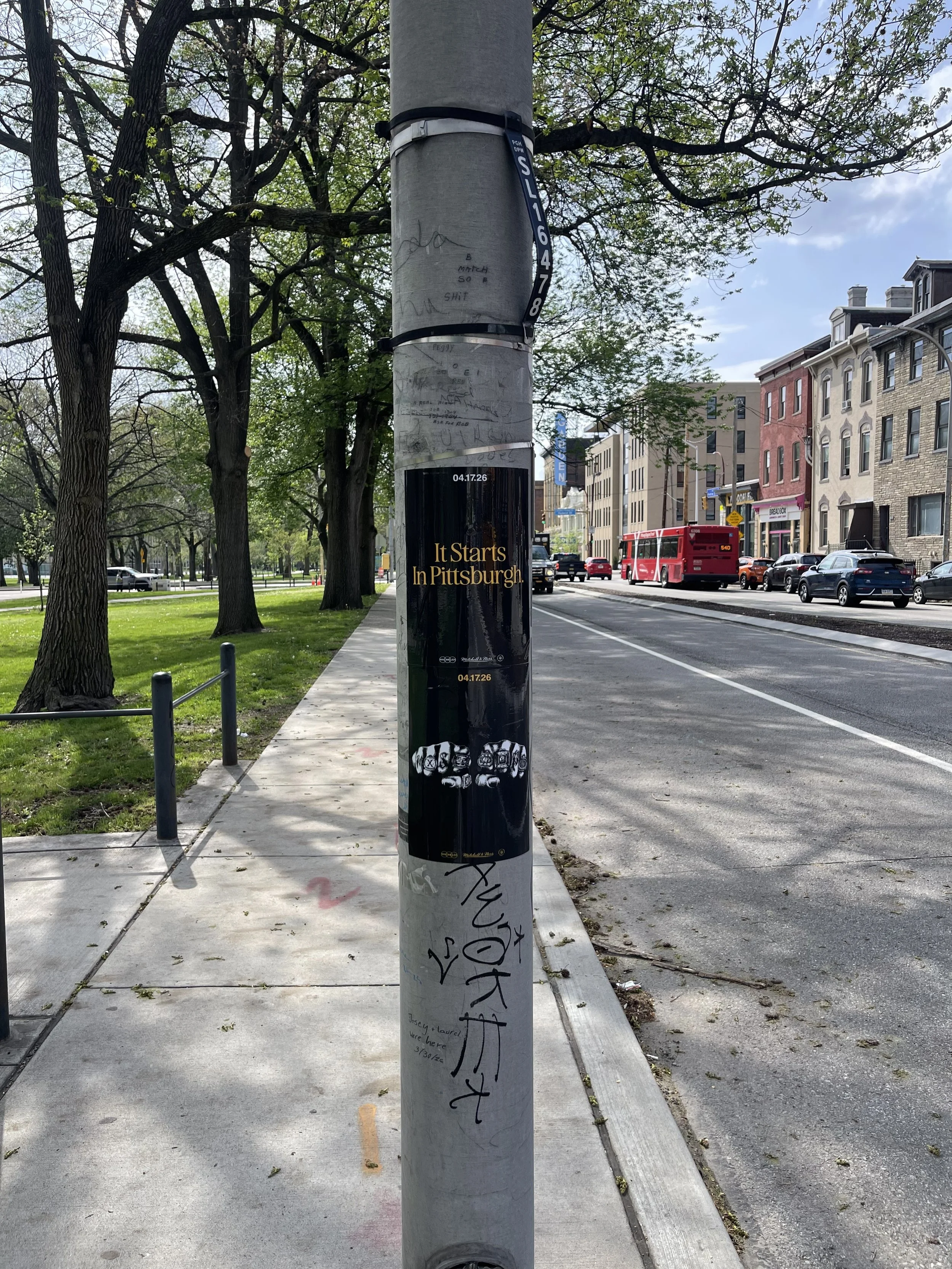
Sticker install by Sidewalktattoos
Many regulated brands are not truly shut out of advertising. They are boxed in by a patchwork of laws, platform policies, age-gating standards, creative limits, and placement rules that make ordinary media buying slow, uncertain, or flatly unavailable.
That pressure has changed the media mix. When paid social rejects a campaign, when search inventory is restricted, or when broad outdoor placements create compliance problems, street-level media becomes a practical option. Wheat-pasted posters and sidewalk stencils let brands appear where attention is already moving: on foot, near nightlife, near retail, near events, and inside neighborhoods that match the audience profile a campaign can legally target.
Why regulated industries face advertising restrictions across major channels
A regulated category does not face one barrier. It faces several at once.
A cannabis operator may be able to advertise in one state and face a very different rule set in the next. An alcohol brand may be allowed to run a campaign, yet still need to screen audience composition and creative tone with unusual care. Nicotine-adjacent products, wagering, CBD, and adult-oriented services run into similar friction, even when the ad copy is factual and the business is legal where it operates.
Then there are platform rules, which can be tighter than the law. A campaign might be legally acceptable but still blocked by automated review, vague category bans, or account-level caution from ad platforms that would rather reject a gray-area advertiser than review it closely.
After a paragraph like that, the operating reality looks like this:
Paid social rejections
Search limitations
restricted geo-targeting
uncertain moderation decisions
costly revisions
short campaign windows
Street-level advertising gives regulated brands more control
Street media works because it turns placement into a visible, physical decision rather than a black-box algorithmic one.
A well-planned wheat pasting campaign can be mapped block by block. A sidewalk stencil run can be placed along the actual path people take to a dispensary opening, a tasting event, a pop-up, or a retail launch. That level of control matters when a category cannot simply buy broad awareness at scale and hope the platform sorts the rest out.
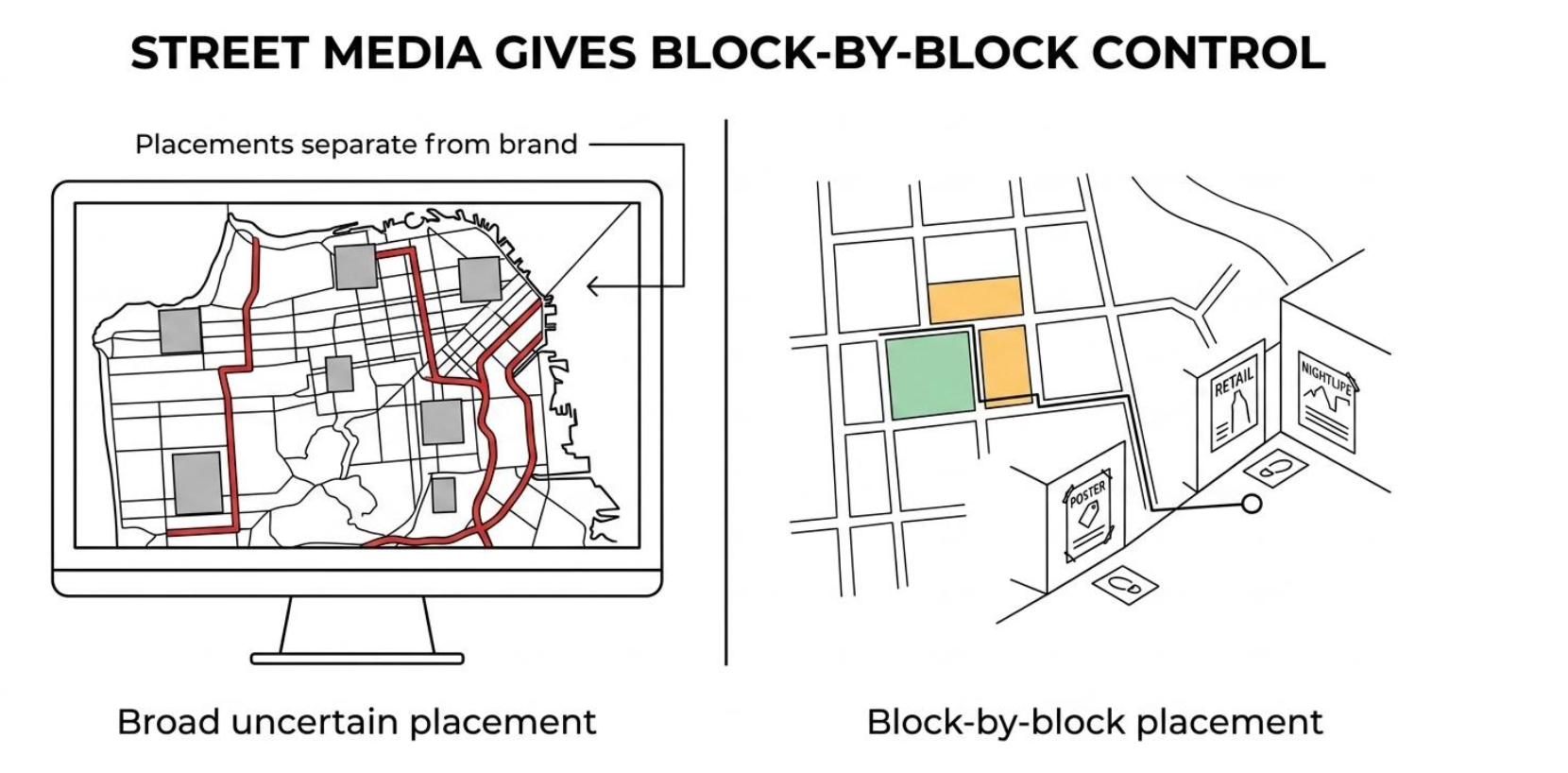
How the city highlights your brand by Sidewalktattoos
The street also offers context. Regulated brands often need to reach adult consumers in adult environments. Dense nightlife corridors, arts districts, shopping streets, music-adjacent areas, and event zones can support that goal more naturally than a generic programmatic ad exchange.
And unlike many digital placements, Street campaigns are hard to ignore because they share space with the city itself.
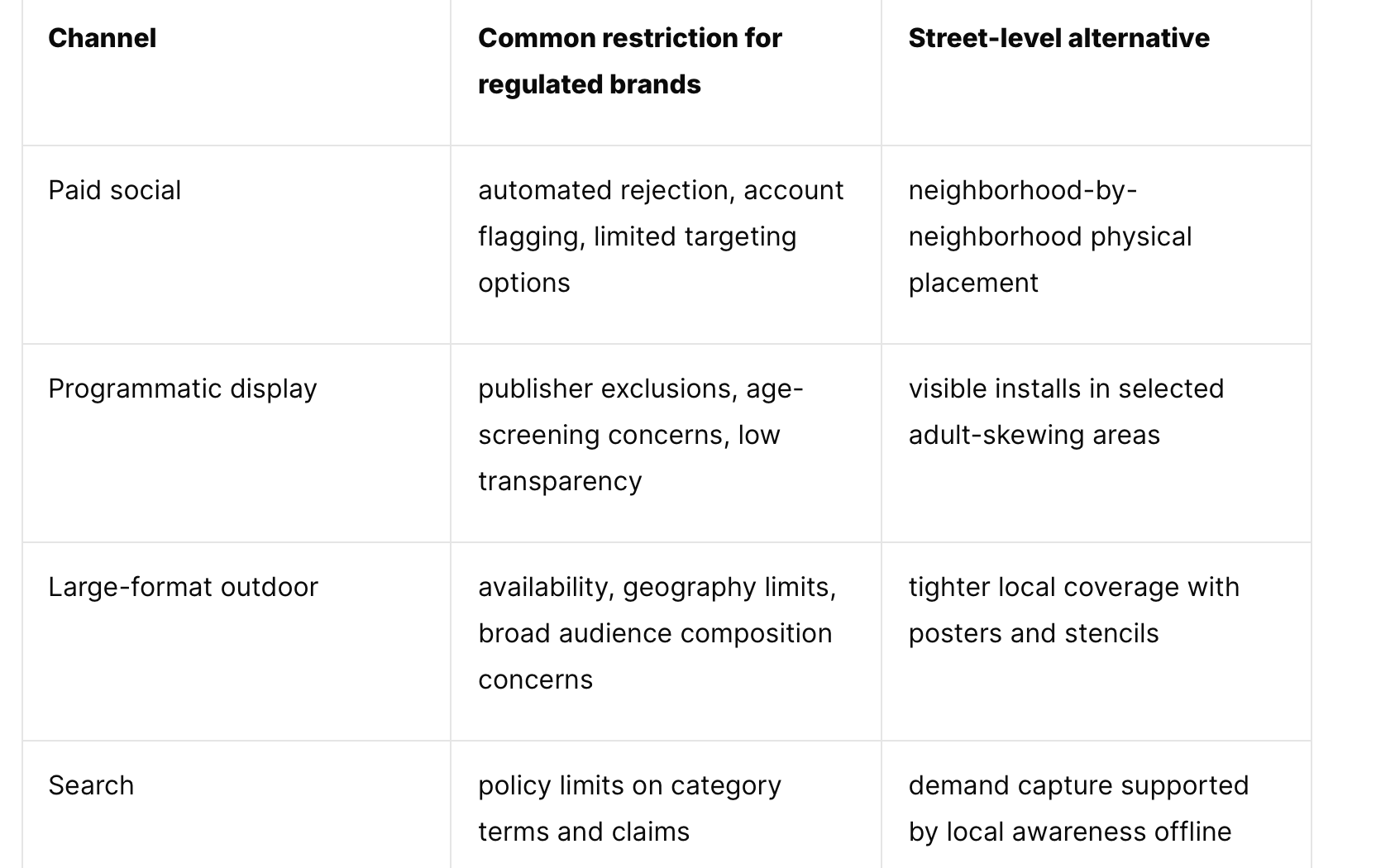
Street-Level ads benefits by Sidewalktattoos
Cannabis advertising compliance makes placement strategy non-negotiable
Cannabis is a clear example of why physical media stays relevant.
Take California. State law requires cannabis advertisements and marketing to identify the responsible licensee by license number. Outdoor advertising companies are not allowed to display a cannabis ad unless that license number appears on the ad. California also restricts cannabis advertising on interstate billboards and on state highways that cross the California border. There are also distance limits around daycare centers, K-12 schools, playgrounds, and youth centers.
Audience composition standards make the challenge even tighter. In California, cannabis ads generally must be placed where the audience is expected to be at least 71.6 percent age 21 or older. That single number shapes where a campaign can responsibly appear.
Street campaigns do not erase those rules. They make them easier to work around with intent. A brand can avoid broad placements that carry too much compliance risk and instead focus on adult-oriented corridors, legal retail zones, and event-driven neighborhoods where the audience fit is stronger and easier to justify.
That means a cannabis street plan often needs:
Creative compliance: include required identifiers, disclaimers, and the license number where state law requires it
Location screening: avoid restricted distances and youth-oriented zones
Audience logic: choose blocks, venues, and districts that skew adult
Documentation: keep photo records and mapped placement logs
Timing: install close to launch windows so the campaign feels current and accountable
For cannabis brands, the street is less about breaking away from rules and more about building a media plan that can live inside them.
Alcohol advertising rules still reward careful audience selection
Alcohol advertising sits in a different legal environment, yet the planning challenge is familiar.
FTC guidance explains that government regulation of truthful, non-deceptive alcohol advertising faces constitutional limits. Still, most alcohol advertisers follow voluntary self-regulatory codes that limit under-21 audience exposure to no more than 28.4 percent. Those same standards also discourage creative that primarily appeals to people under 21.
That makes broad digital placements tricky when audience data is imperfect and creative is judged by automated systems or cautious reviewers. Street media gives alcohol marketers another route: choose neighborhoods, venues, and moments where adult consumption is already culturally legible, then keep the message simple, mature, and place-specific.
A launch for a ready-to-drink product near music venues, restaurant clusters, and nightlife streets is a different proposition from a generic mass-audience buy. So is a poster run near retail partners and event spaces where legal-age attendance is more defensible.
Wheat pasting campaigns and sidewalk stencils fit regulated brand needs
Wheat pasting is especially useful when a brand needs dense frequency in a limited geography.
Instead of scattering impressions across a city, a poster campaign can create concentration. Multiple installs across a few high-traffic blocks let the audience encounter the same message on the way to work, on a lunch break, before a show, and while heading home. Sidewalk stencils add directional value by guiding foot traffic toward a store, event, or activation.
This combination works well for regulated brands that need local relevance more than national saturation. It is also fast. Street-specialist agencies can often activate campaigns within 48 to 72 hours, using city-by-city mapping, local print coordination, and documented installation workflows. That speed matters when approvals land late or launch dates move.
A few traits make these formats especially attractive:
Fast deployment: useful when digital approvals collapse late in the schedule
High repetition: strong visibility within a few blocks instead of thin reach across an entire market
Physical proof: photo and geo-tagged documentation supports accountability
Temporary materials
neighborhood specificity
Temporary materials are another practical point. Many campaigns use eco-conscious, short-term applications that suit product drops, events, and retail openings without pretending the media needs to stay up forever to work.
Out-of-home performance data supports repeated street exposure
The performance case for outdoor media is getting stronger, not weaker.
Research released in 2026 by OAAA and Kochava analyzed device-level data across hundreds of campaigns in seven verticals. One of the headline findings was a 5.3x conversion-rate increase from 1 to 10 ad exposures in OOH-to-digital action outcomes. That matters for regulated industries because repetition is often the whole game. If a brand cannot depend on precision digital retargeting or unrestricted paid social, it needs memory, familiarity, and visible legitimacy.
Street media is well suited to that pattern. A single poster can catch attention. A coordinated takeover creates recognition. Ten touchpoints on a commute path can push someone from curiosity to action.
This is also why dense local coverage can outperform a larger but diluted media buy. Street campaigns are not always trying to reach everyone. They are trying to reach the right adults often enough, in a place where the message feels relevant.
How regulated brands can plan compliant street marketing campaigns
Good street advertising in a restricted category starts long before the first install.
The first step is legal and operational review. State rules, local ordinances, landlord permissions, and category-specific content limits all need a look. No physical tactic should be treated as a loophole.
The second step is market selection. A campaign should focus on neighborhoods where adult audience composition, retail intent, nightlife density, or event traffic support the media plan. That is where mapped street execution becomes valuable. A well-built route is not random. It reflects compliance logic, foot traffic, and brand goals at the same time.
The third step is creative discipline. Regulated brands usually do better with direct, uncluttered visuals than with overworked messaging. The street gives only a few seconds to land the idea. Clear branding, a short line, a readable URL or QR code, and any required legal identifiers usually outperform copy-heavy designs.
A practical planning sequence looks like this:
Review category rules, city rules, and placement limits
Choose blocks and zones that fit adult audience goals
Build creative that is legible, compliant, and restrained
Install, document, and monitor the campaign in market
That last step matters more than many teams expect. Photo documentation, geo-tagging, and post-install reporting turn a street campaign from a cool tactic into a media channel the rest of the organization can trust.
Some brands also pair wheat pasting with sidewalk stencils to build movement. Posters create recognition. Stencils direct traffic. Together, they can surround a launch area without relying on a single platform approval queue.
When traditional ad systems narrow the available options, physical media opens a lane that is visible, local, and controllable. Sidewalk Tattoos plans wheat pasting campaigns, sidewalk stencil activations, and documented street takeovers across major U.S. cities and international markets. If your category keeps getting throttled by algorithms, get in touch to get seen.
Reach out for more information :
929.678.0235
