
Discover the Power of the Hometown Launch: Why Local Roots Impact Guerrilla Marketing
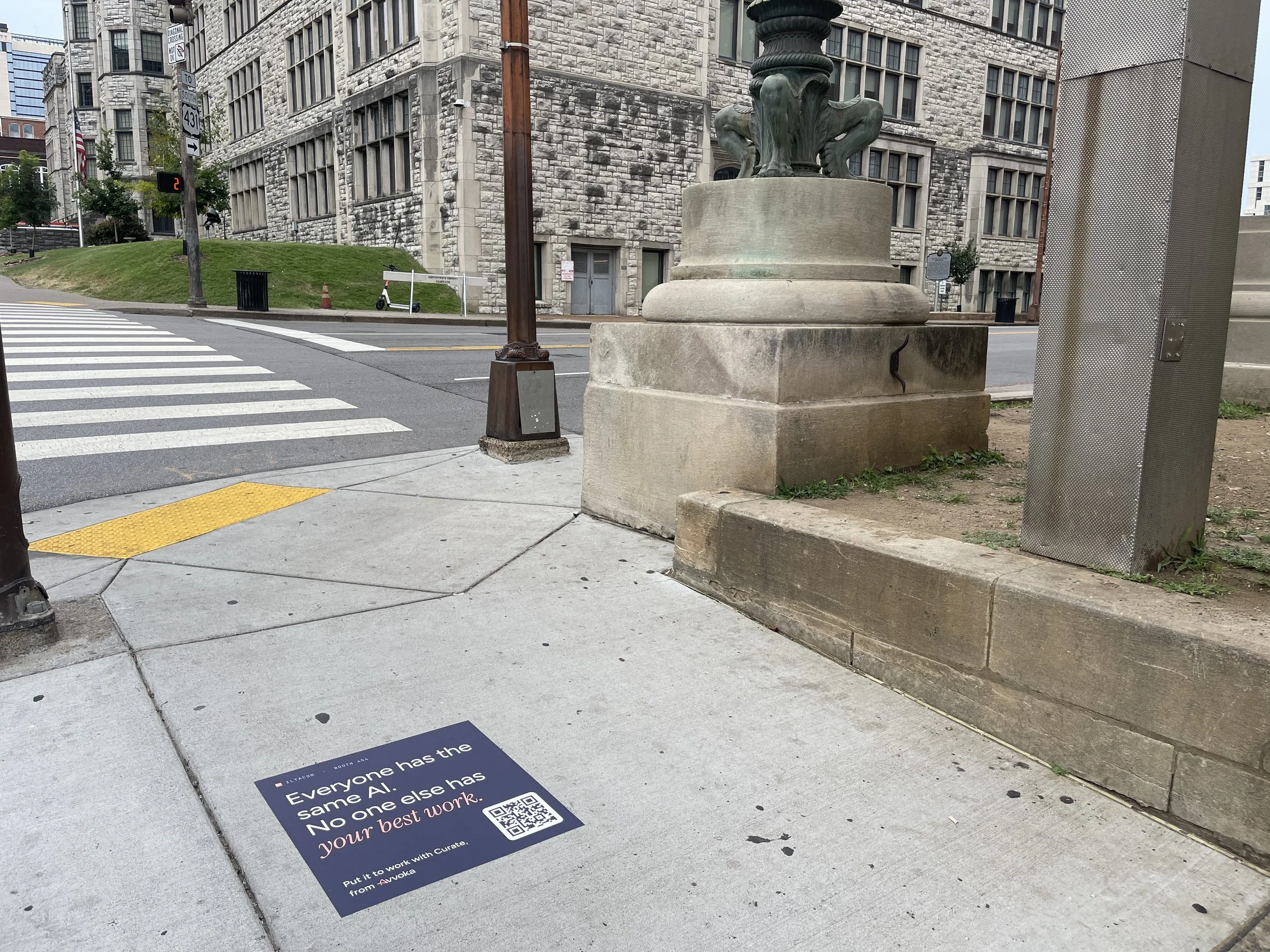
Snipe activation by Sidewalktattos
A brand’s first big moment feels different when it happens on its own turf.
Launching in the city where a company began gives guerrilla marketing a built-in advantage: the campaign is not just visible, it is legible. People can read the context. They know the blocks, the habits, the shortcuts, the landmarks, the crowd mix, the local references. A hometown launch can feel less like an ad buy and more like a public signal that a brand belongs here.
That sense of belonging matters more than many media plans account for. Street-level work is strongest when it feels native to the environment around it. Posters, stencils, and targeted installations do more than create impressions. They create recognition in places where recognition already has emotional weight.
Why local roots change guerrilla marketing response
A hometown campaign carries a story before a single poster goes up. If the brand started in a neighborhood, built a community there, or first found traction there, the creative lands inside a real narrative. That gives the campaign texture. People are not only seeing a message. They are seeing a local name claim space in a familiar setting.
That changes the response. In a home market, a campaign can trigger pride, curiosity, and even a sense of collective ownership. Residents may feel they are watching something from their area grow up in public. That is very different from the reaction a cold-market launch often gets, where the creative needs to do all the work by itself.
Community connection is not equal in every neighborhood, but it is still a meaningful variable. Pew Research Center reported in 2025 that 26% of U.S. adults say they know all or most of their neighbors, and 44% say they trust all or most people in their neighborhood. Those numbers do not suggest a uniform social fabric everywhere. They do show that many neighborhoods still operate through familiarity and trust, which gives local relevance real value in street campaigns.
When a campaign feels like it came from the block instead of landing on the block, people notice.
How neighborhood proximity improves out-of-home performance
A hometown launch also benefits from simple geography. Street media works best when exposure happens close to the place where action can happen next. That could mean a retail opening, a limited drop, a pop-up, an event venue, or a recurring neighborhood destination.
An OAAA research summary published in March 2026 reported that the connected commerce economy now exceeds $112 billion, and 98% of respondents use out-of-home in purchase-driven initiatives. That is a strong signal: physical media is still a serious driver when brands want movement, not just awareness.
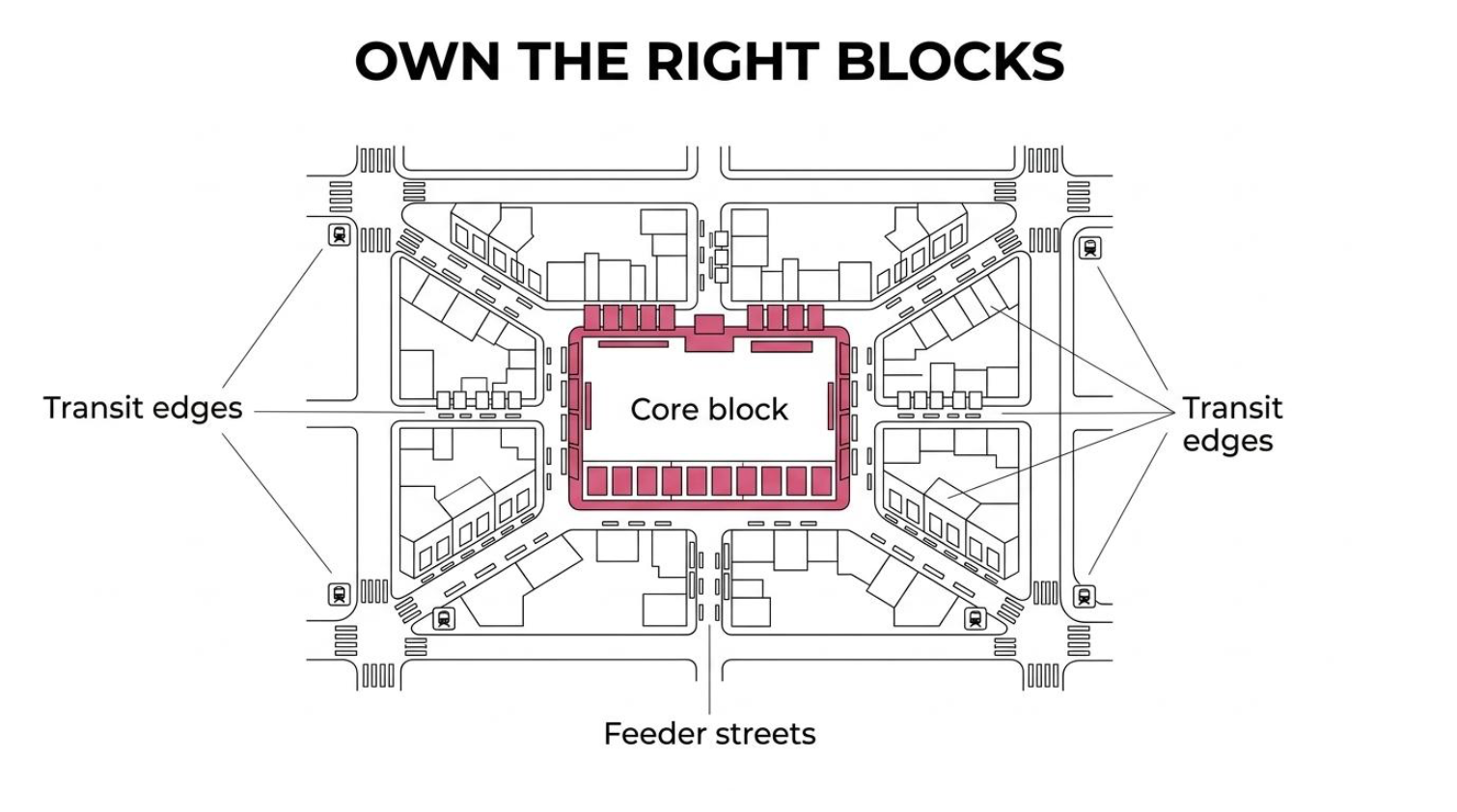
For hometown launches, proximity sharpens that effect. Instead of broadcasting across a whole city with equal intensity, guerrilla marketing can own the routes people already take. A cluster of posters near the flagship block, stencils near subway exits, and repeated visuals on feeder streets can create the feeling that the launch is everywhere, even when the footprint is carefully concentrated.
Marketing method by Sidewalktattos
That concentration often matters more than raw scale.
After a tight placement strategy is in place, the campaign can do several jobs at once:
Near the venue: build recognition before arrival
Along commuter routes: catch people when they are already moving toward retail, nightlife, or transit
repeated visuals on key blocks
event-night reinforcement
Why hometown word of mouth multiplies street campaign reach
Local campaigns do not spread only through paid reach. They spread through conversation.
Pew Research Center found that 55% of U.S. adults get local news and information through word of mouth at least once a week. The same report found that 41% are “local news participators,” meaning they contribute information, join online conversations, or add community content. Street activations live right inside that behavior. Someone sees a poster wall on a familiar block, sends it to a friend, mentions it in a group chat, posts it to Stories, or brings it up at dinner that night.
That is where hometown work starts to hit harder. The street execution becomes a local talking point because it is tied to a local identity. A launch in the city where the brand started can sound more meaningful when people talk about it: “They began here,” “their first shop was around the corner,” “this used to be a tiny project and now it’s all over the neighborhood.”
That kind of retelling creates momentum that money alone cannot buy.
Mobile behavior pushes it further. Pew also reported that 47% of adults use mobile devices for local news and information, especially when they are out and about. Street media and mobile sharing are not separate channels anymore. They are part of the same loop. A person notices a stencil, takes a photo, shares it instantly, and extends the campaign beyond the sidewalk without reducing the value of the physical placement.
What a concentrated hometown launch map should include
A hometown launch does not need to cover every district to feel dominant. In many cases, it is smarter to take over the blocks that matter most and create density there.
The right map usually starts with behavior, not just traffic counts. Where do people enter the area? Where do they slow down? Which corners become photo backdrops? Which stretches connect transit, retail, food, and nightlife? A strong hometown rollout uses those answers to build repetition with purpose.
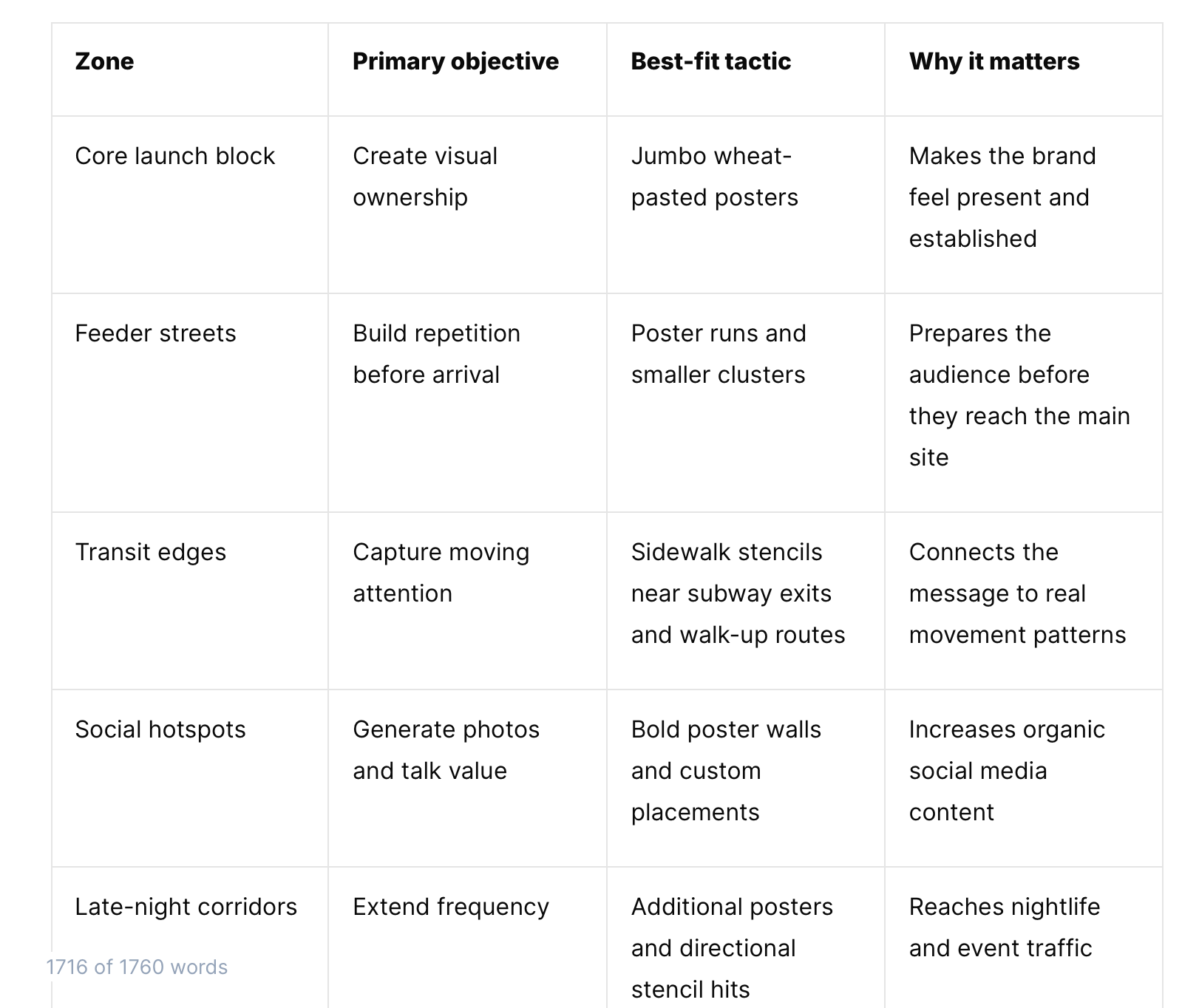
Here is a simple way to think about block-level planning:
Campaign launch strategy by sidewalktattos
This is one reason neighborhood-level execution can outperform a diluted citywide spread. When the creative keeps appearing inside a walkable zone, people begin to feel surrounded by it. That feeling is often what turns “I saw something” into “everyone is talking about this launch.”
Which guerrilla marketing tactics work best in a home city
The strongest hometown campaigns usually combine formats instead of relying on one. Wheat pasting gives a launch scale, repetition, and visual mass. Sidewalk stencils add immediacy, direction, and street-level surprise. Used together, they can give a neighborhood both a skyline and a pulse.
That integrated approach is especially effective when timing is tight. A brand can announce itself, build anticipation, and frame the physical route into a store, pop-up, or event in a matter of days. Sidewalk Tattoos specializes in exactly this kind of execution, with mapped wheat pasting campaigns, sidewalk stencil activations, custom poster installations, geo-tagged documentation, and fast turnarounds that often happen within 48 to 72 hours.
A Sidewalk Tattoos case study in Soho offers a useful model for concentrated neighborhood impact. The campaign used 100 sidewalk stencil hits and 600 jumbo wheat-pasted posters across the area. According to the case study, the result was both street buzz and organic social media content as people photographed the work. That is a good example of what happens when physical density and local circulation meet.
When brands want hometown energy, these street tactics tend to work especially well:
repeated poster faces
Sidewalk stencils: turn sidewalks into directional media with a place-based feel
Poster clusters: create dominance on a few high-value blocks instead of light coverage everywhere
launch-week takeovers
The creative itself should also sound local without becoming cliché. That may mean referencing the city’s pace, visual codes, or cultural rhythm. It may mean keeping copy spare and letting placement do the storytelling. In many hometown launches, confidence beats explanation.
How to measure a hometown launch at block level
A hometown campaign should be measured by what it changes in a real place, not only by broad impression estimates.
Foot traffic lift, store visits, event turnout, QR scans, promo code use, direct messages, tagged posts, and neighborhood chatter all matter. So does proof of presence. Geo-tagged photo documentation is valuable because it confirms exactly where the work appeared, how the network was built, and whether the density matched the original strategy.
Good reporting often focuses on three layers:
Deployment proof: every poster run, stencil hit, and custom install is mapped and documented
Behavior signals: store traffic, web spikes, searches, and launch-day conversions
neighborhood conversation and user-generated content
This kind of measurement is especially useful for hometown brands because local launches often have a compounding effect. The first campaign may drive immediate results. It also sets the brand’s visual memory in its home city, which can support future openings, collaborations, seasonal drops, and earned media later on.
Why hometown authenticity matters more than polished scale
A huge media spend can make a brand visible. It does not always make the brand feel real.
Street-level hometown work has a different strength. It can show that a brand knows where it came from and is willing to meet people in the same spaces where its story began. That authenticity is not sentimental. It is strategic. People respond differently when a campaign feels earned by place.
This is one reason smaller, sharper local launches can outperform broader campaigns that lack context. When the work appears on the right corners, on the right routes, and in the right cultural pockets, it starts to feel native to the city instead of imported into it.
Start a hometown guerrilla marketing campaign with street precision
If a brand is launching where it was born, the campaign should reflect that advantage. The goal is not to blanket a map. The goal is to own the blocks that shape perception, spark conversation, and move people toward action.
Sidewalk Tattoos helps brands do that with wild wheat paste poster advertising, sidewalk stencil activations, custom poster installations, strategic mapping, and documented rollouts across U.S. cities and international markets. If you are planning a hometown launch and want a street campaign that feels grounded, visible, and hard to ignore, contact us to get started.
Reach out for more information :
929.678.0235
