
How Wheatpasting Earns Your Brand Real Street Credit
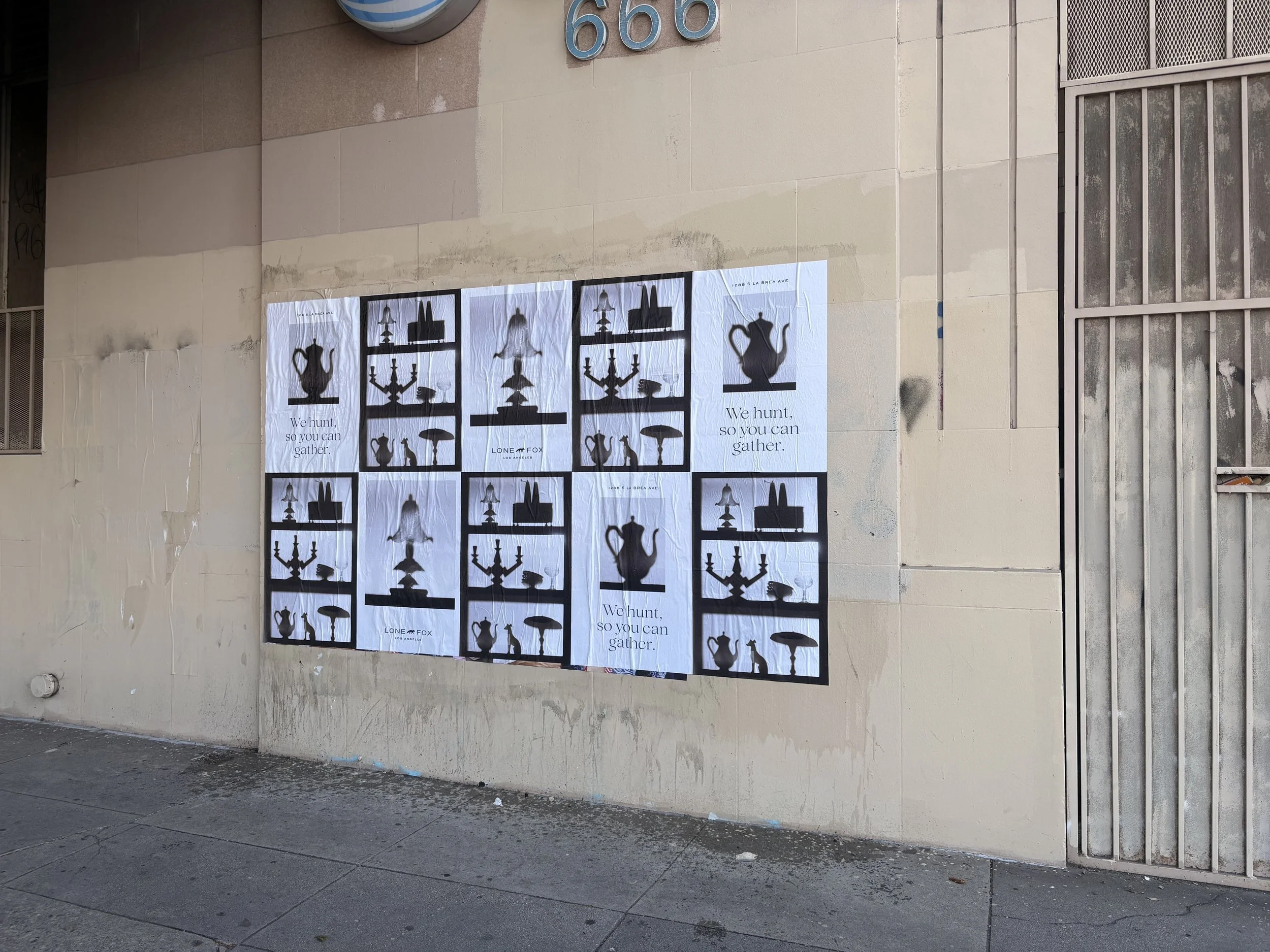
"Custom wildposting poster installation by sidewalktattos
Street credit is one of the few brand assets people can spot without being told it exists.
You cannot buy it with louder targeting, cleaner motion graphics, or a bigger media budget alone. People grant it when a brand shows up in a way that feels native to the city, visible to the public, and close to culture rather than hovering above it. That is why wheatpasting still matters.
A wheatpaste campaign does more than put posters on walls. It gives a brand a physical footprint. It creates repeated encounters across blocks, neighborhoods, and nightlife corridors. It turns a message into part of the visual texture of a place, which is very different from appearing as a paid interruption inside a feed.
Why street credit matters in brand marketing
Street credit is not just about looking cool. It affects how people interpret intent.
When a brand appears in the right places, with the right visual language, it can feel like a participant in culture instead of a spectator trying to rent access. That distinction matters for fashion labels, artists, music releases, events, challenger brands, and tech launches that want to feel current without feeling overproduced.
Research on street-level advertising helps explain why. A Journal of Advertising Research study on handbills found that credibility influenced whether people accepted the message. The format was different, but the lesson carries well into public street media: people respond to more than simple exposure. They react to whether the message, the source, and the context feel believable together.
People do not grant cultural credibility because a media plan says they should.
Wheatpasting builds brand authenticity through public presence
Street posters have staying power because they feel local, direct, and physical. A 2026 academic article on contemporary street posters describes them as a largely local, relatively low-tech alternative to screen-based media, and even as a unique communicative typology of the contemporary city. That phrasing matters. It suggests posters are not just ad units. They are part of how cities speak.
That is exactly why wheatpasting can make a brand feel more authentic. A poster takeover is public. It can be seen by commuters, pedestrians, nightlife crowds, creators, and competitors. It lives in open space, where people can read it, photograph it, ignore it, or talk about it. That publicness creates a kind of accountability. If a brand looks out of place, everyone can see it. If it looks right, everyone can feel that too.
The best wheatpaste campaigns do not fake intimacy. They earn familiarity through presence.
A 2022 advertising study on street art found that this kind of visual culture can imprint originality and coolness on a brand, promote social connectedness, and spark spontaneous social spreading. Wheatpasting is not the same as street art, and it should not pretend to be. Still, the overlap is useful. Both operate in shared urban space, and both gain force from how people encounter them naturally rather than by invitation.
A wheatpaste campaign tends to feel credible when several factors work together:
repeated visibility
neighborhood relevance
clear graphic identity
Public proof: people see the campaign in the wild, not only in screenshots
Cultural fit: the placement, tone, and design feel suited to the area
Material honesty: paper on walls feels tangible, temporary, and real
Repeated wheatpaste exposure strengthens recall and response
Street credit grows through repetition.
That point is easy to miss because marketers often think of posters as a single visual stunt. In practice, wheatpasting works best as a field of impressions. The same image appears across multiple walls and routes, which creates memory through accumulation. Someone sees it near a venue on Friday, outside a coffee shop on Saturday, then near the train on Monday. The campaign starts to feel bigger than any one poster.
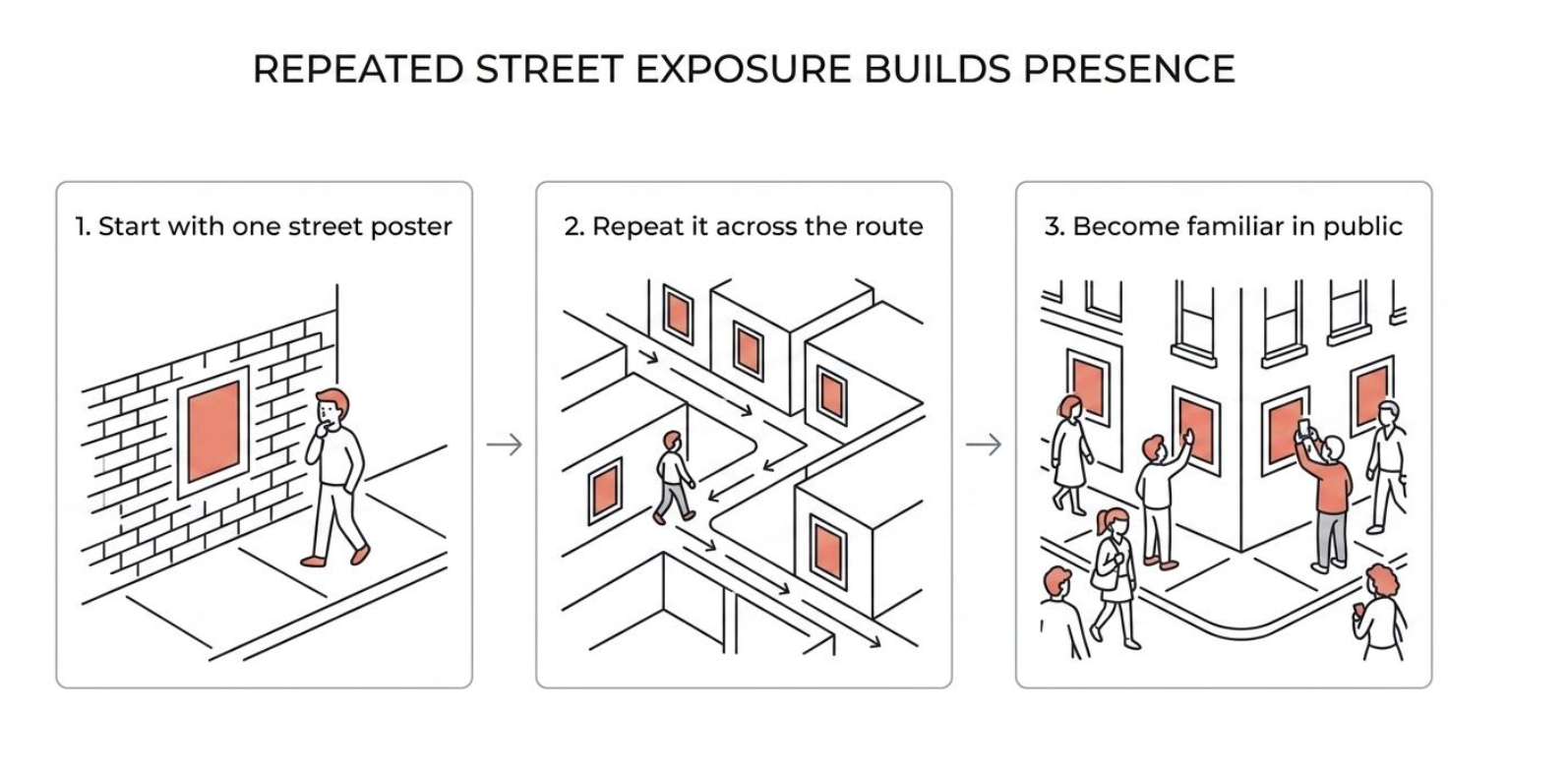
wheatpasting processing illustration by sidewalktattos
This pattern lines up with broader out-of-home performance research. A 2026 OAAA study based on device-level data across hundreds of campaigns in seven verticals reported that OOH is not just an awareness medium. It also reported a 5.3x conversion-rate increase from 1 to 10 ad exposures in OOH to digital action outcomes. Wheatpasting is not identical to every OOH format, of course, but the lesson is useful: repeated public exposure can move people from recognition to action.
That is one reason poster-heavy street campaigns are so effective for launches, drops, tours, openings, and brand moments that need to feel unavoidable for a short window.
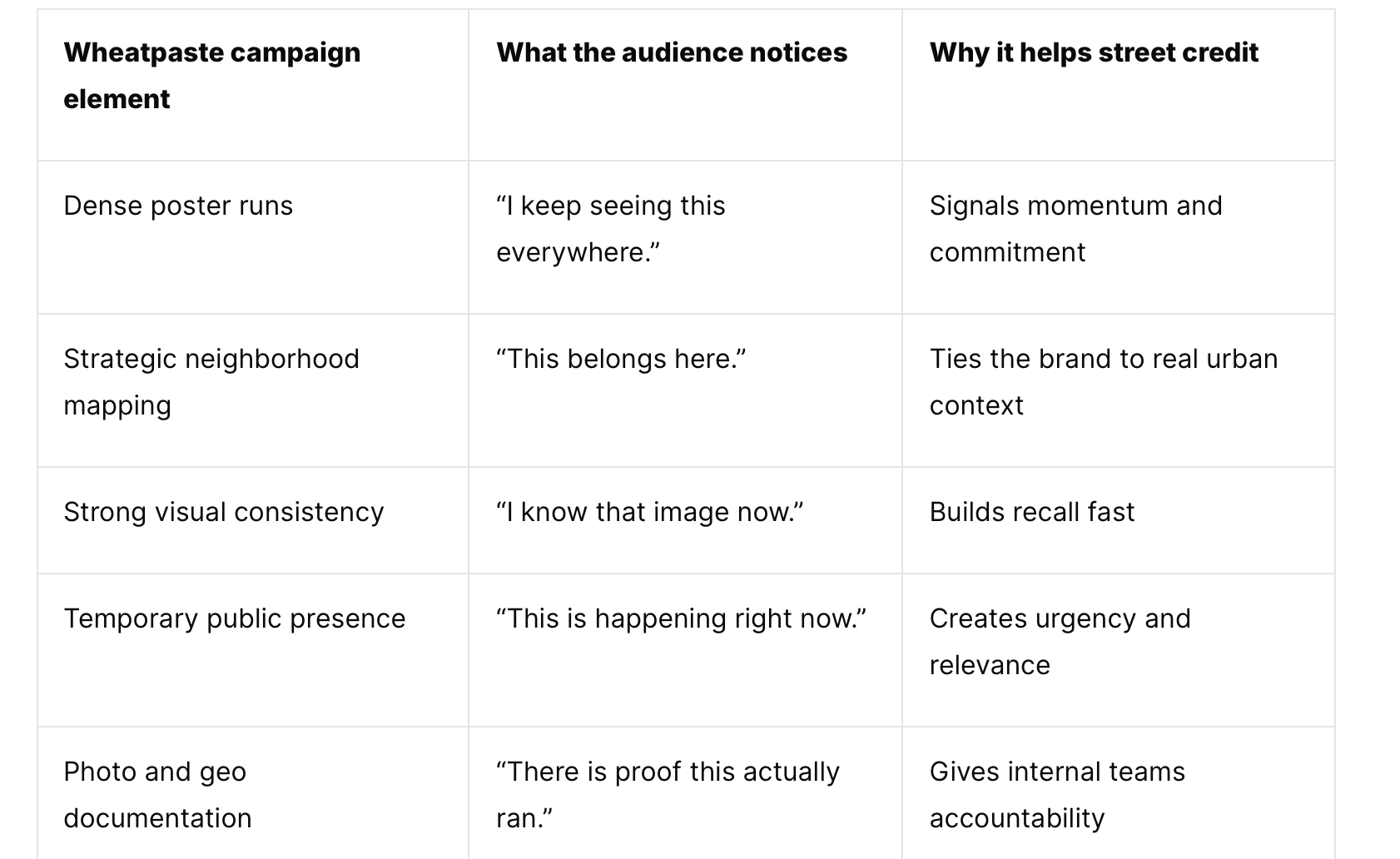
The impact of wheatpasting throughout the streets by sidewalktattos
Wheatpasting design and placement shape how the brand is judged
A wheatpaste campaign earns respect when it feels considered, not careless.
Design matters first. Posters that rely on clutter, tiny copy, or generic stock visuals tend to read like noise. Strong wheatpaste creative usually has a dominant image, a short verbal hook, and a layout that works from a distance. It should still look good when partially viewed, photographed at an angle, or seen at speed from the sidewalk.
Placement matters just as much. Street credit comes from context, not from scattering posters randomly and hoping volume does the work. A nightlife flyer aesthetic might fit one district and fall flat in another. A luxury fashion teaser needs different surfaces and routes than a local event push. Placement is media strategy, but it is also cultural editing.
The brands that get this right tend to follow a few simple rules.
Match the neighborhood: let the area inform tone, density, and cadence
Build clusters, not fragments: one poster alone can disappear, a coordinated run can own a route
Stay visually disciplined: one memorable image usually beats six competing ideas
short copy
bold contrast
strong logo restraint
That last point is important. Street culture usually rejects brands that look desperate for approval. A poster can carry the brand clearly without shouting. Confidence reads better than overstatement.
Wheatpasting works best when it becomes part of the city’s rhythm
What makes a campaign feel real is not perfection. It is participation.
A street poster campaign lives among venue signage, scaffolding, traffic, flyers, stickers, murals, corner stores, and the wear of everyday movement. That environment gives it texture. Unlike polished digital placements, wheatpaste installs do not arrive inside a protected frame. They sit in public, where city life edits them in real time.
That is also why wheatpasting can make a young or fast-growing brand seem more established than its age might suggest. A visible, well-mapped street presence implies confidence. It tells people the brand is willing to take up real space, not just bid for transient attention online.
For artists, promoters, and fashion brands, this effect can be especially powerful. The city becomes a witness to the campaign. People encounter it independently, then reinforce it through photos, conversation, and social posts. That blend of physical presence and social circulation gives wheatpasting a multiplier effect that purely digital media rarely matches on its own.
Campaign documentation makes street marketing accountable
Street credit is cultural, but it should still be operationally sound.
That is where mapped execution and documentation change the conversation. A modern wheatpaste campaign can be planned by neighborhood, rolled out on a fast timeline, and documented with photos and geo-tagging so internal marketing teams, agencies, and brand partners can see exactly what ran and where. That removes the old uncertainty that sometimes made street marketing feel hard to defend inside a formal media mix.
For brands managing multiple cities, this matters even more. Consistent documentation makes it easier to compare markets, confirm coverage, brief stakeholders, and pair street activity with owned and paid channels. It also helps translate a campaign’s cultural value into something visible and reportable.
A public-facing medium does not need to be vague to feel authentic.
Building wheatpaste campaigns that earn credibility
The strongest campaigns usually combine creative clarity with street-level discipline. That means choosing surfaces and routes with intent, posting at density, and moving fast enough that the campaign feels like a live moment instead of a slow rollout.
For many brands, a combined approach works especially well: wheatpaste posters for broad visual coverage, plus sidewalk stencil activations for added surprise and repetition at foot level. That pairing can make a campaign feel both expansive and immediate. It also gives more opportunities for people to encounter the message naturally across a neighborhood.
This is where experienced execution matters. Sidewalk Tattoos specializes in wheat pasting posters, custom poster installations, and combined takeovers across U.S. cities and international markets. Campaigns can be mapped strategically, documented with photos and geo-tags, and activated quickly, often within 48 to 72 hours, using temporary materials suited to street-level work.
If your brand wants visibility that feels earned, not rented, wheatpasting is one of the clearest ways to claim it in public. Contact Sidewalk Tattoos to plan a campaign that puts your brand where culture actually happens, then gives you the proof to show exactly how it showed up.
Reach out for more information :
929.678.0235
