
Sidewalk Poster Advertising in Wynwood
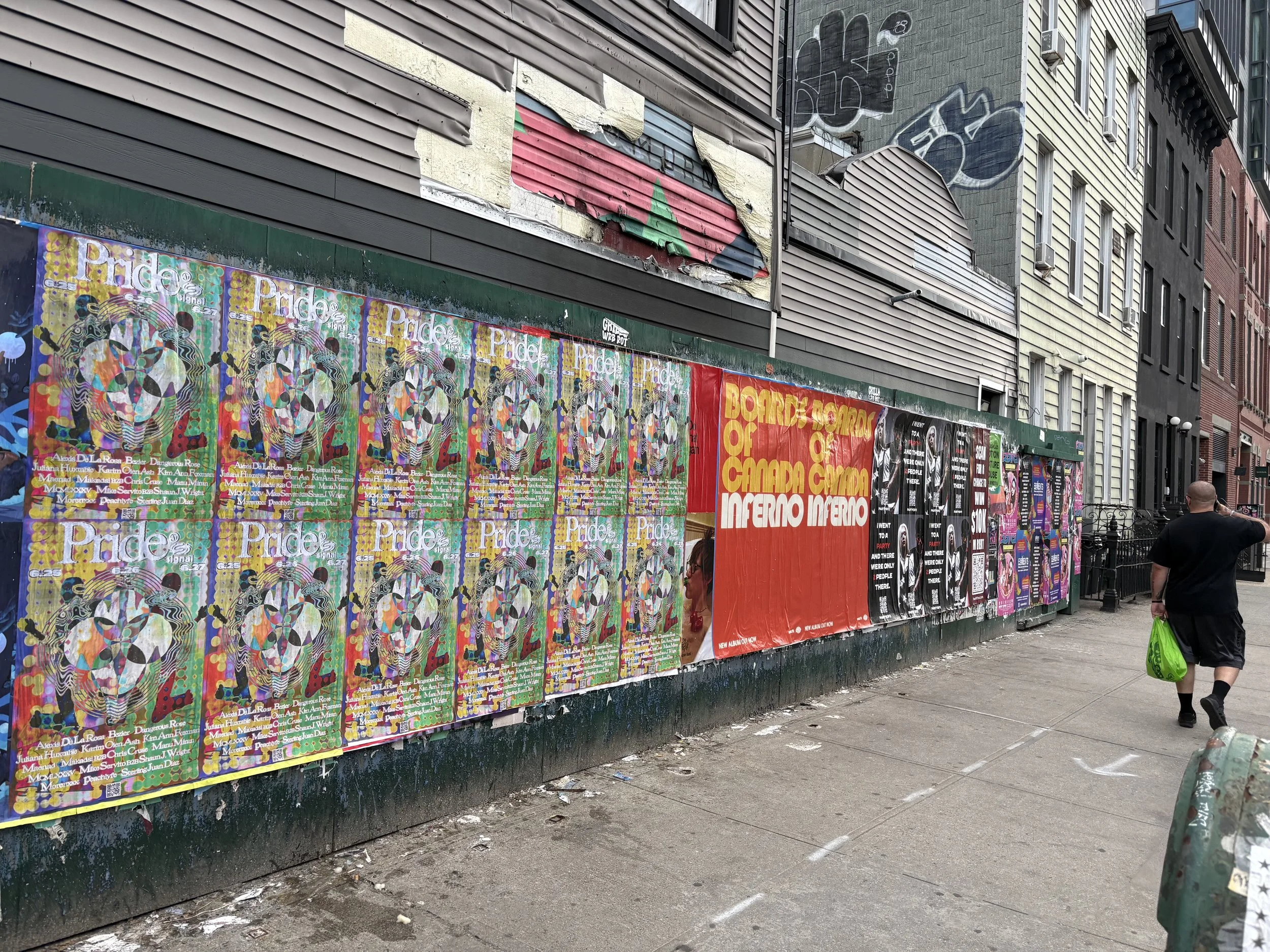
A city sidewalk lined with colorful Pride posters and layered event flyers.
Wynwood rewards scale, contrast, and placement that stops people mid-block. A strong wall can turn a poster run into a photographed moment within hours. Yet Miami asks more from paper than many other cities do.
That matters for any brand planning a wheat paste campaign in the district. Creative may be the first thing people notice, but climate decides how that creative holds up on the wall, how cleanly it photographs, and how long it stays readable in open air.
Wynwood poster campaigns meet Miami climate reality
Paper is sensitive by nature. Library of Congress guidance for works on paper recommends a cool, relatively dry environment around 35% relative humidity, along with minimal exposure to light and no direct or intense light. Wynwood offers almost the opposite set of conditions. Posters there live outside, on active streets, under bright sun, through humidity swings, and in a city with frequent summer rain.
NOAA climate normals for Miami Opa-Locka show why this matters. Mean temperatures reach 82.6°F in June, 83.6°F in July, and 84.0°F in August, with monthly precipitation above 8 inches through much of the wet season. Those are not museum conditions. They are high-pressure outdoor conditions for paper, paste, ink, and wall adhesion.
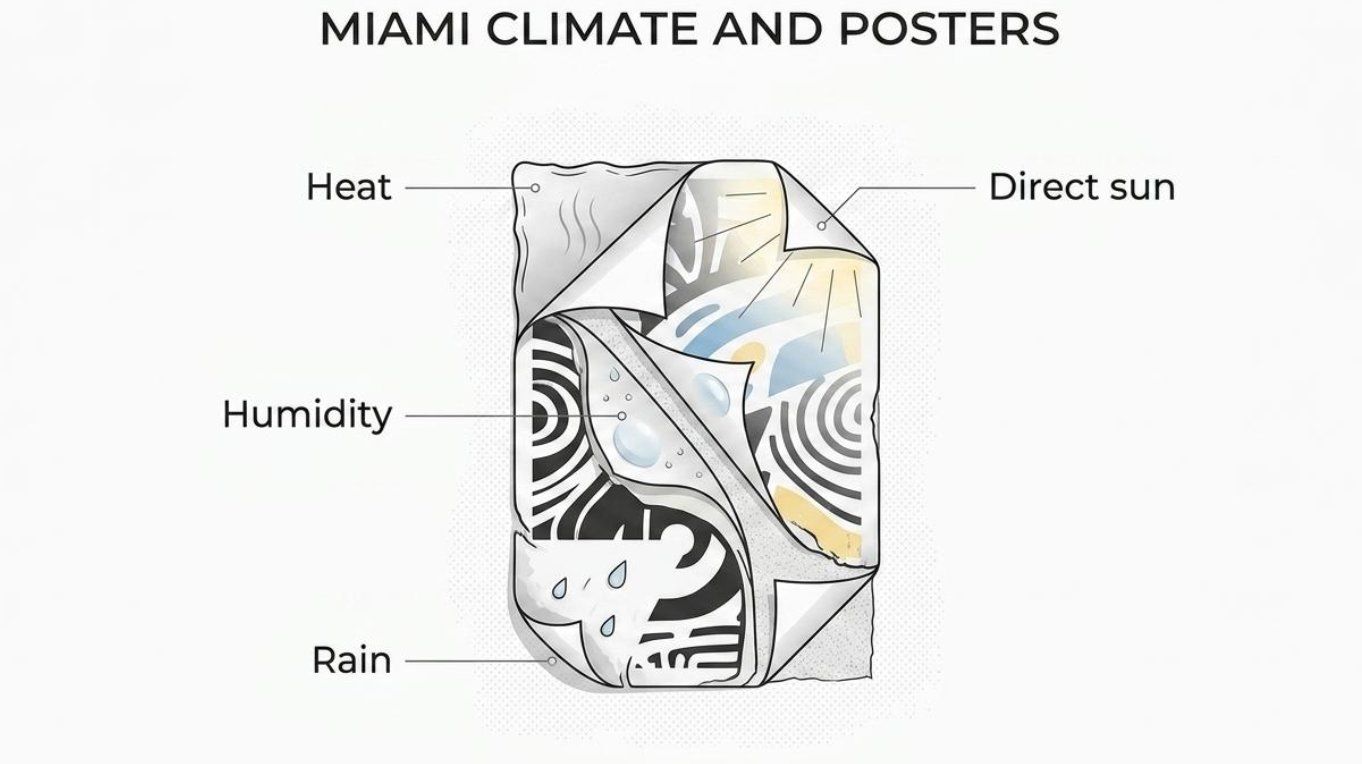
Climate impact on posters by sidewalktattos
A Miami poster campaign succeeds when climate is treated as part of media planning, not as an afterthought.
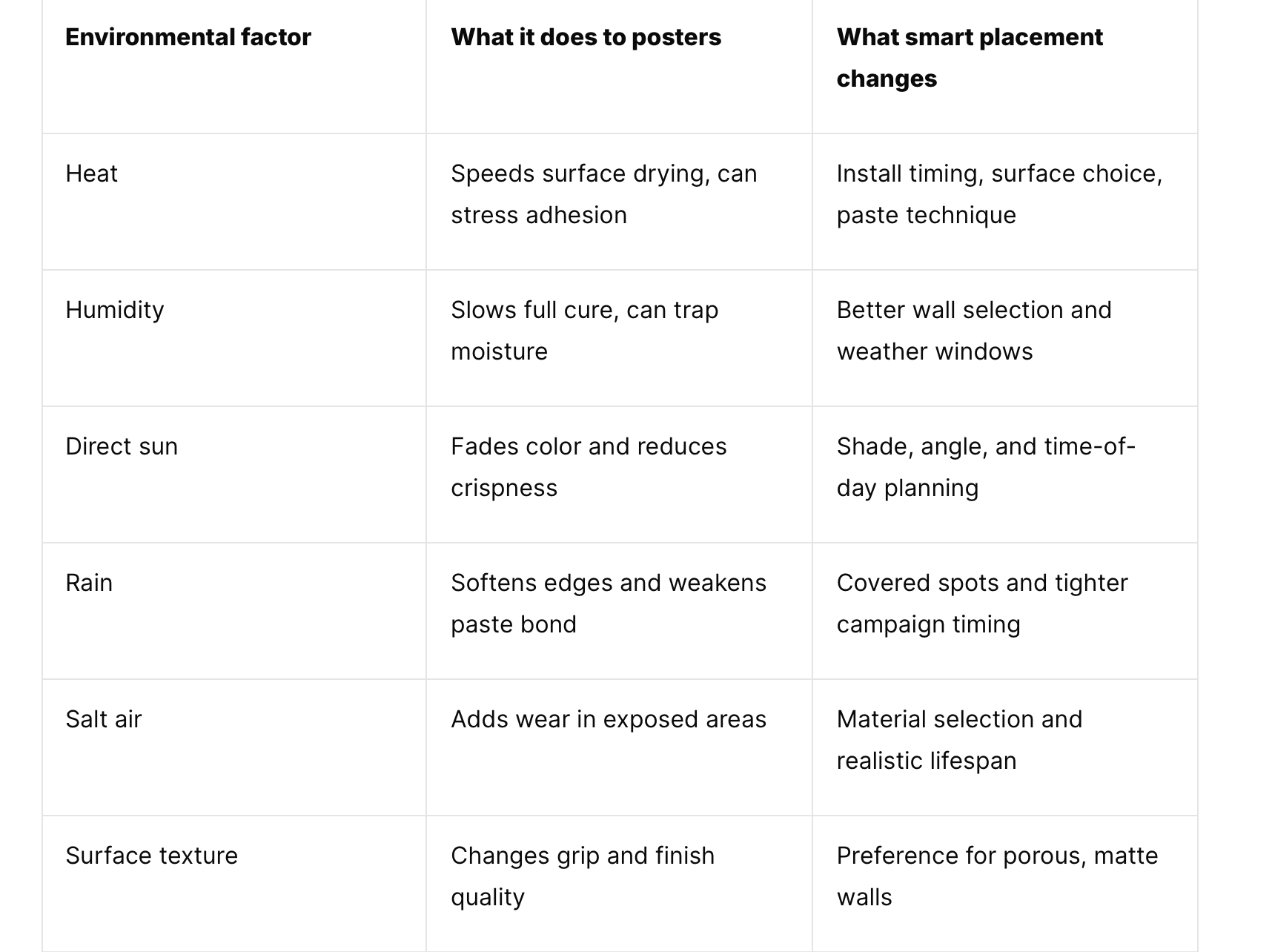
Climate change affect on wheat pasting by sidewalktattos
Wheat paste adhesion changes under heat and humidity
Wheat paste works best when paper, adhesive, wall texture, and drying conditions are working together. In Wynwood, heat can dry the outer layer of paste quickly while humidity keeps moisture trapped beneath the paper. That imbalance often shows up as soft edges, bubbling, minor lifting, or a finish that looks less crisp than it did at install.
This is why wall prep and timing matter so much. A poster that goes up on a porous matte surface during a stable weather window has a stronger chance of bonding cleanly than one applied to a slick or heat-loaded wall in poor conditions. Surface temperature is not always obvious from a distance either. A wall that looks usable at noon may already be holding a great deal of radiant heat.
Teams that install regularly in Miami account for the environment before the first sheet touches the wall.
Fast drying at the edges: Heat can set the outside of the poster before the full bond develops underneath.
Moisture trapped underneath: High relative humidity can slow curing and create soft spots.
Repeated movement: Daily warming and cooling can make paper expand and contract.
Surface contamination: Dust, chalk, residue, and salt exposure reduce reliable contact.
That principle is familiar in adjacent wall-care work too, where Elevation Power Washing notes in its graffiti removal guidance that residue and surface condition directly affect how cleanly a wall can be restored or prepared.
That does not mean wheat paste is a poor fit for Wynwood. It means Wynwood rewards disciplined execution. When materials, paste mix, wall texture, and timing are selected with care, the result can look striking and feel native to the district.
Sunlight and UV exposure affect poster color and visibility
A bold design can lose impact quickly under direct Miami light. Paper fades. Ink shifts. Contrast softens. Library of Congress guidance is clear that works on paper should face minimal light exposure, with no direct or intense light. Outdoor street media cannot avoid light entirely, but it can be placed with light behavior in mind.
In practical terms, that means a wall is not just a wall. The same poster can read very differently depending on whether it gets morning light, harsh afternoon sun, or partial shade from nearby buildings. In Wynwood, where visitors take photos all day, this changes more than durability. It changes how the campaign lives on phones, in stories, and in shared posts.
Open-air posters in Miami often last one to two weeks, while shaded or covered spots can remain intact longer. That is a realistic frame for street media in this market.
A washed-out poster does not only age faster. It also loses stopping power.
That is why placement strategy should consider how the artwork will look at the moments when foot traffic is strongest. If the goal is to get photographed, the best wall may be the one that preserves color depth and legibility across the longest stretch of the day, not just the one with the heaviest street count.
Rain, salt air, and wall texture affect poster lifespan in Miami
Miami weather is not a single challenge. It is a stack of them. Heat and humidity are constant pressures, then rain pushes directly against bond strength, and salt air adds another layer of wear in exposed conditions. Open-air posters in Miami often last one to two weeks, while shaded or covered spots can remain intact longer. That is a realistic frame for street media in this market.
Wall texture is just as important as weather. Porous surfaces, including textured brick and matte concrete, generally hold paste more reliably than glass, polished metal, or glossy painted finishes. The reason is simple. Paste needs something to grip. When the wall has tooth, the install has a better chance to settle in and stay readable.
This is where local execution separates a clean campaign from a messy one. Great creative on the wrong wall can fail fast. Good creative on the right wall can feel built for the neighborhood.
Some surfaces are consistently more dependable in Wynwood:
textured brick
matte concrete
lightly sealed masonry
covered recesses
shaded side walls
No street campaign lasts forever, and it should not need to. Wheat paste is temporary media. Its power comes from impact, timing, and cultural fit. In Wynwood, a well-placed poster can do real work during a short but visible life cycle.
Poster placement in Wynwood drives photos and social reach
Wynwood is built for visual competition. Murals, retail signage, parked cars, pedestrian traffic, and constantly shifting backgrounds create a dense field of attention. That makes placement more strategic than many brands expect. The question is not only whether people pass the wall. The question is whether the wall gives the poster room to read.
Posters perform best when the viewing angle, sightline, and surrounding visual noise are all considered together. A campaign near active walking routes can earn repeat exposure, but only if the artwork is legible at a glance. If viewers need too much time to decode the design, the street has already moved on.
There is also a difference between being seen and being photographed. A wall can have excellent foot traffic but poor image quality because of glare, shadow bands, clutter, or awkward proximity to competing visuals. In a district where earned social sharing matters, that distinction is huge.
Strong photo-friendly placements often share a few traits:
Clean backdrop: Limited visual conflict around the poster field
Readable distance: Clear view from sidewalk approach and across the street
Balanced light: Enough brightness for photos without constant glare
Natural pause points: Corners, crosswalks, queues, and café spillover areas
A mapped campaign becomes more valuable here. When walls are selected with walking patterns, light behavior, and surface quality in mind, the install starts to function as both media and setting. That is the sweet spot in Wynwood.
Planning a Miami wheat paste campaign with realistic expectations
The strongest campaigns in Wynwood are planned around what Miami actually is: hot, wet, bright, fast-moving, and visually demanding. That does not limit ambition. It sharpens it. Brands can go big here, but they should expect climate to shape both scheduling and lifespan.
Fast activation helps. A narrow install window can keep artwork fresher at launch and put the campaign in front of people before weather has time to wear it down. Documentation matters too. Geo-tagged photos taken right after install capture the campaign at peak condition, which is valuable for reporting, internal teams, press use, and social assets.
It also helps to think in phases rather than a single static poster life. The first phase is launch impact. The second is social capture and street photography. The third is residual visibility until weather and traffic take over. If the campaign is built with that rhythm in mind, performance becomes easier to judge.
A practical planning model often looks like this:
Creative design: Strong contrast, readable type, and compositions that hold up at distance
Wall selection: Porous surfaces, better shade patterns, and strong pedestrian sightlines
Install timing: Weather-aware scheduling and quick deployment
Documentation: Photo proof and geo mapping while the work is at its sharpest
For brands, event promoters, artists, fashion labels, and agencies, this is good news. Wynwood still delivers the kind of street-level visibility that polished digital placements cannot imitate. It feels physical, current, and culturally grounded. When the media is installed with respect for local conditions, the result can be immediate and memorable.
Sidewalk Tattoos builds campaigns for exactly that kind of environment, with wheat pasting, sidewalk stencil activations, mapped placement strategy, and documented installs across Miami and beyond. If your creative is ready for Wynwood, this is the moment to claim a wall and put it where the city will actually notice it.
Reach out for more information :
929.678.0235
