
sidewalk stencil advertising in Miami, Florida
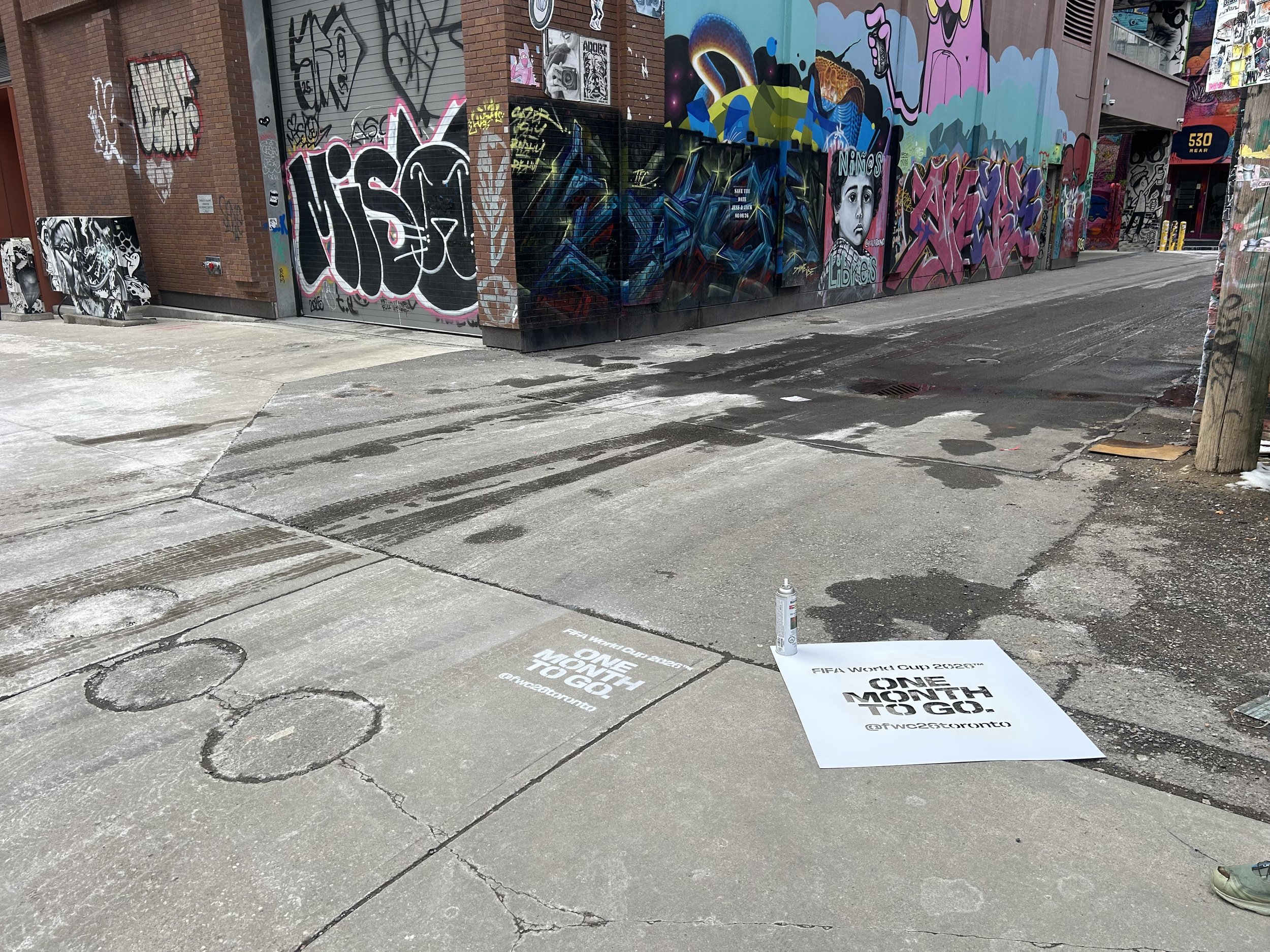
Miami is one of the best places in the country for street-level brand visibility. The city moves on foot in dense, high-energy pockets, from Brickell and Wynwood to South Beach, Little Havana, Downtown, and event corridors that fill quickly during festival weeks, holiday traffic, and major launches. When a message is placed where people are already looking, right in their path, it can create instant attention without feeling distant or generic.
Sidewalk stencil campaigns are built for that moment. They put branding, direction, and calls to action directly into the pedestrian experience, giving brands a way to show up in the physical world with personality. For campaign inquiries, planning support, or city-by-city rollout questions, reach out at info@sidewalktattoos.com.
Built for Miami foot traffic
Miami rewards media that feels immediate. A sidewalk stencil can direct people to a pop-up, support a retail opening, amplify an event, or keep a brand visible across a neighborhood where pedestrians are moving between cafes, stores, galleries, hotels, and nightlife venues.
The strongest campaigns keep the message short and visually clean. Large lettering, bold contrast, and simple iconography tend to perform best because people only have a second or two to take it in. In a city with bright sun, colorful architecture, and constant visual competition, clarity wins.
That is especially true in places where crowd movement already has momentum. Sidewalk messaging can guide traffic, create repetition across several blocks, and turn a walk into a branded path instead of a single ad impression.
After the right locations are selected, strong Miami stencil campaigns usually focus on:
High-traffic pedestrian corridors
Retail and hospitality clusters
Event-adjacent blocks
Tourist-heavy walking routes
Neighborhood-specific creative
Fast deployment windows
Creative that fits the city
Miami has a distinct visual rhythm. Campaigns that work here usually feel bold, modern, and native to the block. That does not mean overdesigned. It means smart use of contrast, disciplined copy, and a look that still reads clearly from several feet away.
Stencil creative often performs best when it uses a few words, one strong visual cue, and a direct next step. That next step might be a location, launch date, QR destination, social handle, or directional arrow. When the design gets too crowded, the message gets lost.
Color choice matters in Miami more than many markets. Pavement tone, sunlight, shadows, and neighborhood character all affect legibility. A campaign in Wynwood may call for a different palette than one near Brickell towers or a beachfront retail strip. If you want to talk through concepts, timelines, or rollout options, email info@sidewalktattoos.com.
Placement strategy by neighborhood
Not every Miami block behaves the same way. A strong stencil campaign starts with mapping, pedestrian logic, and local context. Tourist zones may benefit from simple English and Spanish messaging. Trend-driven districts may respond better to art-forward visuals. Business-heavy areas often perform well with direct, utility-driven copy.
A good placement plan looks at more than raw foot traffic. It also considers pace, dwell time, nearby businesses, event overlap, and how often someone is likely to encounter the message again within a few blocks.
In Miami, placement often centers on a few key goals:
Retail pull: Driving walk-ins from nearby sidewalks to a storefront, showroom, café, or activation
Event amplification: Building visibility before and during launches, art fairs, concerts, nightlife events, and brand moments
Wayfinding: Using arrows, footprints, or repeated marks to move pedestrians toward a destination
Neighborhood saturation: Repeating a brand presence across a targeted zone so the campaign feels bigger than a single placement
Cultural fit: Matching language, tone, and design to the block, not just the city as a whole
Compliance comes first
Miami is not a market where brands should treat public surfaces casually. Unauthorized advertising on public sidewalks can create legal and operational risk. City rules, right-of-way restrictions, and property permissions matter, and they matter early in planning.
That is why stencil advertising should be approached with a compliance-first mindset. Approved placements, private property permissions where applicable, material choices, and site suitability all need to be reviewed before execution. Safety matters too. Messaging should never interfere with curb ramps, crossings, sight lines, or pedestrian flow.
Sidewalk Tattoos approaches these campaigns with a practical focus on approved execution, smart material choices, and clear documentation. Brands that want a campaign built with planning discipline can start the conversation at info@sidewalktattoos.com.
Materials and execution standards
Stencil work is only as strong as the field setup. In a city known for heat, humidity, rain, and constant foot traffic, flimsy materials and rushed installs do not hold up well. Durable stencil templates and temporary media suited to outdoor conditions make a real difference in consistency and finish.
The best executions also take surface type seriously. Concrete texture, color, moisture, and wear all affect how a stencil reads once applied. A polished activation is not just about the art file. It is about matching the design to the ground it will live on.
Depending on campaign goals, street-level activations may involve:
Short-term temporary stencil media
Repeat placements across multiple blocks
Combined stencil and poster takeovers
Geo-tagged photo documentation
Fast rollouts, documented clearly
Speed matters when a launch window is narrow.
For brands promoting store openings, event weekends, fashion drops, tech launches, or festival programming, a stencil campaign often needs to move from planning to fieldwork quickly. Sidewalk Tattoos supports rapid activation timelines in Miami while keeping location planning and documentation organized. That includes mapped execution and proof-of-performance imagery that helps internal teams and agency partners verify coverage.
This is especially useful when Miami is part of a larger regional or national effort. A local activation may need to match a wider campaign across New York, Los Angeles, Chicago, Austin, Atlanta, or international markets. The value is not only in the creative itself, but in making the street-level work measurable and easy to report.
A strong fit for brands that need physical presence
Sidewalk stencil advertising works well for brands that benefit from immediacy. Fashion labels, consumer apps, restaurants, hospitality groups, artists, nightlife promoters, beverage brands, and event marketers often see the most value because they need to influence behavior close to the point of action.
It also fits agencies looking for something more tactile than standard out-of-home. Street-level media can support social content, influencer activity, sampling programs, poster campaigns, and local buzz at the same time. When planned well, it gives a campaign texture.
Common use cases include:
Store openings: Put directional messaging near the block where conversion can happen quickly
Pop-ups: Build urgency around a limited-time presence
Festival weeks: Reach crowds already moving through packed districts
Hospitality launches: Support bars, restaurants, hotels, and nightlife concepts
Brand moments: Add physical visibility to a broader campaign already running online
Miami campaigns with local logic
What works in Little Havana is not always what works in Wynwood. What works near the beach is different from what works in a business corridor. The best campaigns respect those differences instead of forcing one message into every neighborhood.
That means language choices, visual references, pacing, and placement density should all reflect the audience nearby. In a multilingual city, bilingual or culturally tuned creative can make the campaign feel sharper and more relevant. In tourist-heavy areas, direct and universal messaging may be the better move.
If your team is planning a Miami activation and wants street-level media that is mapped, documented, and built with real-world execution in mind, contact info@sidewalktattoos.com. For fast estimates, multi-neighborhood planning, or combined stencil and wheat paste campaigns, email info@sidewalktattoos.com.
Frequently Asked Questions
How long do sidewalk stencil campaigns usually last in Miami?
Humidity and foot traffic impact duration, but visibility remains strong in busy areas.
What kinds of brands benefit most from sidewalk stencils in Miami?
Tourism, nightlife, fashion, and events.
Can sidewalk stencils be paired with other street media?
Yes.
Do stencil campaigns work during major Miami events?
Yes.
What should the stencil design include?
Bold and simple.
Is documentation available after installation?
Yes.
Do you handle production and installation?
Yes.
Miami’s energy makes it ideal for high-visibility campaigns.
SIdewalk stencil ADVERTISING in the following cities :
sidewalk stencil advertising in Atlanta, Georgia
sidewalk stencil advertising in Austin, Texas
sidewalk stencil advertising in Boston, Massachusetts
sidewalk stencil advertising in Charlotte, North Carolina
sidewalk stencil advertising in Chicago, Illinois
sidewalk stencil advertising in Los Angeles, California
sidewalk stencil advertising in Miami, Florida
sidewalk stencil advertising in Milwaukee, Wisconsin
sidewalk stencil advertising in New Orleans, Louisiana
sidewalk stencil advertising in Philadelphia, Pennsylvania
sidewalk stencil advertising in Phoenix, Arizona
sidewalk stencil advertising in Portland, Oregon
sidewalk stencil advertising in San Francisco, California
sidewalk stencil advertising in Seattle, Washington
sidewalk stencil advertising in Washington, District of Columbia
sidewalk stencil advertising in Houston, Texas
sidewalk stencil advertising in Montreal, Canada