
sidewalk stencil advertising in San Francisco, California
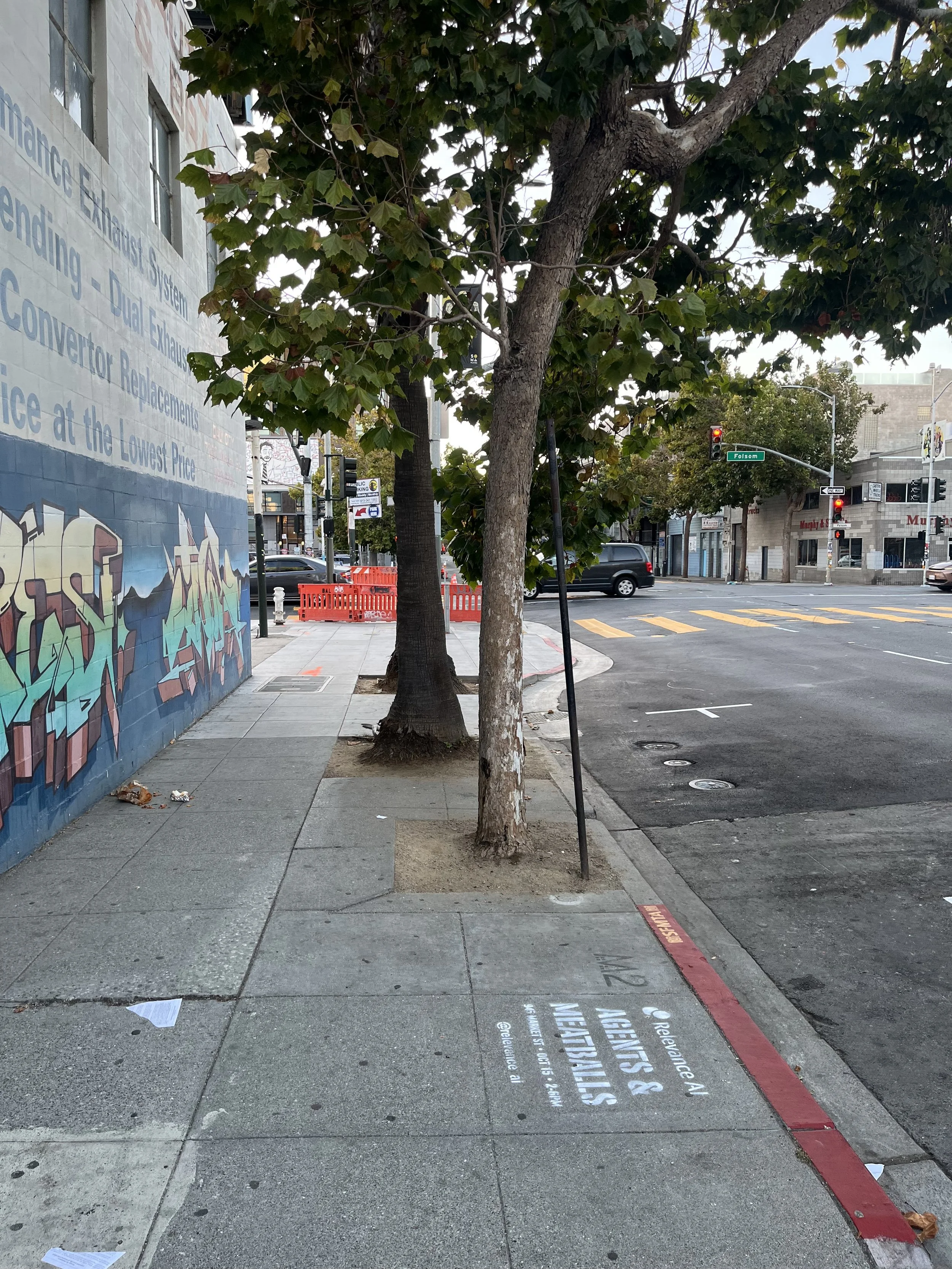
San Francisco rewards street media that feels immediate, visual, and placed with intent. Sidewalk stencils fit that environment well because they meet people where attention is already active: outside transit stops, along retail corridors, near event venues, and in neighborhoods where foot traffic never really goes quiet.
For brands that want visibility at ground level, stencil campaigns can turn ordinary pavement into a directional, memorable touchpoint. They can support product drops, store openings, nightlife promotions, tech launches, art events, and short campaign bursts tied to a specific week or weekend. To scope a campaign, request a city plan, or review creative options, contact info@sidewalktattoos.com.
Why this format works in San Francisco
San Francisco is a walking city with strong neighborhood identity. A campaign that feels right in the Mission may need a very different visual language in SoMa, Hayes Valley, Union Square, the Castro, or near the Embarcadero. That is part of what makes stencil advertising effective here. The city rewards localized creative rather than one-size-fits-all messaging.
The strongest stencil campaigns are usually brief in copy and bold in form. Pedestrians rarely stop for a paragraph. They react to a clean mark, a direct phrase, a logo they can recognize in a second, or an arrow that points them toward a nearby destination. In busy corridors, clarity wins.
San Francisco audiences also tend to respond to design that feels current and shareable. If the artwork is clean enough to photograph and simple enough to read in motion, it has a much better chance of moving from sidewalk impression to social mention.
What high-performing stencil creative looks like
The most effective layouts are built for the glance. High contrast, minimal text, and clear spacing matter more than decorative complexity. Concrete is a rough surface, and crowded streets create visual competition, so artwork has to hold up at a distance and at walking speed.
That usually means a short phrase, a logo, a symbol, or a directional device. Large sans serif lettering reads well. Strong edges matter. Too much copy gets lost fast, especially at intersections and transit exits.
Common creative elements include:
Bold logos
Short taglines
Directional arrows
Foot traffic cues
Event dates
QR-friendly layouts
Bilingual messaging where relevant
A well-planned stencil is not trying to say everything. It is trying to spark recognition and push the next action.
Neighborhood strategy matters
Placement in San Francisco is never generic. A launch tied to nightlife or art culture may fit naturally near the Mission or parts of the Lower Haight. A tech-oriented campaign may read better around SoMa, downtown commuter paths, and the areas around conference traffic. Retail and tourism messaging often performs best near Union Square, the Ferry Building, waterfront zones, and heavily photographed corridors.
Timing matters just as much as geography. Morning commuter traffic behaves differently from lunch-hour footfall, evening bar traffic, or weekend event crowds. Street-level media performs best when the route, the message, and the audience are matched rather than treated as separate decisions.
That is where mapping becomes valuable. A campaign should not just name neighborhoods. It should identify the exact blocks, corners, directional paths, and pedestrian pause points that make the message more likely to land.
Materials, rollout, and field execution
Temporary materials are a major part of the strategy. In a city with strict standards around public space, removable and non-toxic options matter. Washable chalk-based applications and other temporary approaches are often preferred when the goal is a short campaign window and minimal lasting impact.
Execution quality matters as much as the concept. A stencil that looks clean in a mockup can fail on actual pavement if the cut file, pigment choice, or surface texture is not considered in advance. Field crews need practical routes, production-ready artwork, and a plan for documentation once installs are live. For rollout details or multi-neighborhood planning, reach out at info@sidewalktattoos.com.
Key campaign factors often include:
Material choice: temporary, removable, non-toxic applications
Creative format: bold graphics designed for rough pavement surfaces
Deployment style: single-day bursts or staggered neighborhood waves
Documentation: geo-tagged photos and mapped reporting
Scale: one district, multiple neighborhoods, or a broader city push
Compliance in San Francisco
San Francisco is not a city where public sidewalk advertising should be treated casually. Rules are strict, and unauthorized markings on public property can trigger removal, fines, and cleanup claims. That matters for brands, agencies, promoters, and anyone attaching a public-facing campaign to a company name.
A serious campaign plan should account for this from the start. Public sidewalks are not a blank canvas, and there is no simple universal permit path for promotional stenciling on public pavement. Any rollout should be reviewed with care, with attention to whether the concept belongs on private property, within event-related parameters, or should be adjusted into another street-level format.
That honest review is part of good planning. If a public sidewalk concept is likely to create risk, it is better to know early and redirect budget into an approved or lower-risk alternative. Brands that want a thoughtful read on feasibility can send campaign details to info@sidewalktattoos.com.
Fast-turn campaigns
When creative, locations, and materials are approved, many street activations can move quickly, often within 48 to 72 hours.
Building a campaign around measurable outcomes
Sidewalk stencils are often used because they create instant visual presence, but they should still be tied to clear goals. A retail opening may want directional foot traffic. A product drop may want photos and local buzz. A festival promoter may want recognition around a venue approach. A startup may want repeated impressions in a compact geography where its audience already walks every day.
That means measurement should be built in. Unique URLs, QR codes, promo codes, campaign hashtags, and before-and-after foot traffic patterns all help turn a street concept into something more accountable. Photo documentation also matters because it shows not just that installs happened, but how the creative looked in real urban conditions.
Useful planning checkpoints include:
Neighborhood selection
Pedestrian flow review
Surface and material assessment
Creative adaptation for concrete
Route mapping
Photo verification
Post-campaign reporting
Pairing stencils with other street media
Stencil campaigns often work best as part of a broader street presence rather than a stand-alone tactic. In the right campaign, they can be paired with wheat pasting, poster installations, or other temporary street-level media to create repetition across a neighborhood. One format catches the eye at foot level. Another carries the message higher and farther down the block.
This can be especially effective for entertainment, fashion, nightlife, and launch campaigns that need a city to feel activated rather than just advertised to. The visual system stays consistent, while each format does a different job. To discuss integrated stencil and poster execution in San Francisco or beyond, email info@sidewalktattoos.com.
Planning support for launches, events, and brand takeovers
A good street campaign starts with a real city plan, not just artwork. That plan should cover where the audience walks, what they can absorb in a second, which neighborhoods fit the message, how quickly the rollout needs to happen, and what documentation is required once the campaign is live.
Brands, agencies, artists, and promoters can use stencil advertising as a sharp, memorable part of a launch when the work is mapped carefully and executed with respect for the city around it. Send launch dates, neighborhoods, creative assets, or rough ideas to info@sidewalktattoos.com.
Frequently Asked Questions
How long do sidewalk stencil campaigns usually last in San Francisco?
Visibility typically lasts several days depending on foot traffic and weather conditions.
What kinds of brands benefit most from sidewalk stencils in San Francisco?
Tech, startups, events, and lifestyle brands.
Can sidewalk stencils be paired with other street media?
Yes.
Do stencil campaigns work during major San Francisco events?
Yes.
What should the stencil design include?
Clean, bold visuals.
Is documentation available after installation?
Yes.
Do you handle production and installation?
Yes.
San Francisco’s dense foot traffic makes it ideal for repetition-based campaigns.
SIdewalk stencil ADVERTISING in the following cities :
sidewalk stencil advertising in Atlanta, Georgia
sidewalk stencil advertising in Austin, Texas
sidewalk stencil advertising in Boston, Massachusetts
sidewalk stencil advertising in Charlotte, North Carolina
sidewalk stencil advertising in Chicago, Illinois
sidewalk stencil advertising in Los Angeles, California
sidewalk stencil advertising in Miami, Florida
sidewalk stencil advertising in Milwaukee, Wisconsin
sidewalk stencil advertising in New Orleans, Louisiana
sidewalk stencil advertising in Philadelphia, Pennsylvania
sidewalk stencil advertising in Phoenix, Arizona
sidewalk stencil advertising in Portland, Oregon
sidewalk stencil advertising in San Francisco, California
sidewalk stencil advertising in Seattle, Washington
sidewalk stencil advertising in Washington, District of Columbia
sidewalk stencil advertising in Houston, Texas
sidewalk stencil advertising in Montreal, Canada