
Sidewalk Stencil Advertising in Austin, Texas
Austin rewards brands that show up in the street, not just on screens. A message placed at eye level on a phone may get scrolled past in a second. A message placed underfoot in the middle of a busy pedestrian route can stop someone mid-step.
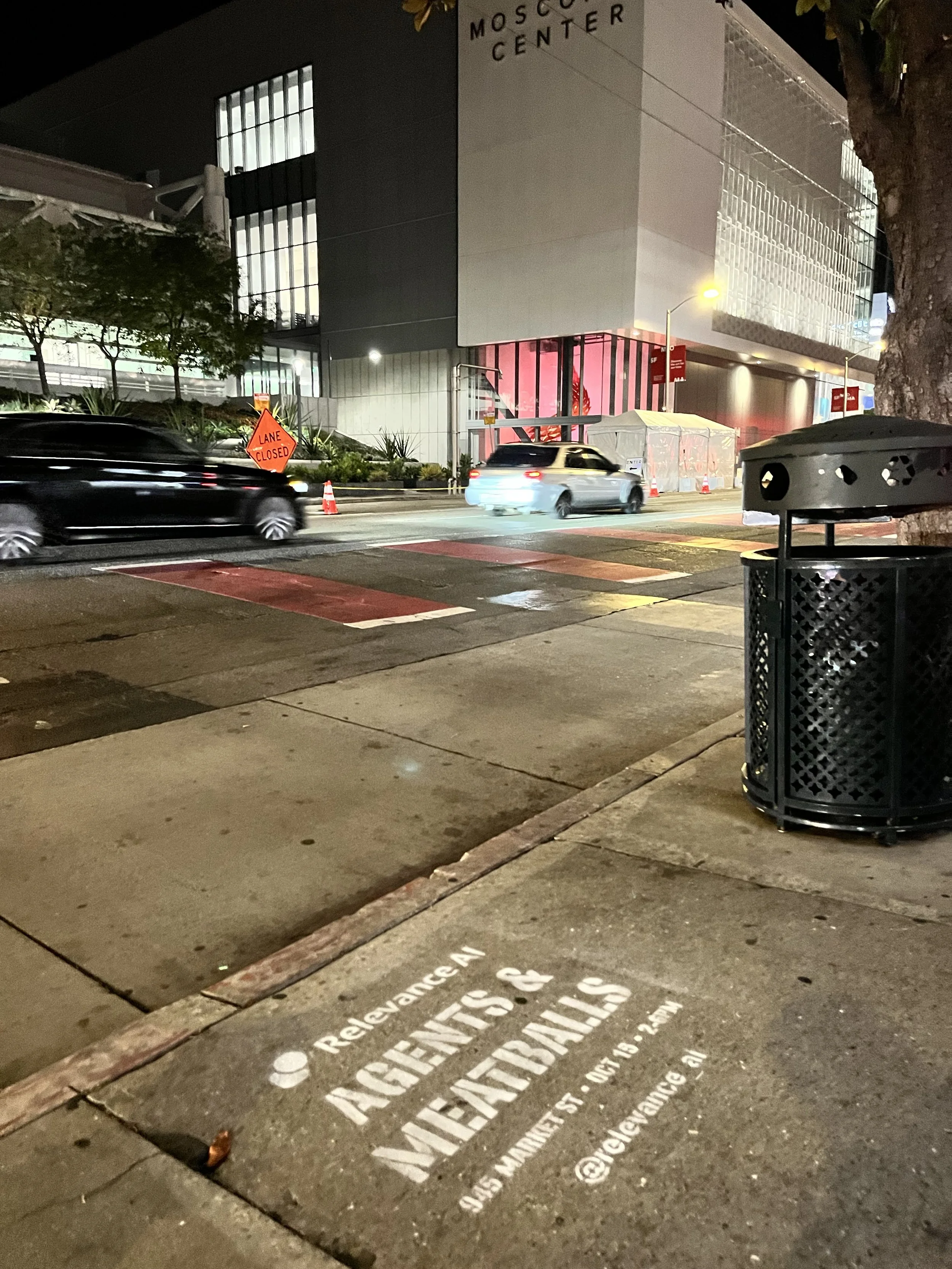
That is why sidewalk stencil advertising has become such a smart fit for Austin, Texas. It is direct, visual, temporary, and built for neighborhoods where music, retail, nightlife, food, and culture overlap. When the design is sharp and the route is planned well, stencil campaigns can turn everyday foot traffic into repeated brand exposure.
Why sidewalk stencils work so well in Austin
Austin is a city of movement. People walk between coffee shops and coworking spaces, from parking lots to venues, from campus to food spots, and from one bar to the next. That movement creates a rare kind of media value. Instead of asking people to look up, sideways, or online, sidewalk stencil campaigns meet them exactly where they are already going.
Street-level advertising also fits the tone of Austin. The city responds to work that feels current, local, and visually confident. Sidewalk stencil activations can support product launches, pop-ups, concerts, retail openings, restaurant promotions, app campaigns, and brand awareness pushes without relying on conventional formats alone.
A strong stencil path can perform well in places like:
Transit-adjacent walkways
Retail corridors
Nightlife blocks
Campus routes
Event approach streets
High-tourism pedestrian zones
Repeated exposure matters here. A single stencil can catch attention. A mapped series of placements can build memory, guide people toward a destination, and make a campaign feel larger than its budget.
The value is not just visibility
The best sidewalk stencil advertising creates a pattern. Someone sees the mark once near a crosswalk, again outside a café, then again near a venue entrance. By the third or fourth sighting, the brand starts to feel familiar. That repetition is one of the format’s biggest strengths.
Cost efficiency is another reason Austin brands keep turning to this medium. Sidewalk stencils can generate heavy local visibility without the long media commitments tied to many traditional placements. For startups, event promoters, fashion brands, and fast-moving campaigns, that flexibility matters.
Social behavior adds another layer. Austin audiences are used to documenting what they see. If the artwork is bold and the placement is smart, stencil campaigns can move from sidewalk to camera roll very quickly. That gives the activation a second life across Instagram Stories, TikTok clips, event recaps, and user-generated posts.
What makes a stencil campaign effective
Good stencil work is simple on purpose. People do not study pavement messaging the way they study a website or brochure. The design has to land fast. That usually means short copy, strong contrast, clear shapes, and a message that reads in seconds.
Placement is just as important as the artwork. A brilliant stencil in a weak corridor will underperform. A clean, readable design repeated along a natural walking route can do far more.
The strongest campaigns usually share a few traits:
Design: Short copy, bold typography, and an image or symbol that reads instantly
Contrast: Colors that stand out clearly against the pavement surface
Spacing: Repetition along real walking routes, not random blocks
Timing: Installation planned around events, weekend traffic, or launch windows
Call to action: A short URL, social handle, or directional cue that feels easy to follow
In Austin, this often means tailoring the look to the neighborhood. A campaign near South Congress may call for a more stylized visual approach. A campaign around the University of Texas area may need sharper messaging and faster readability. Near nightlife zones, brighter contrast and larger forms tend to hold up better in low light and fast-moving crowds.
High-value areas for sidewalk stencil advertising in Austin, Texas
Not every block carries the same weight. Austin has several zones where foot traffic, cultural relevance, and brand fit make stencil advertising especially compelling. The right route depends on who you want to reach and what action you want them to take.
South Congress is excellent for lifestyle brands, fashion labels, food concepts, and campaigns that benefit from tourist visibility. Downtown and the 2nd Street area support events, tech, retail, and premium consumer campaigns. East Austin brings creative audiences, destination dining, and a strong local feel. Rainey Street and surrounding nightlife corridors work well for entertainment, beverage, and late-hour promotions. The University of Texas area remains a prime match for student-facing campaigns.
A mapped route matters more than a single hot corner. One block can perform well. Five connected placements can create a street presence that feels difficult to miss.
Designing for Austin’s personality
Austin responds to campaigns that feel native to the city rather than imported into it. That does not mean every stencil needs guitars, bats, tacos, or skyline shapes. It means the campaign should reflect the pace and character of the neighborhood where it appears.
Local relevance can come through tone, color, timing, or references that fit the audience. A music-adjacent brand might activate near live venue corridors with a rhythm-forward graphic system. A tech launch tied to a conference window may focus on concise copy and directional messaging. A restaurant or pop-up retail concept may use stencils as a breadcrumb path leading people toward the door.
It also helps to think seasonally. Austin’s event calendar creates major bursts of attention. SXSW, Austin City Limits, university events, launch parties, gallery nights, and weekend nightlife all create moments when the streets are unusually active and audiences are ready to notice something unexpected.
The materials matter too. Temporary, eco-conscious execution is part of doing this responsibly. Brands want attention, not residue. That is why removable, short-term methods are often the right choice for campaigns designed for short windows and clean fade-out periods.
A practical campaign structure
At Sidewalk Tattoos, sidewalk stencil campaigns are usually planned around pedestrian logic first. That means identifying where people queue, cross, pause, turn, and circulate. The goal is not just to place artwork. The goal is to place it where repetition feels natural.
From there, the campaign can expand into a larger street presence. Some brands want stencil-only activations. Others pair stencils with wheat pasting posters or custom poster installations, or a wider neighborhood takeover. Austin is a strong city for those hybrid formats because the audience moves through districts on foot and notices repeated creative across multiple surfaces.
Clients often want more than installation alone. A modern street campaign should be organized, documented, and measurable.
That is why many brands look for:
Mapped placements: Routes selected for visibility, pedestrian flow, and neighborhood fit
Photo documentation: Clear proof of execution across every zone
Geo-tagged reporting: Useful for internal teams, agency recaps, and campaign records
Fast rollout: Ideal for event timelines, launch windows, and short-notice promotions
Speed matters in Austin. A campaign tied to a festival, opening weekend, or pop-up date cannot wait through a long production cycle. Quick activation timelines make street media far more usable for modern brands.
Compliance, permissions, and campaign planning
Street-level advertising works best when it is handled with care. Rules around sidewalks, right-of-way use, private property, and temporary markings can vary by location, property type, and campaign format. That makes planning essential.
A professional approach includes site review, material selection, and permissions or approvals where required. It also includes knowing when a location is not the right fit. That protects the campaign, the property, and the brand.
Austin is a city with strong civic identity and active public spaces. Brands do well here when their campaigns feel intentional, respectful, and well executed.
Who uses sidewalk stencil advertising in Austin
This format appeals to a wide range of marketers because it can support both awareness and action. A direct-to-consumer launch may use stencils to create buzz in a high-traffic neighborhood. An event promoter may use them to guide people toward a venue corridor. A restaurant group may use them to increase walk-ins during a focused opening push. A fashion label may use them to seed a district before a drop.
It is especially effective for brands that want street credibility without losing operational discipline. That combination matters. Great campaigns still need strong design files, route mapping, execution standards, and reporting.
Austin is also a good city for campaigns that start local and later scale. Once a stencil strategy works in one neighborhood, the same concept can often be adapted for other markets while keeping the local tone intact.
Frequently asked questions
How long do sidewalk stencil campaigns usually last in Austin?
That depends on the surface, weather, foot traffic, and material choice. In dry conditions, visibility can hold well for days or even a few weeks. Busy pedestrian wear and rain can shorten that window, which is why some campaigns include refresh planning.
What kinds of brands benefit most from sidewalk stencils?
Consumer brands, restaurants, events, nightlife concepts, fashion labels, artists, startups, and entertainment campaigns often perform very well with this format. Any brand that wants visibility in walkable districts can benefit from it.
Can sidewalk stencils be paired with other street media?
Yes. One of the strongest options is combining sidewalk stencil advertising with wheat pasting posters or custom poster installations. That creates repetition across both pavement and vertical surfaces, which can make a campaign feel much larger on the street.
Do stencil campaigns work during major Austin events?
They can be especially strong during high-traffic windows. Festivals, conferences, game days, nightlife weekends, and cultural events bring concentrated pedestrian movement, which increases the value of well-mapped placements.
What should the design include?
Less is usually better. A logo, a short phrase, a directional element, a social handle, or a short URL is often enough. The design should be legible fast and still feel visually distinct.
Is documentation available after installation?
Many brands want visual proof and route tracking after execution. Photo documentation and geo-tagged reporting are useful for campaign review, internal reporting, and agency coordination.
Austin remains one of the most exciting cities in the country for brands that want to meet audiences in motion. When the route is sharp, the design is clean, and the execution is thoughtful, sidewalk stencil advertising can turn an ordinary block into a memorable brand moment.
Austin area | Best for | Street-level advantage |
|---|---|---|
South Congress | Fashion, retail, food, hospitality | Heavy pedestrian traffic and strong photo-sharing behavior |
Downtown Austin | Tech, events, launches, consumer brands | Dense daytime and evening foot traffic |
2nd Street District | Premium retail, activations, events | Polished environment with steady movement |
East Austin | Creative brands, music, dining, art-driven campaigns | Strong local culture and destination foot traffic |
Rainey Street | Beverage, nightlife, events, entertainment | Concentrated evening crowds |
University of Texas and Guadalupe | Student campaigns, apps, events, affordable offers | Consistent circulation and repeat exposure |
Frequently Asked Questions
How long do sidewalk stencil campaigns usually last in Austin?
In Austin’s typically dry climate, stencil visibility can last several days to over a week. However, rain, foot traffic, and surface type all play a role, especially in busy areas like Downtown or South Congress.
What kinds of brands benefit most from sidewalk stencils in Austin?
Austin is ideal for startups, tech, music, lifestyle, and event brands. Campaigns tied to SXSW, festivals, and nightlife tend to perform especially well.
Can sidewalk stencils be paired with other street media?
Yes. Pairing stencils with posters or decals creates a more immersive street presence and increases brand recall.
Do stencil campaigns work during major Austin events?
Yes. Events like SXSW and large festivals create dense pedestrian movement, making stencil campaigns highly effective.
What should the stencil design include?
Simple, bold elements like logos, short messaging, or directional arrows.
Is documentation available after installation?
Yes, including geo-tagged photos and reporting.
Do you handle production and installation?
Yes. We create and install stencils in all sizes.
Austin’s walkability and event-driven culture make it one of the strongest cities for stencil campaigns.
SIdewalk stencil ADVERTISING in the following cities :
sidewalk stencil advertising in Atlanta, Georgia
sidewalk stencil advertising in Austin, Texas
sidewalk stencil advertising in Boston, Massachusetts
sidewalk stencil advertising in Charlotte, North Carolina
sidewalk stencil advertising in Chicago, Illinois
sidewalk stencil advertising in Los Angeles, California
sidewalk stencil advertising in Miami, Florida
sidewalk stencil advertising in Milwaukee, Wisconsin
sidewalk stencil advertising in New Orleans, Louisiana
sidewalk stencil advertising in Philadelphia, Pennsylvania
sidewalk stencil advertising in Phoenix, Arizona
sidewalk stencil advertising in Portland, Oregon
sidewalk stencil advertising in San Francisco, California
sidewalk stencil advertising in Seattle, Washington
sidewalk stencil advertising in Washington, District of Columbia
sidewalk stencil advertising in Houston, Texas
sidewalk stencil advertising in Montreal, Canada