
sidewalk stencil advertising in Portland, Oregon
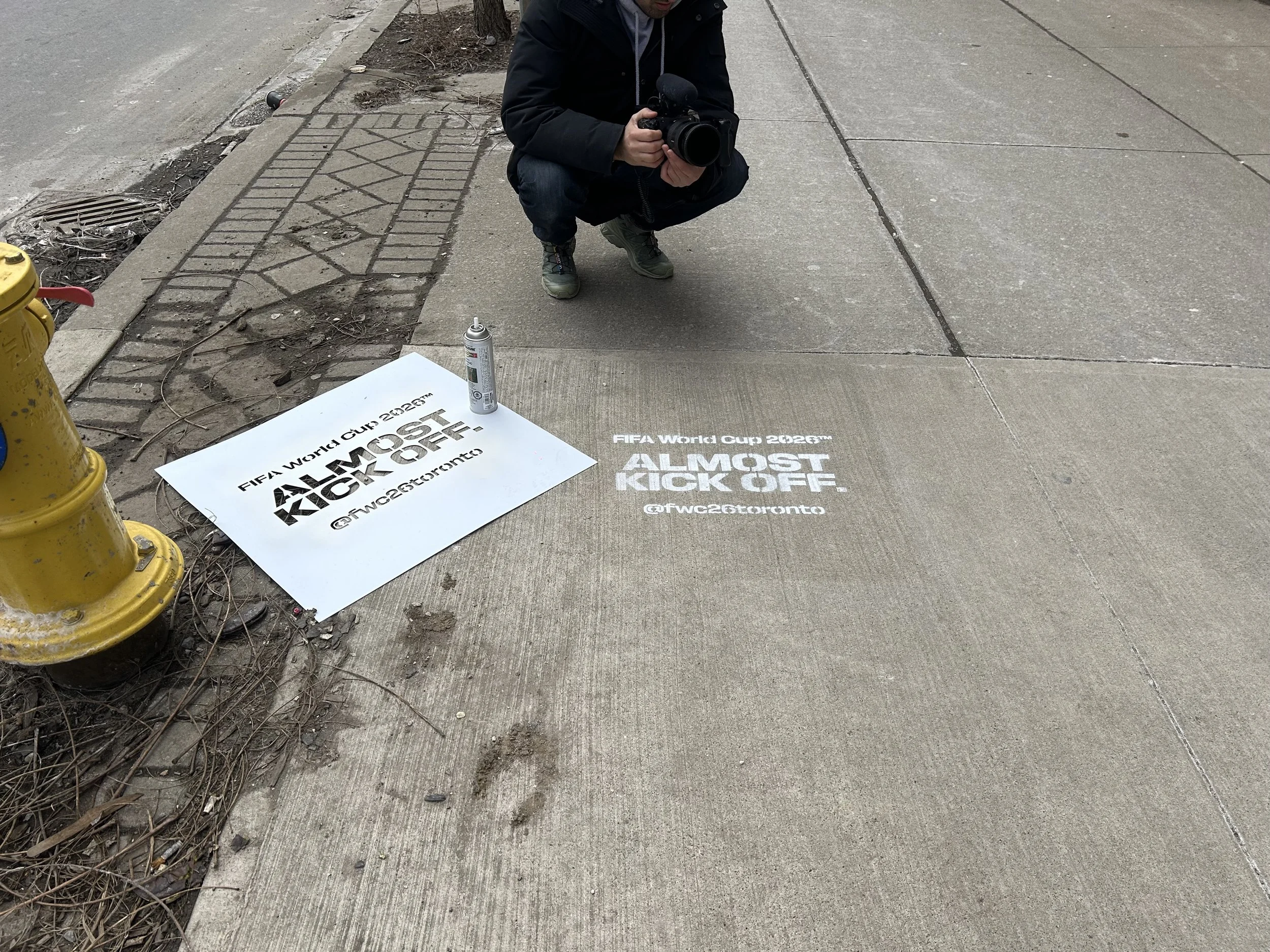
Portland rewards marketing that feels native to the street. People walk, bike, linger, browse, queue for coffee, drift between retail corridors, and move through neighborhoods with a strong visual identity. That makes stencil-based street media a smart fit for brands that want to be seen at ground level, close to the moment of action.
For launches, events, product drops, pop-ups, and neighborhood-focused campaigns, sidewalk stencil work can create repeated impressions in the places where attention is already present. To plan a Portland campaign, reach out at info@sidewalktattoos.com.
Street-level visibility that fits Portland
Portland is not a city where every message lands the same way. Generic media often fades into the background, while smart street placements can feel immediate, timely, and part of the block itself. A well-designed stencil activation meets people on foot, in motion, and in context.
That matters in a city with strong neighborhood identities. Downtown, the Pearl District, Hawthorne, Division, Alberta, Mississippi, and East Burnside each attract slightly different audiences, moods, and rhythms. A campaign aimed at creative consumers should not look or read the same as one built for nightlife traffic, a college-adjacent audience, or a retail-heavy weekend corridor.
Sidewalk stencil advertising also works because it invites repetition. A single impression can catch the eye. A mapped cluster across a walkable route can build memory, prompt social sharing, and push people toward a store, venue, or event.
Where campaigns gain momentum
Placement strategy is where street media stops being decorative and starts performing. Portland offers strong pedestrian corridors, but the best route depends on the audience, the offer, and the timing.
Campaigns are often planned around areas with reliable foot traffic, cultural activity, and reasons to stop rather than simply pass through. In Portland, that usually means a mix of retail corridors, nightlife streets, event zones, and destination-heavy blocks.
Some of the strongest neighborhood targets include:
Downtown core
Pearl District
NW 23rd Avenue
Hawthorne
Division
Mississippi Avenue
Alberta Arts District
East Burnside
Timing matters just as much as geography. Fridays, Saturdays, launch weekends, festival periods, and evening traffic windows tend to create stronger visibility than low-activity weekday gaps. A smart rollout is less about covering everything and more about matching placement to behavior.
If you already have target blocks in mind, send them to info@sidewalktattoos.com and the campaign can be scoped around visibility, pacing, and density.
What strong stencil campaigns usually have in common
The best Portland activations are concise, visually confident, and easy to read at a glance. People do not stop for long copy on the sidewalk. They react to shape, contrast, and a message that can be processed in seconds.
Design also has to respond to Portland’s physical environment. Gray pavement, variable lighting, textured surfaces, and wet conditions all affect legibility. A concept that looks excellent on a laptop screen can fail completely on concrete if the lines are too thin or the message is too crowded.
Campaigns tend to work best when they prioritize a few essentials:
Bold contrast: colors that stand apart from concrete and remain visible in mixed light
Short copy: a headline, a directional cue, or a simple call to action
Large shapes: icons, arrows, logos, or forms that survive distance and texture
Route thinking: multiple placements that build frequency across a walkable path
Documented execution: photo proof and mapped reporting for every installed hit
This is one of the reasons stencil campaigns pair so well with poster work. Posters can carry richer visual storytelling, while stencils act as quick-impact touchpoints closer to the pedestrian flow.
Designing for Portland’s aesthetic
Portland audiences often respond better to creative that feels art-led rather than overtly corporate. That does not mean the brand disappears. It means the brand is expressed with restraint, confidence, and a sense of place.
Simple, blocky typography tends to outperform delicate styles. Thick lines hold up better on rough pavement. Minimal copy reads better in motion. High-contrast palettes are especially important during overcast days, under streetlights, and on older sidewalk surfaces.
There is also a local cultural factor. Portland tends to reward visual work with character. Campaigns that reference the city’s creative energy, neighborhood texture, music, food, bike culture, or independent retail scene often feel more at home than polished national creative dropped in without adaptation.
That local calibration can be subtle. It might be a color choice, an illustration style, a phrase, or the way the logo is treated. The difference is often small on paper and significant on the street.
Compliance, permissions, and smart execution
Portland requires a careful, informed approach. Commercial advertising in the public right-of-way can raise compliance issues, and public sidewalks are not a free-for-all. Any serious campaign should be planned with site review, permissions strategy, and material choice in mind.
That is why execution should be disciplined from the start. The right path may involve private property opportunities, approved surfaces, event-based contexts, or integrated alternatives that combine stencil concepts with other street formats. Fast work is useful. Responsible planning is what protects the campaign.
Before moving into production, it helps to define the basics clearly:
Objective: store visits, event attendance, product awareness, app downloads, or local buzz
Geography: one neighborhood, several corridors, or a citywide cluster
Timeline: launch date, active window, and any event tie-ins
Creative assets: logo files, campaign copy, visual references, and QR destination
Scale: approximate number of placements and expected reporting needs
For brands that want a scoped recommendation before committing creative, info@sidewalktattoos.com is the fastest place to start the conversation.
Weather, materials, and campaign timing
Portland weather is part of the media plan. Dry months usually support longer visibility windows, while rain can compress performance and change material choices. That does not make the channel unreliable. It means planning has to be realistic.
Surface conditions matter too. Smooth downtown concrete behaves differently from older, more textured sidewalks in historic or mixed-use districts. A campaign that accounts for slip resistance, drying time, contrast, and durability will always outperform one designed in abstraction.
In many cases, speed is a real advantage. Rapid launch timelines allow brands to connect street media to a release date, pop-up, opening weekend, concert, or neighborhood event. When timing and location line up, even a compact stencil campaign can create a strong local presence.
For urgent launches in Portland, info@sidewalktattoos.com can be used to request timing, neighborhood recommendations, and format guidance.
Who this works well for
This channel is especially strong for brands that need local attention, repeated exposure, and cultural relevance. Consumer-facing campaigns tend to benefit the most because the audience is already moving through the environment where the message appears.
Common fits include retail brands, fashion labels, beverage launches, nightlife promotions, art events, festivals, tech products with a city activation angle, restaurant openings, and experiential campaigns that need to move people from awareness to action quickly.
It can also work well for agencies running multi-format takeovers. Stencils do not need to carry the full story alone. They can direct, reinforce, and extend a broader street campaign anchored by wheatpasting, posters, or custom installations.
Planning a Portland rollout with Sidewalk Tattoos
A well-run campaign starts with the route, then the concept, then the production logic. Sidewalk Tattoos builds stencil activations around strategic mapping, real-world placement thinking, and documented delivery. That includes neighborhood planning, creative adaptation for street conditions, and photo or geo-tagged reporting that gives clients a clear record of what went live.
Whether the goal is a single-neighborhood push or a broader Portland presence, the most useful first step is a concise brief. Share the audience, timing, target zones, and the outcome you want from the campaign. From there, the scope can be shaped around visibility, compliance considerations, and the right mix of street formats.
Send campaign details to info@sidewalktattoos.com for a custom Portland plan, or use info@sidewalktattoos.com to request guidance on timing, neighborhood selection, and integrated stencil plus poster activations.
Frequently Asked Questions
How long do sidewalk stencil campaigns usually last in Portland?
Rain can impact longevity, but visibility still holds for several days depending on placement.
What kinds of brands benefit most from sidewalk stencils in Portland?
Lifestyle, creative, and local brands perform well.
Can sidewalk stencils be paired with other street media?
Yes.
Do stencil campaigns work during major Portland events?
Yes.
What should the stencil design include?
Minimal and bold messaging.
Is documentation available after installation?
Yes.
Do you handle production and installation?
Yes.
Portland’s walkability and creative culture make stencil campaigns effective.
SIdewalk stencil ADVERTISING in the following cities :
sidewalk stencil advertising in Atlanta, Georgia
sidewalk stencil advertising in Austin, Texas
sidewalk stencil advertising in Boston, Massachusetts
sidewalk stencil advertising in Charlotte, North Carolina
sidewalk stencil advertising in Chicago, Illinois
sidewalk stencil advertising in Los Angeles, California
sidewalk stencil advertising in Miami, Florida
sidewalk stencil advertising in Milwaukee, Wisconsin
sidewalk stencil advertising in New Orleans, Louisiana
sidewalk stencil advertising in Philadelphia, Pennsylvania
sidewalk stencil advertising in Phoenix, Arizona
sidewalk stencil advertising in Portland, Oregon
sidewalk stencil advertising in San Francisco, California
sidewalk stencil advertising in Seattle, Washington
sidewalk stencil advertising in Washington, District of Columbia
sidewalk stencil advertising in Houston, Texas
sidewalk stencil advertising in Montreal, Canada