
Snipes: The Small Posters That Take Over City Poles
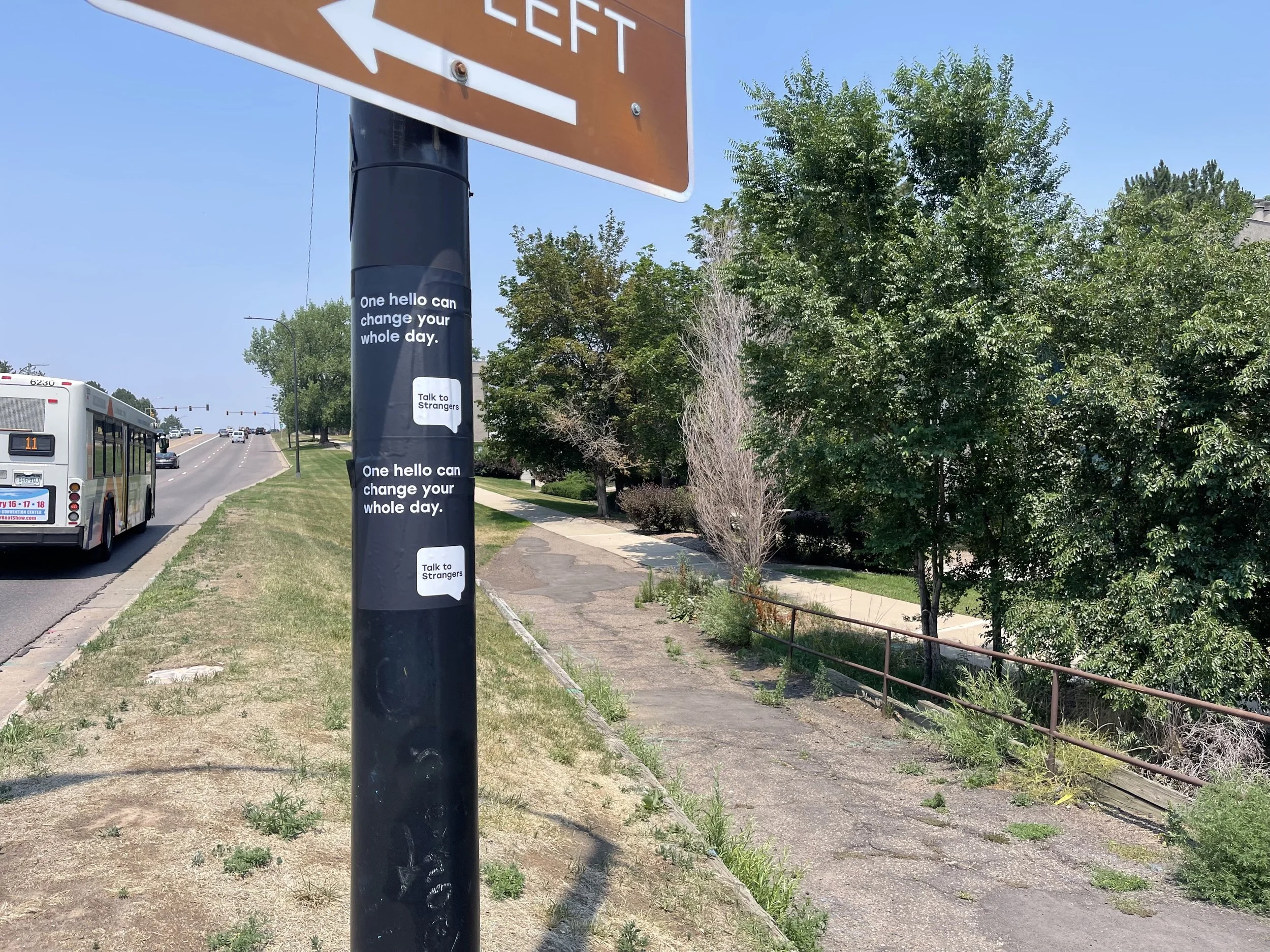
side walk tattoos sticker placement for the "Talk to Strangers" campaign on a street pole.
A small poster can do something a giant billboard often cannot: become part of the block.
That is the appeal of the snipe, the compact street poster often printed around 8.5x11 or 9x12, built for repetition, fast recognition, and tight geographic focus. When placed across a neighborhood with discipline and strong creative, it can make a brand feel suddenly present, familiar, and impossible to miss.
The scale is modest. The effect is not.
What Small Snipe Posters Are and Why They Stand Out
In street advertising, a snipe is the compact format that turns frequency into force. Instead of relying on one oversized placement, the format works through multiples: corner after corner, route after route, venue after venue. A person may not stop for a full read on the first exposure. By the fifth or sixth, the message sticks.
That is why the format has such a strong reputation among fashion labels, events, music releases, challenger brands, and local launches. It is not trying to dominate the skyline. It is trying to own the daily path.
A snipe also fits the rhythm of the street. People notice it while walking, waiting, crossing, grabbing coffee, or stepping out of a venue. The message enters the environment at a human scale.
After that first impression, repetition does the rest.
Small-format posters tend to perform well when a campaign needs:
Eye-level visibility
Block-by-block coverage
Fast swaps
Dense repetition
Local cultural presence
How Small Poster Campaigns Build Big Street Presence
The power of a snipe campaign comes from distribution, not size alone. A single 9x12 poster is just a flyer-sized object in the urban field. A mapped network of them becomes a signal. It tells people a release is happening, a show is coming, a store is opening, or a brand is active in their city right now.
That is also why small posters pair so well with larger street formats. Sidewalk Tattoos uses 9x12 snipes alongside 24x36 standard posters and 48x72 large-format posters in layered wild posting campaigns. The larger pieces establish dominance at key walls or installation zones. The smaller pieces extend the message into side streets, nightlife corridors, and neighborhood touchpoints.
This combination creates a useful visual rhythm. The campaign feels broad without becoming generic.
Here is a simple way to think about the different poster sizes often used in street campaigns:
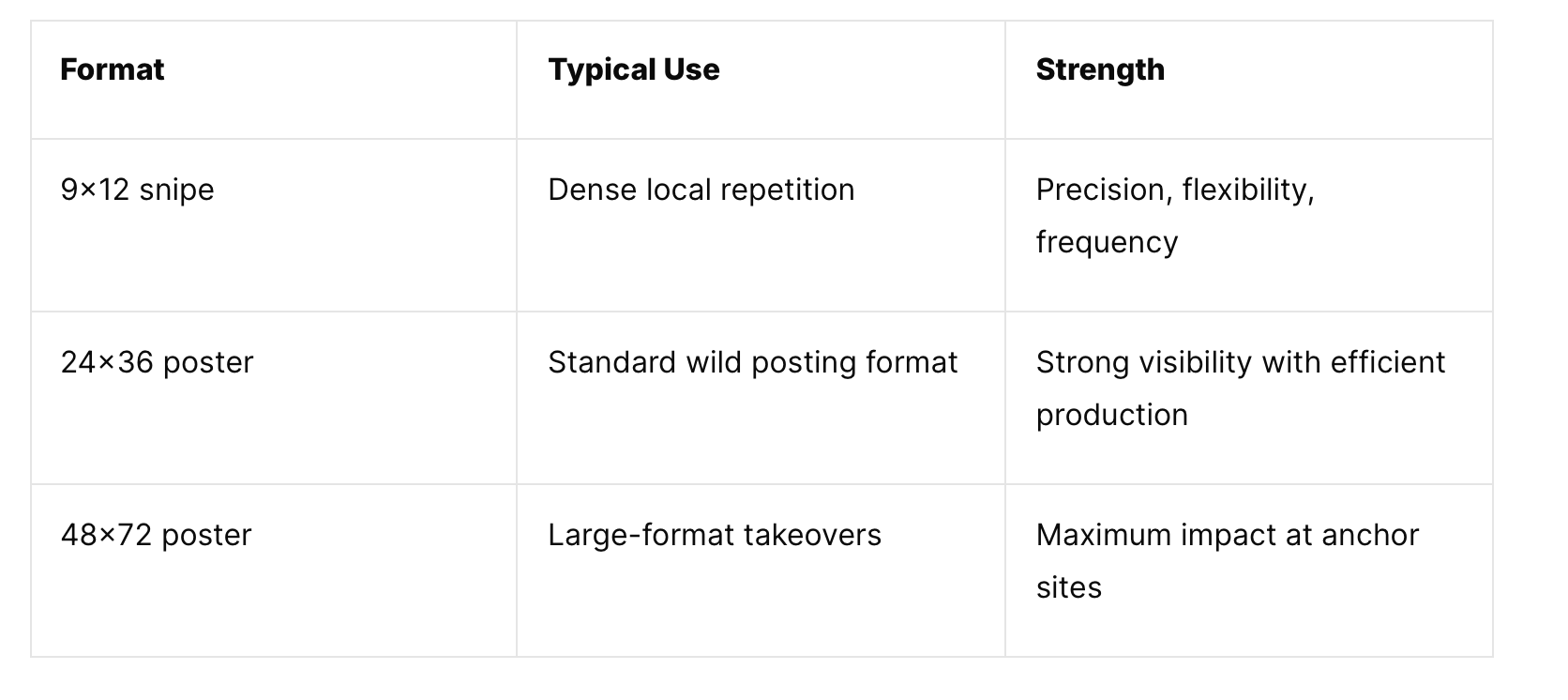
Different posters size and purpose
A smart street campaign rarely asks one format to do everything. Small posters win on reach within a narrow geography. Larger posters win on visual command. Together, they create scale that feels organic rather than forced.
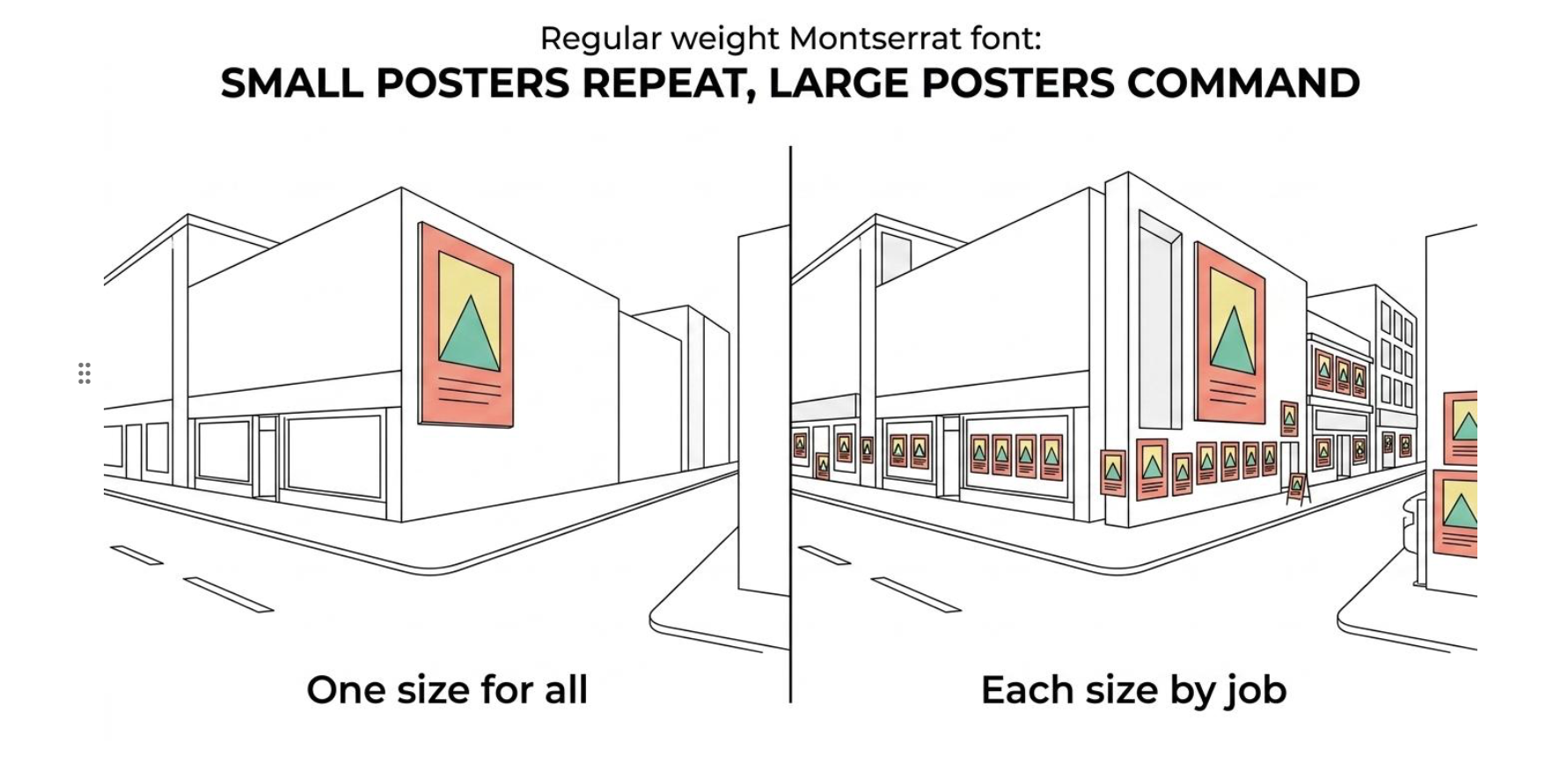
small size vs large size posters by sidewalktattos
Why City Pole Posting Rules Matter for Snipe Campaigns
The phrase "pole poster" is common, but the legal reality is more complicated. In many cities, posting on utility poles, lamp posts, and similar public fixtures is restricted or prohibited outright. That matters for anyone planning a snipe campaign, because the difference between strong street media and a cleanup liability often comes down to local rules.
Official city codes make this clear. Dallas code prohibits affixing posters or notices to lamp posts, utility poles, telephone poles, trees, and other public structures in the public right-of-way unless another law authorizes it. Los Angeles code bars posting hand-bills or signs on sidewalk fixtures including lamp posts, traffic signs, hydrants, trees, and utility poles, and it allows removal costs to be charged back. Seattle’s ordinance history frames these regulations as time, place, and manner restrictions, noting concerns about traffic hazards and visual blight, while also recognizing that rules may address material, size, location, duration, and removal.
That does not make small-format street advertising irrelevant. It makes planning essential.
The strongest operators treat compliance as part of campaign design, not as an afterthought. A city can welcome street energy and still restrict posting on public infrastructure. Both things can be true at once.
Before a snipe campaign goes live, the planning process should cover a few basics:
Check the surface: Public fixtures, utility poles, lamp posts, and traffic-control devices are commonly restricted.
Review the right-of-way: Rules often change when a surface sits on public property or in a public corridor.
Confirm duration limits: Some cities regulate how long temporary signs may remain in place.
Plan removal: Cleanup obligations and removal costs can be built into enforcement.
Map by market: One city’s accepted practice may be another city’s violation.
Where Small Posters Work Best When Pole Posting Is Restricted
When city pole posting is limited, the answer is not to abandon the format. The answer is to place it smarter.
Snipe-style campaigns can still be effective through approved surfaces, private property placements secured with permission, custom installations, venue-linked networks, and combinations with wheat-pasted walls or other temporary street media where allowed. In practice, this often produces better outcomes anyway. The message appears where it can hold longer, look cleaner, and connect more directly with the target audience.
A strong campaign feels intentional, not random.
This is one reason experienced street teams spend so much time on mapping. The surface matters. The pedestrian flow matters. The surrounding retail mix matters. The nightlife pattern matters. The same 9x12 poster can be forgettable on the wrong block and highly effective on the right one.
Brands usually get the best results when the placement strategy follows audience behavior:
Near venues and nightlife clusters
Around launch neighborhoods
Along commuter walking routes
Close to retail corridors
In districts with strong street culture visibility
The phrase "every corner" should be read as a media effect, not just a literal pole-by-pole tactic. What matters is that the city starts to feel branded through repetition.
How to Design a Small Snipe Poster for Fast Street Readability
Because the format is compact, design discipline matters more than decoration. A snipe has only a second or two to register. That means the creative must work at a glance, from a few feet away, under imperfect lighting, and amid visual noise.
The best small posters are usually simple, bold, and singular in purpose. One message. One image or one typographic idea. One action. When brands try to fit a full digital ad into an 8.5x11 or 9x12 frame, the result often collapses into clutter.
Street readability depends on restraint.
A useful creative checklist looks like this:
Message: Lead with the core idea, not supporting copy.
Typography: Use large, high-contrast type that reads instantly.
Branding: Make the brand mark visible without letting it consume the piece.
Call to action: Keep it short, whether that is a date, URL, handle, or QR code.
Color choice also matters. High contrast tends to outperform subtle palettes outdoors. Black and white can work beautifully when the concept is sharp. Bright color blocking can also cut through busy surroundings. The decision should come from the campaign identity, the city context, and the desired mood.
QR codes deserve special restraint. They can be effective, especially for event drops, app installs, or limited-run offers. Still, a snipe should not depend on the scan. The poster needs to communicate even when nobody stops moving.
Why Small Posters Are So Effective for Hyperlocal Targeting
A digital campaign can target by zip code. A snipe campaign can target by block mood.
That difference matters for brands that care about cultural context. A streetwear drop in one district may need a very different visual footprint than a gallery opening in another. The compact poster makes it easier to shift emphasis market by market, neighborhood by neighborhood, and even route by route.
This is where street media becomes more than exposure. It becomes placement as positioning. The brand is not just seen in a city. It is seen in this district, near these venues, among these audiences. That specificity creates relevance quickly.
For new brands, that can shorten the distance between unfamiliar and recognizable. For established brands, it can sharpen local credibility.
What Brands Gain From Small Snipe Campaigns
Small posters work especially well for campaigns that need urgency, density, and cultural texture. Product launches, retail openings, event promotion, artist announcements, and limited releases all benefit from the format because the message can be repeated quickly and refreshed just as quickly.
They also fit modern campaign timelines. Street activations often move fast, and compact poster production supports that pace. When paired with mapped deployment and photo or geo documentation, brands get both the physical presence and the reporting structure needed for a measured rollout.
The gains are practical as much as visual:
Speed: Fast printing and deployment support short campaign windows.
Precision: Tight neighborhood targeting reduces wasted impressions.
Flexibility: Creative can be swapped, layered, or adapted by market.
Presence: Repetition builds familiarity far beyond the size of the sheet.
For agencies and brand teams, the format offers a rare balance. It is affordable enough to scale, visible enough to matter, and flexible enough to fit into broader outdoor, experiential, and social campaigns.
That is why the small poster remains a staple of street media. Not because it is loud, but because it is persistent. When the creative is sharp, the placement strategy is disciplined, and the market rules are respected, a compact sheet can make a city feel newly charged with brand presence.
Reach out for more information :
929.678.0235
