
Why Stencils Are So Unique, Especially the Chalk Paint
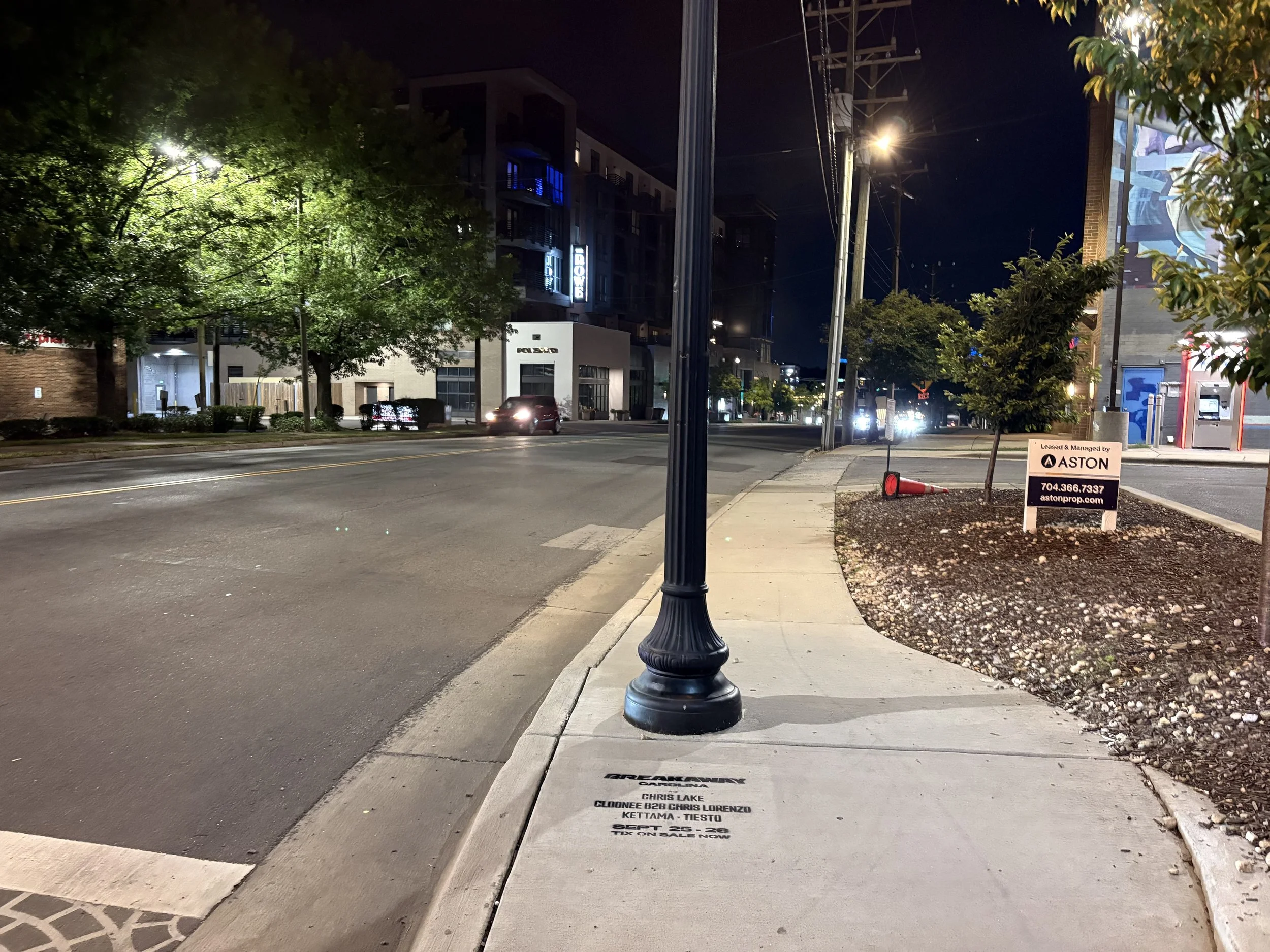
sidewalk stencil by sidewalktattos
Street marketing gets most of its power from context. A message feels different when it appears in the same space where people walk to work, queue for a show, leave a subway station, or drift through a retail district on a Friday night.
That is why sidewalk stencils feel so distinct. They do not ask people to look up, stop, or switch screens. They meet attention at ground level, inside the flow of movement, where a brand can become part of the route itself. When chalk paint enters the picture, the format becomes even more unusual: bold enough to get noticed, temporary enough to fit short campaign windows, and practical enough to place across many pedestrian-heavy locations.
What makes sidewalk stencils different from other street marketing formats
A poster takeover can dominate a wall. A wild posting campaign can turn a corridor into a visual field. A sidewalk stencil does something else. It works in the exact space where footsteps land.
That shift matters. People do not read a sidewalk stencil the same way they read a billboard or even a wheat-pasted poster. The stencil sits lower, closer, and often appears as a quick interruption in an otherwise familiar path. It can feel less like an ad placed into a city and more like a mark that belongs to the moment.
Sidewalk stencil illustration by sidewalktattos
It also carries a built-in sense of timing. Because stencil campaigns are temporary by nature, they often feel current. A sidewalk stencil can point toward a launch, a show, a store opening, a festival, or a limited drop without creating the long tail that comes with more permanent signage.
The result is a format that feels immediate, local, and highly physical.
Why chalk paint gives stencils a unique edge
Not every stencil medium creates the same effect. Chalk-based and water-based marking paints are what make many sidewalk stencil campaigns stand apart.
Official guidance from the City of Orlando describes spray chalk as a temporary surface treatment that can be used for stencils and other demonstration-project markings, with a lifespan of up to about one week in some cases. Product manufacturers describe similar temporary systems with a broader range. Some water-based inverted marking chalk products are designed to last up to 30 days depending on the surface, traffic, weather, and cleanup method. That range is exactly why chalk paint is so useful in street marketing: it offers presence without permanence.
Here is what that means in campaign terms:
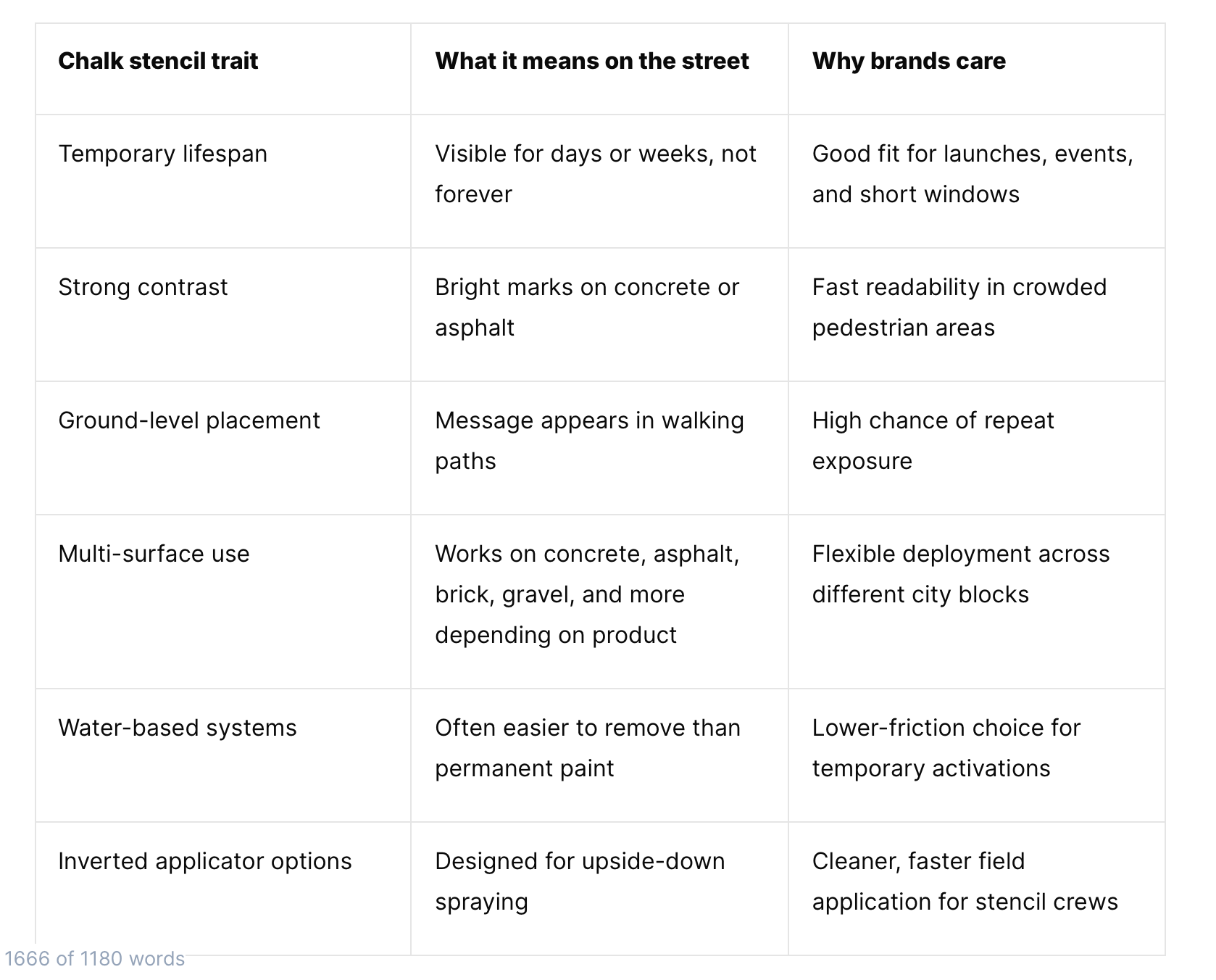
Chalk stencil trait and benefit by sidewalktattos
That last detail matters more than it may seem. Many temporary marking products are built with inverted applicators, which makes them practical for surface work on sidewalks and pavement. The application method supports sharp lines, repeatability, and speed, all of which matter when a campaign is rolling out across multiple locations in a narrow timeline.
Chalk paint gives stencil work a rare balance: it can be loud without being long-term.
Ground-level stencil placement changes audience behavior
A sidewalk stencil does not compete for attention in the same way as a poster, transit ad, or phone screen. It catches people inside motion.
That makes pedestrian-heavy placement strategy the heart of the format. A stencil near a subway exit, outside a venue, along a shopping corridor, or on the approach to an event can be seen by the same person more than once in a single day. Repetition happens naturally when the placement follows real movement patterns.
For that reason, stencil campaigns are often strongest in clusters rather than isolated placements.
Commuter paths
Retail corridors
Nightlife zones
Event perimeters
Campus walkways
Approaches to stores or pop-ups
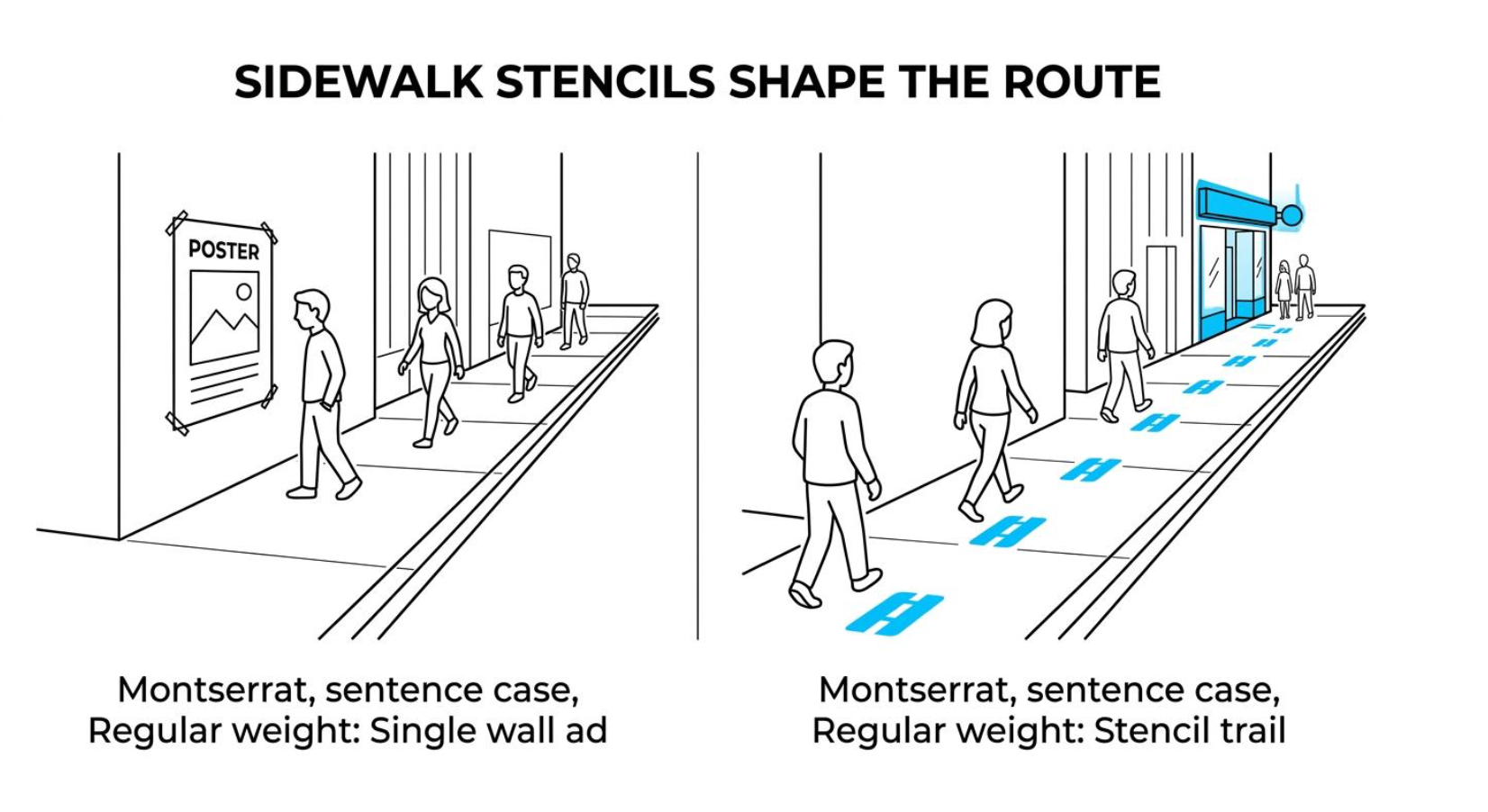
A wall can own a block; a sidewalk stencil can shape a route.
This is where the “breadcrumb trail” effect becomes powerful. Instead of relying on one big moment, the campaign builds momentum through a sequence of sightings. A person notices one stencil, then another, then another closer to the destination. The message gains force because the city itself becomes part of the pacing.
Chalk stencil durability and cleanup matter because timing matters
Temporary does not mean weak. It means calibrated.
In practice, chalk paint stencil durability depends on several variables: surface texture, weather, foot traffic, product choice, and whether the surface is sealed. Official guidance and product specs show a real range. Some spray chalk applications may stay visible for about a week. Some water-based marking chalk products are marketed to last up to 30 days on surfaces like concrete, asphalt, brick, gravel, grass, and dirt.
That flexibility is a major advantage for marketers. A campaign tied to a weekend event may only need a few strong days. A product launch, art opening, or retail push may benefit from a longer run. Planning the material around the campaign window keeps the format efficient.
Cleanup is another reason the medium stands apart. Certain temporary marking chalk products can be removed with power washing or a wire brush, and some official guidance notes that life span can be extended with a surface sealer like spray varnish when a project needs a bit more staying power. That makes chalk paint practical in a way permanent paint is not.
Typical life span: Often about one week to up to 30 days, depending on product and conditions
Weather impact: Rain, heat, and constant foot traffic can shorten visibility
Surface matters: Smooth sealed concrete behaves differently than rough asphalt or brick
Extended visibility: A sealer may help some projects last longer where appropriate
Removal options: Power washing, brushing, and normal wear can clear many temporary markings
For brands and agencies, that means the format can be planned with more precision. It can show up fast, hold long enough to do its job, and leave without creating a permanent footprint.
Placement strategy makes sidewalk stencil campaigns feel larger than they are
One stencil can get noticed. A mapped network of stencils can change how a neighborhood feels.
That is one of the most compelling parts of chalk-based street media. Because the format is relatively quick to place and does not require a wall, brands can build density across foot-traffic zones. When placements are concentrated near shopping districts, transit exits, nightlife clusters, and event areas, the campaign starts to feel bigger than the number of individual marks.
This is also why stencil campaigns pair so well with wheat pasting. Posters create vertical dominance. Stencils create horizontal repetition. Together, they turn both sightlines into media. The street-level mark reinforces the wall-level message, and the wall-level message gives the stencil more authority.
A practical rollout usually follows a few basics:
Map the traffic: Focus on where pedestrians already bunch, pause, or funnel through
Cluster the placements: Repetition across a short walking radius builds memory faster than scattered one-offs
Pair formats when useful: Posters and stencils together can widen reach across both walls and walkways
This kind of planning is where experienced field execution matters. Sidewalk stencils are most effective when they are documented, geo-tagged, and deployed with local context in mind, not just sprayed anywhere with open pavement.
Why chalk paint stencils work especially well for short campaign windows
Some marketing formats need time to build. Chalk stencil campaigns can move on a much faster schedule.
That speed fits modern launch cycles. A brand may have only a few days before an event, drop, screening, opening, or announcement. Temporary stencils can be produced and activated quickly, which makes them useful when the campaign window is tight and the need for physical visibility is immediate.
They also fit moments when a message should feel current rather than fixed. A limited-edition product, a one-weekend festival, a ticketed event, a fashion release, or an app launch can all benefit from a format that feels tied to the now.
A few high-fit use cases stand out:
Event promotion: Directing foot traffic toward a venue or district
Retail activation: Building street presence around store openings or pop-ups
Entertainment campaigns: Reaching moviegoers, concert crowds, and nightlife audiences
Product drops
Festival routes
Neighborhood takeovers
Because the format lives where people walk, it is especially strong when the goal is not only awareness but movement. A good stencil can do more than announce a brand. It can guide people toward the place where the action is happening.
Why sidewalk stencils still feel fresh in crowded cities
Cities are full of ads, but not all ad experiences feel the same. Sidewalk stencils still carry a sense of surprise because they sit outside the visual habits people have built around screens, posters, and standard out-of-home placements.
They also feel more human in scale. A chalk stencil is not trying to dominate the skyline. It asks for a quick glance, then rewards that glance with clarity and timing. That can feel more persuasive than a larger format when the audience is already moving through a dense urban setting.
There is also an authenticity factor. Chalk paint stencils borrow some of the language of the street without pretending to be permanent public art. Their temporary nature keeps the message light on its feet. It arrives, makes its point, and fades.
For brands that want high visibility without a heavy footprint, that combination is hard to match. Bold, temporary, ground-level, easy to place across strategic routes, and well suited to short campaign bursts, chalk-based stencil work stands in a category of its own.
And that is exactly why it keeps earning attention block after block.
Reach out for more information :
929.678.0235
