
Stencils and the Creative Impact They Have for Brands
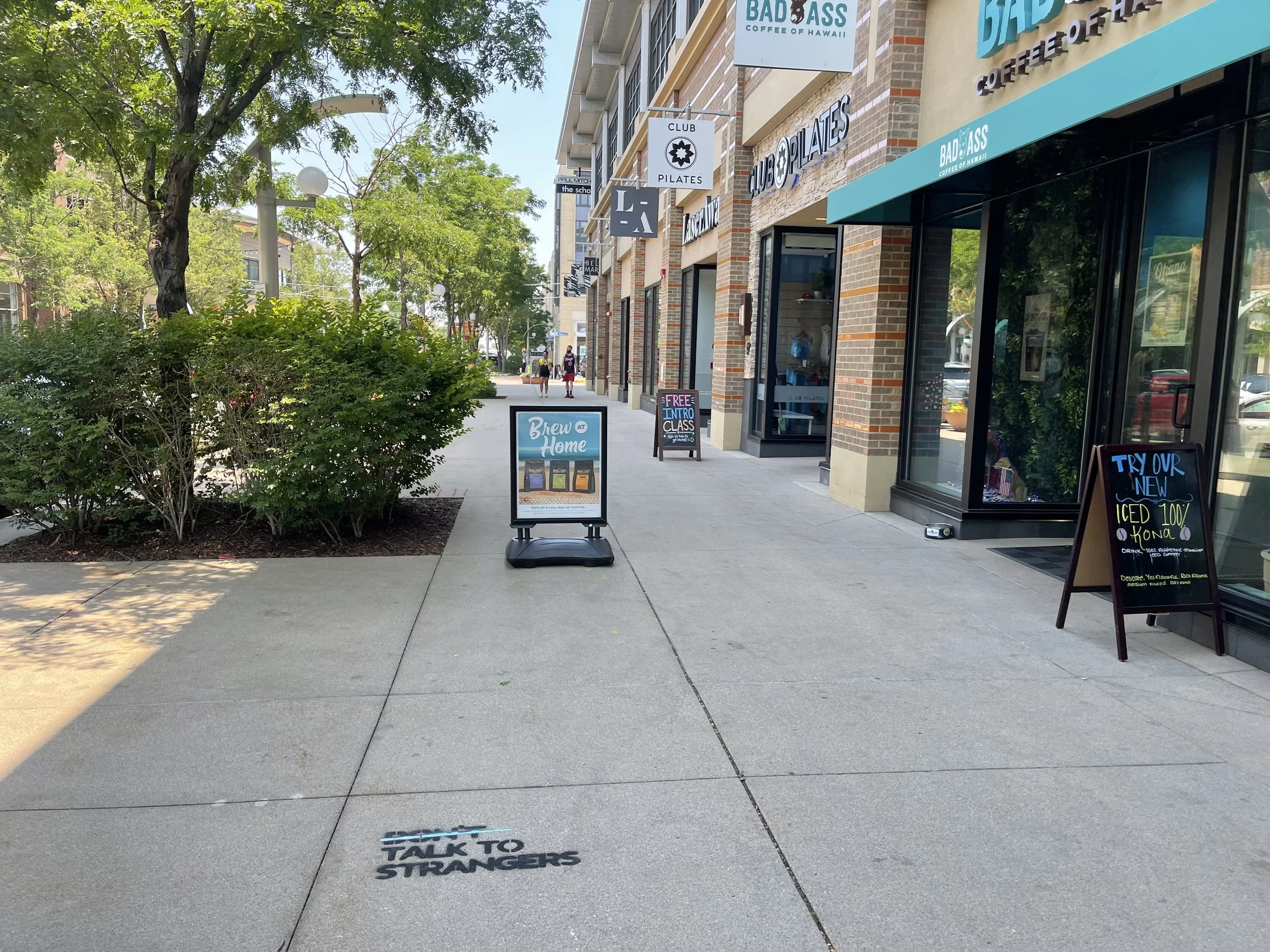
“Don’t talk to strangers” stencil installed by sidewalktattos
A sidewalk is usually treated as background. People cross it, scan it, and move on. A well-placed stencil changes that in an instant. It turns a routine path into a visual interruption, and that interruption can become a memorable brand moment.
For brands that want visibility in busy urban spaces, stencils offer something rare: creative impact at eye level for pedestrians, built into the rhythm of the street. They are direct, temporary, and highly adaptable. When the message is sharp and the placement is smart, the pavement itself starts working like media.
Sidewalk stencil advertising creates brand moments at street level
Most advertising asks people to look up, swipe over, or click through. Sidewalk stencils meet people where they already are, on foot, in motion, and close to the point of action. That physical proximity gives the format a different kind of power.
A stencil does not need to dominate an entire block to make an impression. It only needs to appear at the right moment. Outside a venue. Near a subway exit. Along a retail corridor. On the route to an event. These placements catch attention because they feel unexpected yet relevant to the environment.
That matters because outdoor visibility is closely tied to recall. Industry reporting from OAAA, citing a 2023 Solomon Partners analysis of U.S. ad-recall studies from 2017 to 2022, found that out-of-home advertising produced higher ad recall than several other major media channels, including television, radio, print, podcasts, and online executions. Printed and digital out-of-home both benefited.
Sidewalk stencils fit naturally inside that street-facing visibility model. They are built for repeated impressions in high-foot-traffic areas, and repetition is one of the biggest advantages of outdoor media.
A strong stencil activation often delivers:
repeated pedestrian exposure
close-range brand visibility
route-based message sequencing
temporary, flexible placement
strong relevance near stores, events, and launches
Creative quality in stencil campaigns shapes recall and response
Placement gets a stencil seen. Creative quality gets it remembered.
That distinction is easy to miss. Many marketers focus first on geography, and they should. A perfect design in the wrong location will underperform. Still, creative quality can change outcomes in a major way. Kantar has reported that top-tier digital-out-of-home ads delivered results far stronger than average, with creative quality identified as one of the biggest drivers of effectiveness. The lesson transfers well to physical street campaigns: not every outdoor execution performs equally, even when the foot traffic looks attractive on paper.
The same pattern appears in broader brand research. Nielsen found that stronger branded content drove higher brand recall and a greater likelihood that people would seek out more from the brand. The format in that study was different, yet the underlying idea stays relevant. People respond to work that is not just visible, but compelling.
For stencil campaigns, that means the design cannot be an afterthought. A logo sprayed onto pavement may register, but it may not linger. A logo paired with a crisp phrase, directional cue, or context-specific message has a much better shot at staying in memory.
Creative quality in stencil work often comes down to a few practical decisions:
Message clarity: short copy wins because pedestrians process it fast
Visual contrast: bold shapes and high-contrast paint read better on textured pavement
Brand fit: the style should feel true to the campaign, not generic street decoration
Context match: messaging should connect to the location, timing, or nearby experience
Photo potential: people are more likely to share work that looks intentional and graphic
Sidewalk stencil design elements that strengthen brand impact
The best stencil campaigns feel simple at first glance. That simplicity is hard won. Designers have to account for surface texture, walking speed, crowd density, and how long someone will actually spend looking down.
Short lines work well because they are instantly readable. Directional language also performs nicely. Arrows, footprints, countdowns, and concise calls to action can move people through a physical story. A campaign can begin with awareness on one block and build anticipation closer to the destination.
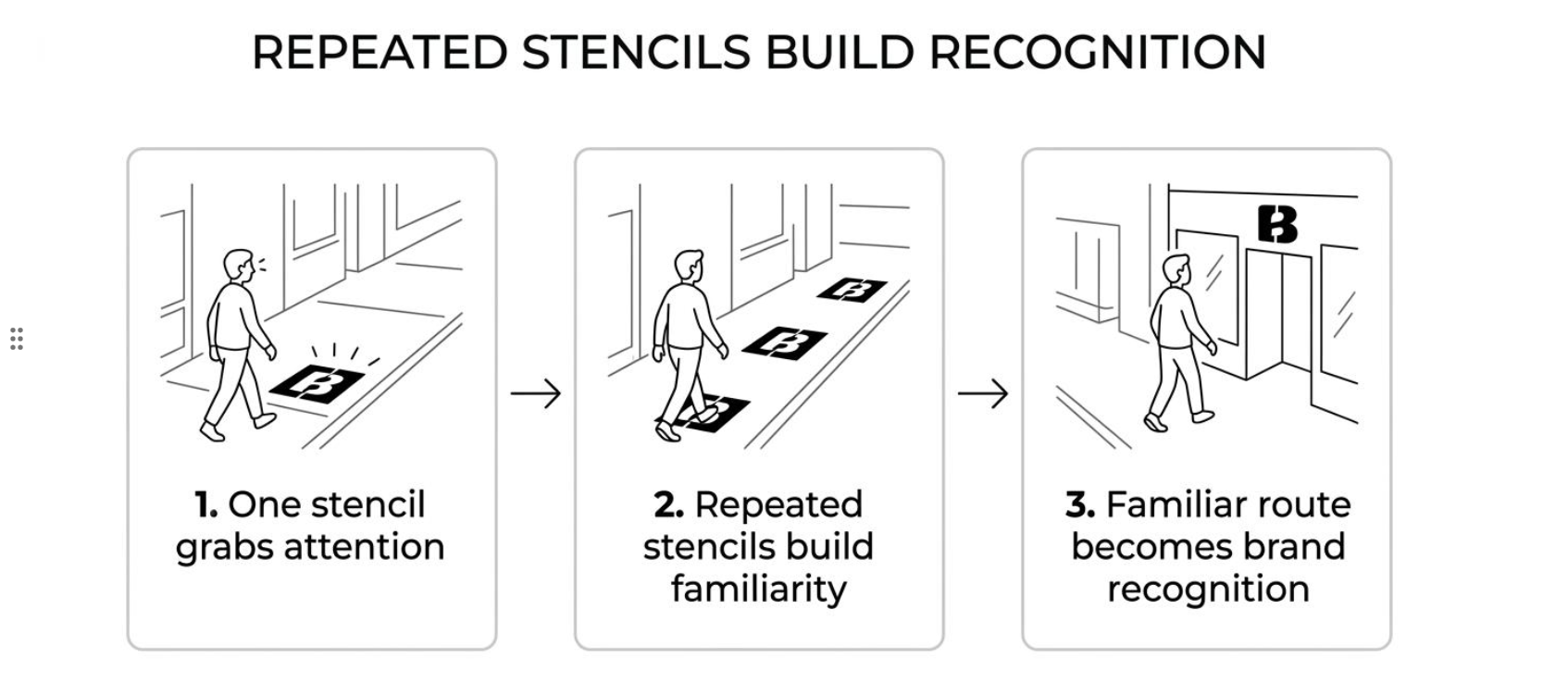
Stencil built illustration by sidewalktattos
Humor can help, too. So can confidence. A witty line outside a fashion event, a bold statement near a product launch, or a minimalist icon sequence leading to a pop-up all give the stencil a job beyond decoration.
The visual structure matters just as much as the copy. Here is a useful way to think about core stencil choices.
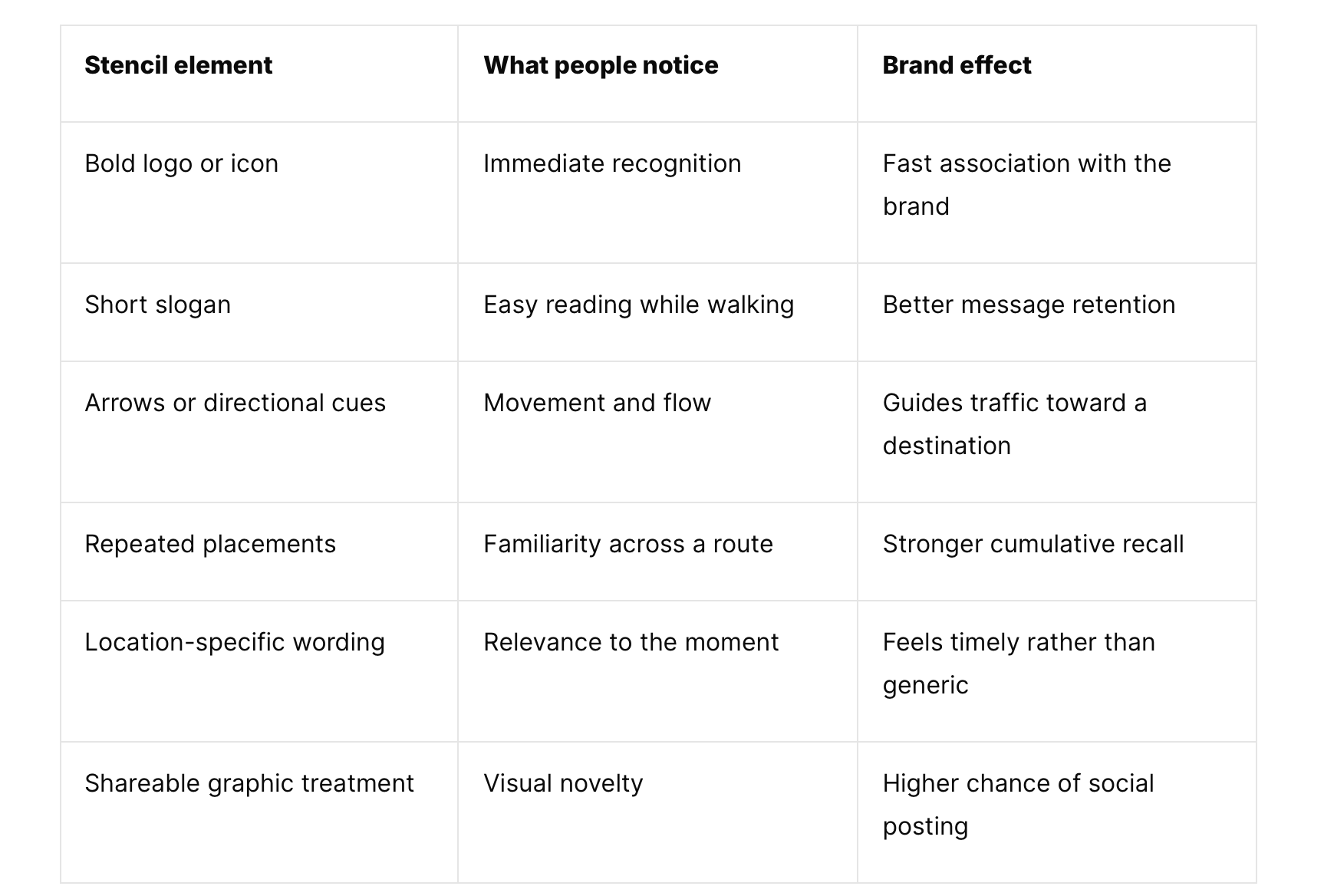
Stencil impact illustration by sidewalktattos
A good stencil does not try to say everything. It picks one task and executes it clearly.
That task could be to announce a drop, support an opening, drive foot traffic, create buzz near an event, or make a brand feel more present in a neighborhood where its audience already spends time.
High-traffic stencil placement increases repeated impressions
Sidewalk stencil advertising is especially effective when it is mapped around pedestrian behavior. People do not move through a city randomly. They follow routines, shortcuts, queues, and event-driven paths. A campaign that respects those patterns feels more natural and reaches people multiple times within a short window.
High-traffic areas tend to include shopping districts, nightlife corridors, subway exits, venue perimeters, and streets with dense lunch or commuter flow. When a stencil appears where people pause, cross, line up, or turn corners, it has a better chance of being noticed.
That repeated exposure is a practical advantage, not just a creative one. OAAA’s attribution reporting has linked out-of-home media to measures like footfall, purchase intent, and ad recall across multiple case studies in U.S. markets. Sidewalk stencils operate at a smaller physical scale than many traditional out-of-home formats, yet they benefit from the same basic dynamic: visible advertising in the real environment can prompt people to remember, look up, and act.
Placement strategy often improves when brands think in zones rather than single points.
Event zone: near entrances, queue areas, and adjacent blocks
Retail zone: routes leading toward stores or shopping clusters
Transit zone: exits, transfer paths, and commuter sidewalks
Cultural zone: nightlife, galleries, fashion streets, and music venues
That zone-based approach makes stencil work feel intentional. It also helps campaigns build rhythm. One stencil catches attention. Three or four along a route turn that attention into recognition.
Street marketing campaigns often work best when stencils support other formats
Stencils are powerful on their own, but they often become even stronger inside a coordinated street campaign. A poster takeover can create scale. A stencil layer can create intimacy. Together, they shape both the skyline and the sidewalk.
This is one reason many brands pair sidewalk stencils with wheat pasting. Posters deliver broad visual mass and strong photographic presence across walls and construction barriers. Stencils extend the same campaign language onto pedestrian paths, where people experience it at close range. The combination can make a neighborhood activation feel hard to miss without relying on a single giant placement.
A combined campaign also gives creative teams more room to assign roles to each format. The poster can handle the hero image or campaign identity. The stencil can handle the directional cue, teaser line, event countdown, or call to action. That division keeps each piece focused.
For fast-moving launches, temporary materials are a clear advantage. Sidewalk stencil campaigns typically use eco-friendly, temporary marking paint, which supports short-window activations without trying to behave like permanent signage. That makes the format a fit for product releases, tours, premieres, seasonal drops, pop-ups, and city-specific cultural moments.
At Sidewalk Tattoos, stencil activations can also be paired with mapped execution, geo-tagged documentation, and wider wheat pasting programs across U.S. cities and international markets. For brands running multi-city launches, that kind of structure helps keep street work organized and measurable while preserving the raw energy that makes it effective.
What brands gain when stencil advertising is done well
The creative impact of stencils is not limited to visibility. They can also shape perception.
A good sidewalk stencil can make a brand feel current, culturally aware, and physically present. It suggests movement. It meets audiences in public rather than waiting for them to enter a feed or open an app. That street-level presence carries a different tone than many polished media channels, and that difference is often the point.
Brands often use stencils when they want one or more of these outcomes:
sharper local relevance
buzz around a timed event
stronger street credibility
support for foot traffic goals
memorable brand recall in dense urban areas
This is especially useful for fashion labels, startups, entertainment releases, tech launches, artists, and agencies looking for high-visibility activations in neighborhoods where attention is already active.
The strongest results usually come from a simple formula: clear message, bold design, smart route planning, and enough repetition to stick.
A plain stretch of pavement can become a signal, an invitation, or a conversation starter.
When a brand wants to create that kind of moment, sidewalk stencils are not just a creative extra. They are a media format with presence, personality, and street-level force. If you are planning an activation and want people to stop, notice, and remember, Sidewalk Tattoos can help map and execute a stencil campaign built for real-world attention. Contact us to plan yours.
Reach out for more information :
929.678.0235
