
Mastering Race Weekend: Strategies for Sports & Energy Brands
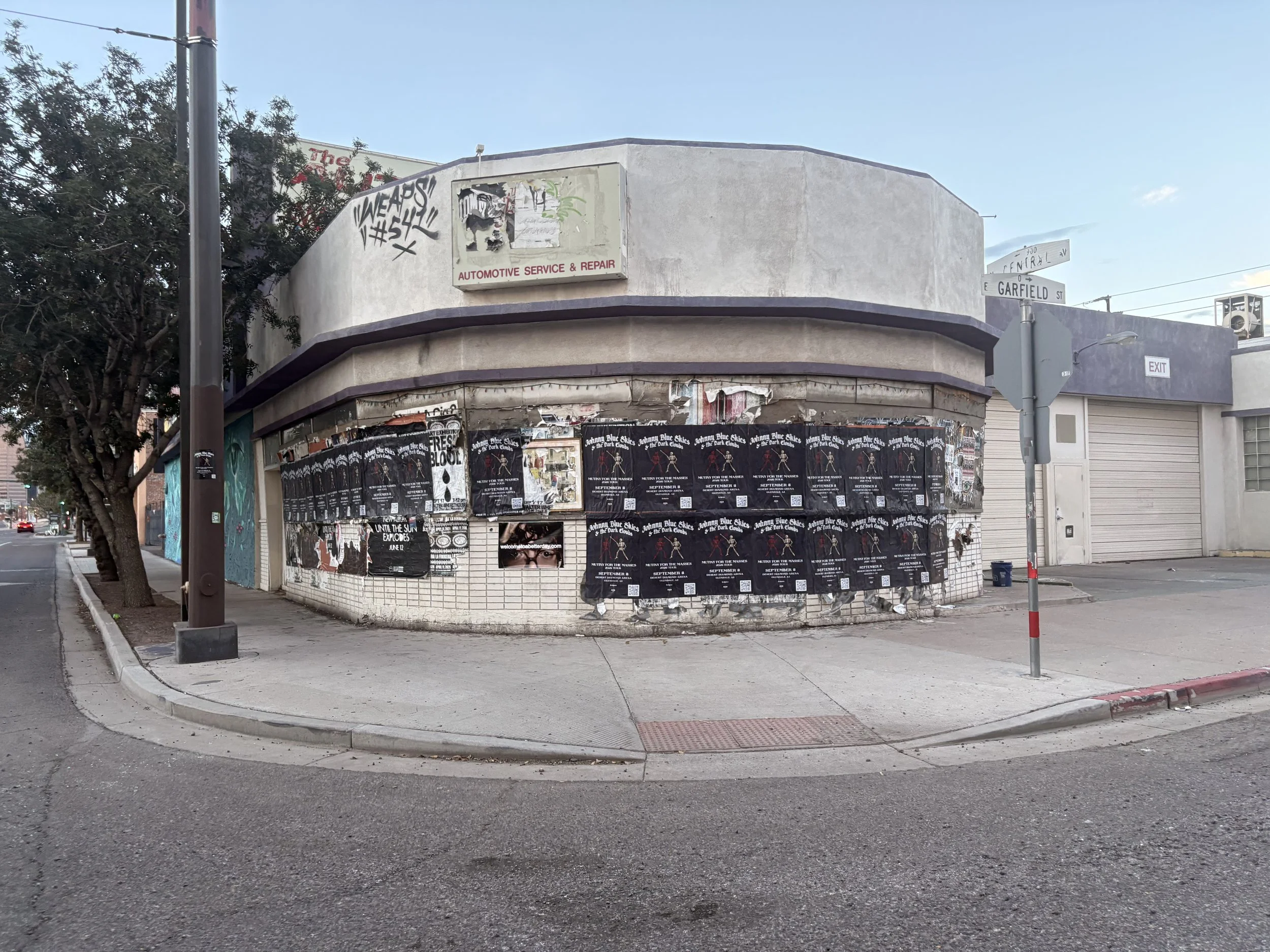
Johnny Blue Skies posters wrapping a street-corner wall by sidewalktattos
Marathon weekend changes the media map of a city. Streets that usually blur into the background suddenly become high-attention corridors packed with runners, friends, volunteers, crews, and spectators who are all moving toward the same destination. For sports brands and energy brands, that creates a rare opening: the audience is motivated, mobile, and already primed for performance messages.
The brands that stand out are not always the ones with the biggest official sponsorship package. They are often the ones that show up in the right places during race week, with creative that fits the moment and placements that meet people where they walk, wait, warm up, and celebrate. Sidewalk stencils and wheat pasted poster runs work especially well here because they live at street level, where race weekend attention is most concentrated.
Race weekend marketing works because runners decide late
Race-week advertising matters because race participation is growing and a meaningful share of runners still make decisions very close to event day. RunSignup’s 2025 RaceTrends report found 5% year-over-year participation growth across races on its platform. It also reported that 23.7% of registrations happened during race week, while only 14.4% came more than three months in advance.
That timing should reshape how sports and energy brands think about media. If nearly one in four registrations happen during race week, then race-week visibility is not just reinforcement. It can influence last-minute entrants, friends choosing where to meet, and supporters deciding what to buy on the way to the course.
Large marathons also create something many marketers want but rarely get: repeat exposure in a compressed window. A runner might pass the same corner during bib pickup, shakeout runs, race morning, and post-race wandering. A supporter might see the same stencil near transit, at a coffee stop, and on the walk to the finish area. Frequency builds quickly when the route itself becomes the channel.
Sidewalk stencils fit the marathon route better than distant media
Sports sponsorship research points to a simple principle: when the match between the event and the brand is clear, results improve. A 2025 meta-analysis on sports event-brand fit found a strong relationship between sponsor-event fit and brand associations, with a reported correlation of ρ = .767. It also found stronger cognitive and behavioral responses in non-spectator situations than spectator situations.
That detail is especially useful for race weekend planning. Running events are not only spectator events. They are participant events. People are doing the thing, not just watching it. They are stretching, fueling, pacing, and recovering. A sidewalk stencil near the route enters that active environment. The brand is no longer abstract. It becomes part of the experience.
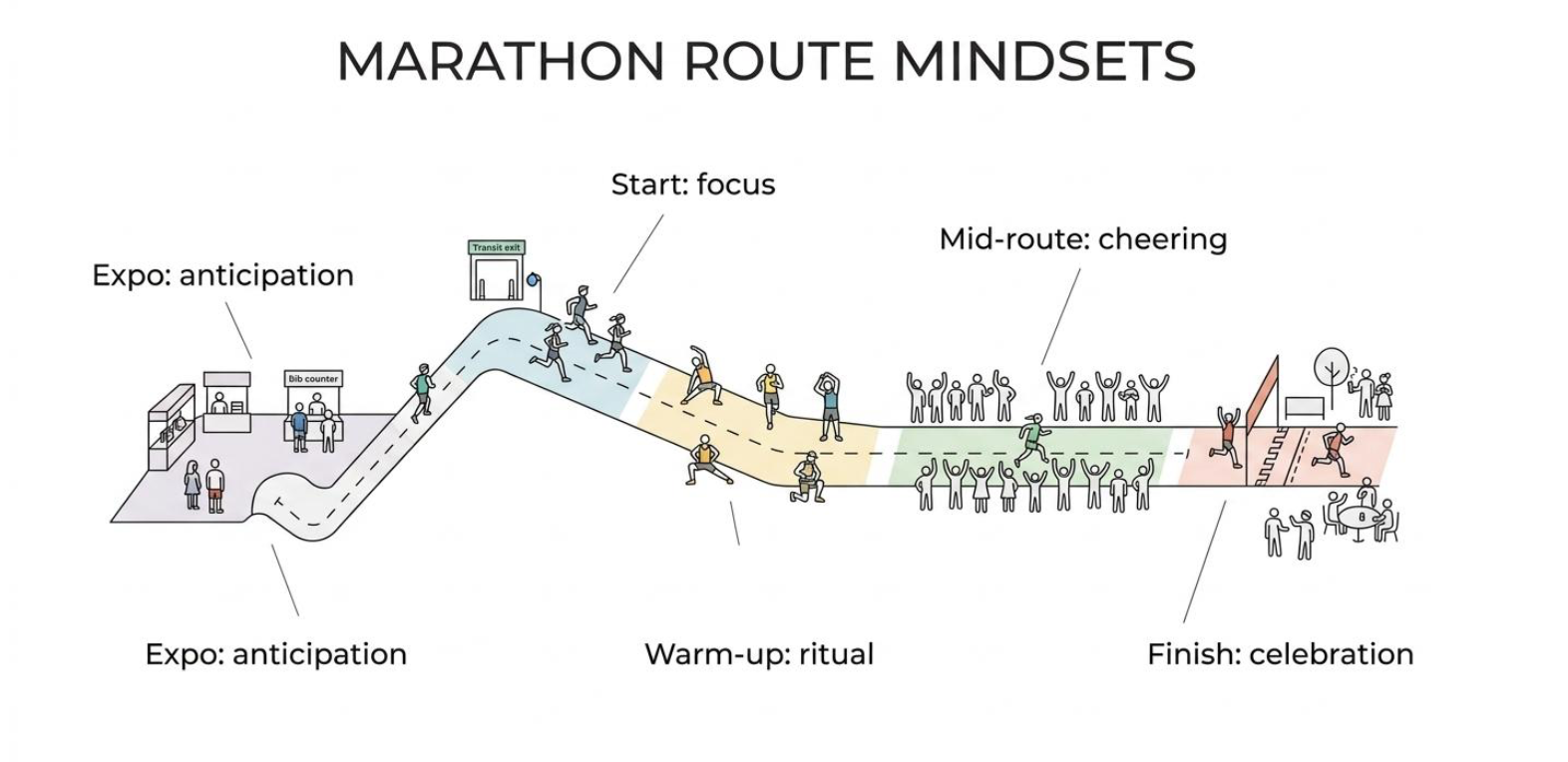
Stencil Route by sidewalktattos
This is where route-level media can outperform broader city advertising. A billboard miles away may build general awareness. A stencil near packet pickup or a poster run by the start corrals feels native to the moment. For endurance brands, that closeness sharpens relevance. For energy brands, it turns the product from a generic pick-me-up into a race-week companion, as long as the message stays responsible and well targeted.
Race route placement strategy for sports and energy brands
Placement should follow the emotional arc of the weekend, not just the route map. Different zones create different mindsets, and the creative should change with them.
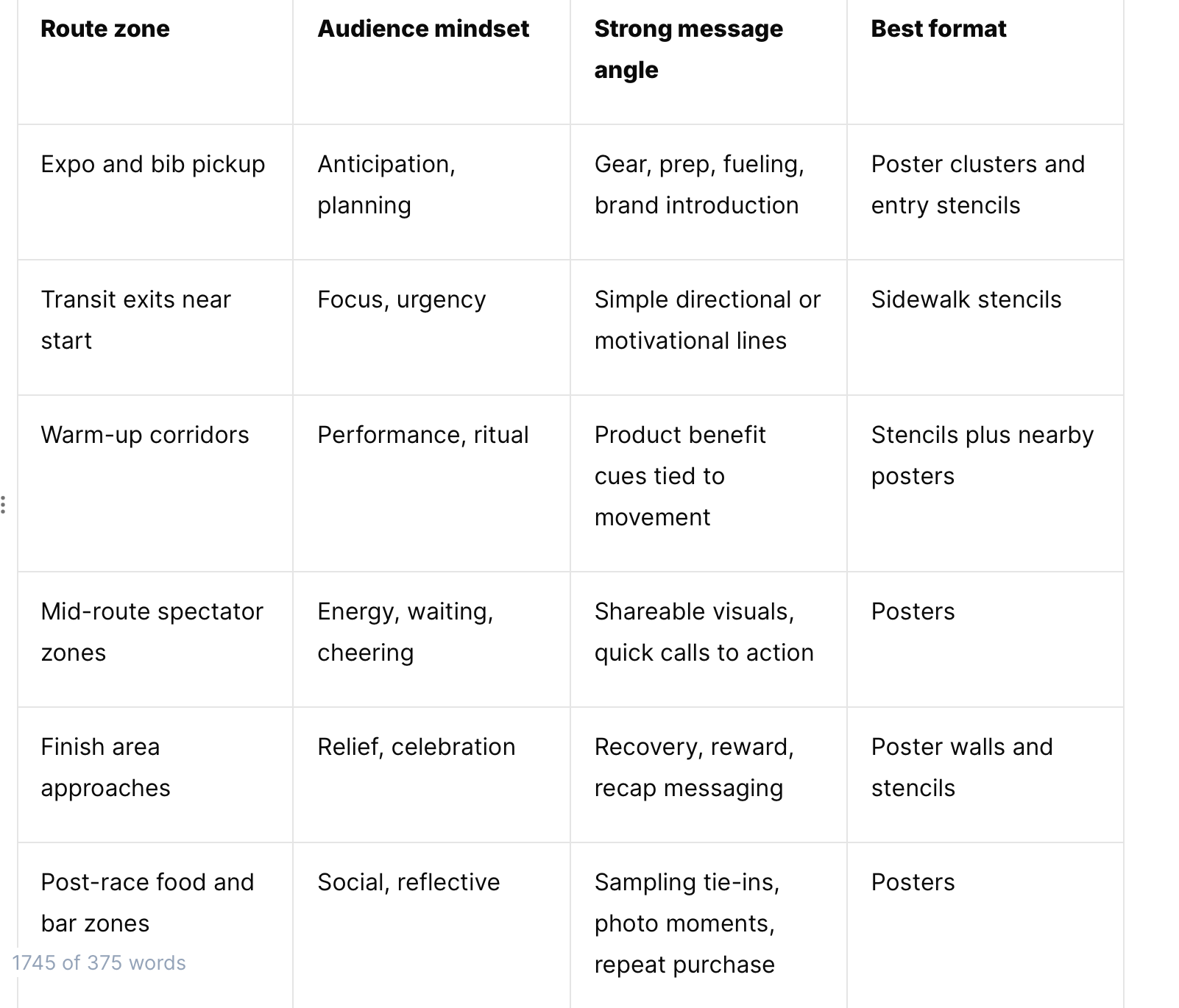
Placement zone strategy by Sidewalktattos
A smart route plan usually includes a few high-traffic clusters rather than a thin spread across the whole city. Density matters. Repetition matters. Seeing a mark three times within a half mile is often more valuable than seeing it once in six neighborhoods.
The strongest corridors are usually easy to spot once the event footprint is mapped.
Packet pickup approaches
Hotel clusters
Transit exits
Start village walk-ins
Finish area spillover streets
Race-week timing turns route traffic into brand recall
Timing matters almost as much as placement. Research on sponsorship effects shows that awareness can move quickly when the fit is right. Nielsen has reported that exposed fanbases see meaningful lifts in purchase intent, averaging 10% across a large set of sponsorships. A 2023 sport marketing study also reported an 8% increase in brand recognition in the first year after sponsorship began.
Street campaigns benefit from that same immediacy, especially when they appear just before the city reaches peak race density. Creative installed too early can fade into the urban background. Creative installed too late misses expo traffic and pre-race rituals. The sweet spot is often 48 to 72 hours before the main event, with select touch-ups as crowds build.
That schedule matches the way marathon weekends actually work. Friday is for arrivals and bib pickup. Saturday is for shakeout runs, merch, coffee lines, and group meetups. Sunday morning is all movement and emotion. A stencil campaign that lands during that window feels timely because it is timely.
After a route plan is set, race-week timing should usually follow a simple sequence:
Map the heaviest pedestrian flows, not just the official course.
Install the first wave before expo traffic peaks.
Add dense placements near start and finish corridors.
Document, geo-tag, and refresh key zones as foot traffic shifts.
Sports brand messaging should match runner intent
Sports brands win race weekend when their message speaks to the runner’s purpose. The best creative is spare, direct, and instantly legible while moving. Long copy rarely works on a sidewalk. Clear language does.
A footwear label might push speed, comfort, or race-day confidence. A recovery brand might focus on what comes after the finish line. A training app might frame the race as proof of a bigger habit. Each can work, but only if the message feels like it belongs beside a marathon route.
Good race-week creative often includes one visual cue and one strong line. That line can be motivational, product-led, or directional, but it should sound like race weekend, not like a generic campaign dropped into a running city.
A few message lanes tend to perform well:
Performance gear: Fast, durable, weather-ready, race-tested
Recovery products: Refill, reset, rebuild
Training platforms: Pace, plan, progress
Lifestyle sportswear: Wear the weekend, not only the race
Energy brand messaging needs precision and responsibility
Energy brands have a powerful race-week opportunity, but they need discipline. The audience is already thinking about stamina and focus, which makes the category highly relevant. That same relevance raises the bar. Messaging should support informed, responsible use, not push excess.
The FDA states that for most adults, 400 milligrams of caffeine per day is an amount not generally associated with negative effects. It also warns that too much caffeine can lead to jitters, nausea, and sleep problems, and notes that children and teens should avoid energy drinks because of caffeine and sugar levels. For race-week campaigns, that means brand language should avoid reckless cues and keep product communication grounded.
That does not make energy marketing weaker. It makes it sharper. A brand can still own alertness, routine, and pre-race focus without implying that more is always better. Responsible messaging often builds more trust because it respects the audience’s goals.
Here is where energy brands can tighten their copy:
Pre-race focus: Keep it clean, simple, and routine-based
Midday pickup: Frame the use case around busy race-week schedules
Recovery social moments: Shift from intensity to celebration and refreshment
Audience targeting: Keep youth-sensitive placements and language off the table
Wheat pasting and stencils work best as a combined race-week system
A single tactic can get noticed. A combined system is what builds memory. Wheat pasted posters carry visual weight and brand world. Sidewalk stencils add frequency and directional presence. Together, they create a city-level campaign that feels both immersive and efficient.
For marathon weekends, that combination is especially strong. Posters can anchor the campaign in expo districts, retail corridors, and finish-zone neighborhoods. Stencils can stitch those areas together across sidewalks, crosswalk approaches, and pedestrian funnels. One format creates the scene. The other guides repetition through it.
This matters because race audiences are in motion. They are not sitting through a 30-second spot or scrolling through a static feed. They are catching fragments while walking fast, meeting friends, checking maps, and watching split times. Street media meets that behavior pattern naturally.
A race-week street campaign is often strongest when it includes:
Short stencil copy for movement
Poster creative with stronger branding
Tight clustering around route-adjacent streets
Photo and geo documentation for reporting
Fast execution gives brands an edge on marathon weekend
Many race-week opportunities appear late. A new retail partner wants support near the course. An event sponsor needs more visibility beyond official assets. A sports drink brand wants presence near athlete hotels after seeing the registration curve tighten. Speed becomes part of the strategy.
That is why street activation has become so valuable for sports and energy marketers. Temporary materials, mapped routes, and city-level deployment can move far faster than many traditional out-of-home formats. When handled well, the campaign still feels intentional because the route logic is strong.
For teams that want both reach and proof, documented execution also matters. Photo coverage and geo-tagged reporting turn a fast campaign into a measurable one. They help internal teams show where the work went up, how densely it was distributed, and which zones carried the heaviest visual load.
Planning marathon weekend stencil campaigns near the race route
The brands that win marathon weekend do not treat the city as background. They treat it as active media. They show up close to the route, match the runner mindset, and time their visibility for the days when decisions and attention peak.
For sports brands and energy brands, that can mean sidewalk stencils near start-bound foot traffic, wheat pasted posters around expo blocks, or a combined takeover that follows the rhythm of the weekend. Sidewalk Tattoos builds mapped, documented street campaigns around exactly those high-traffic moments, with fast activation timelines across major U.S. cities and beyond. If race weekend is on your calendar, this is the moment to plan the streets around it.
Reach out for more information :
929.678.0235
