
What Alcohol Brands Should Know Before Running a Street Campaign: Key Tips
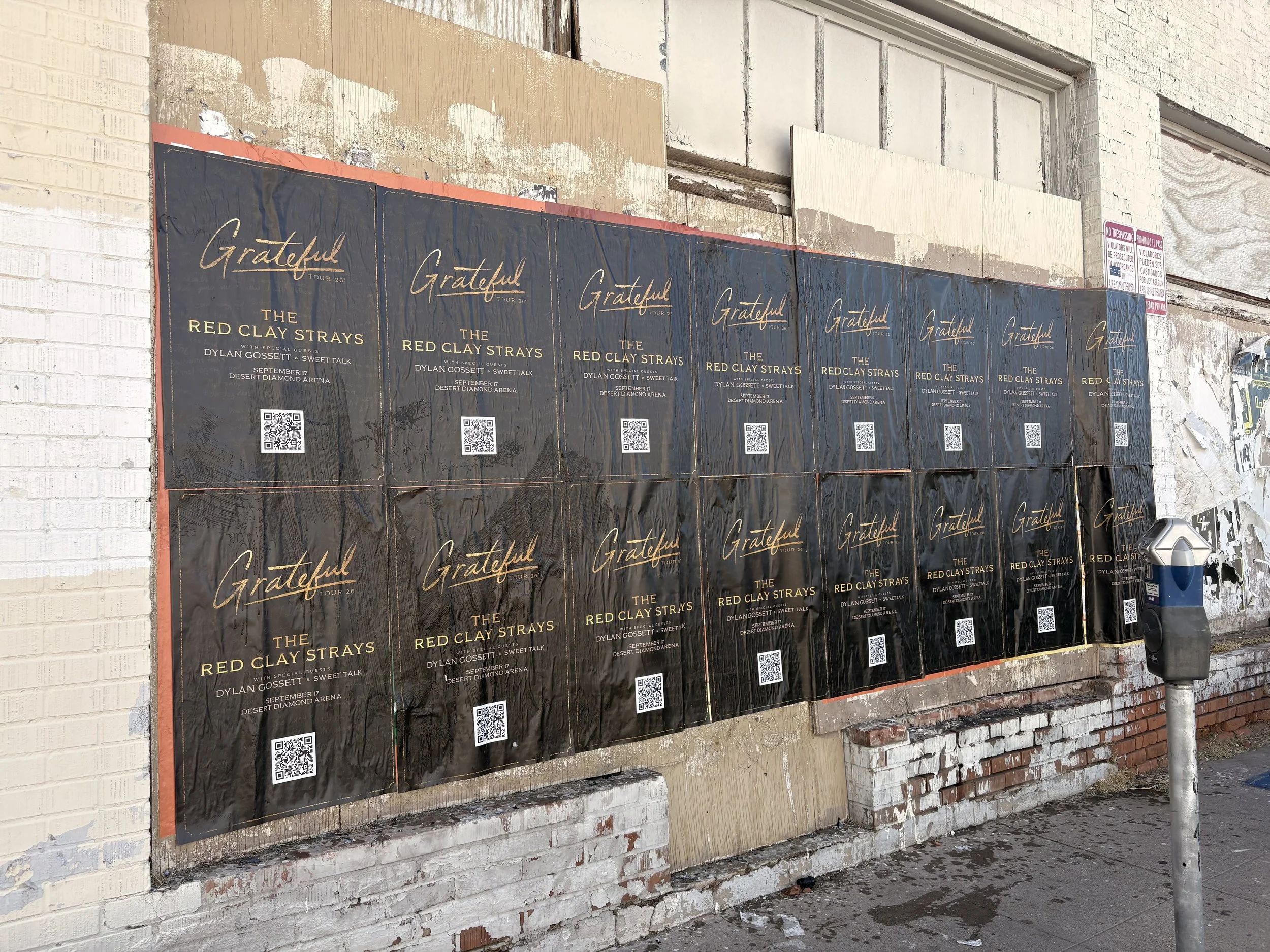
The Red Clay Strays posters displayed in two rows by sidewalktattos
Alcohol brands tend to ask better street-marketing questions than most categories.
They usually want to know where a campaign can go, what has to appear in the creative, how close placements can get to nightlife or retail, and what kind of documentation is available if a compliance team asks for proof later. Those are the right questions. Street visibility can be powerful for beer, wine, spirits, canned cocktails, and low-ABV launches, but it works best when legal review, placement logic, and field execution are treated as one plan.
A street campaign is not a shortcut around alcohol advertising rules. It is still advertising, and the standards around audience, claims, and required disclosures still matter.
Alcohol street campaign compliance starts with outdoor advertising rules
According to the TTB, alcohol advertising includes written, verbal, illustrated, or depicted statements intended to induce sales, and that scope covers billboards, public transit cards, outdoor signs, and other outdoor displays. That matters because a wheatpaste poster on the street is not some separate universe. If it promotes an alcohol brand, it should be reviewed with the same discipline as any other public-facing ad.
The first practical takeaway is simple: treat street creative like regulated creative. Do not assume that a bold image and a logo can be approved faster just because the format feels temporary or unconventional. If the piece is public, it deserves a compliance pass.
The TTB also says advertisements must contain required mandatory statements. When space is restricted, that requirement may be satisfied by a clearly marked link that goes directly to the mandatory information. For street work, that often shapes layout decisions early. A poster may need a scannable path to required information, not just a vanity URL tucked into the bottom corner.
Before artwork goes to print, teams should review a few basics:
Brand name
Product class
Mandatory statements plan
Claims and disclosure review
Adult-heavy placement strategy for alcohol street advertising
Placement is where alcohol campaigns either get sharper or get riskier.
The FTC has noted that many alcohol advertisers follow voluntary industry codes aimed at limiting youth exposure by both content and placement. One widely cited placement standard says that no more than 28.4% of the audience should be under 21, based on reliable audience data. Even though that standard comes from voluntary codes, serious alcohol marketers tend to treat it as a practical operating boundary.
That means the strongest street campaigns are usually built around adult-heavy environments, not just high-traffic environments. A location can be busy and still be a poor fit if the surrounding audience skews too young or if the immediate context creates unnecessary scrutiny.
Sidewalk-level execution works best when the map favors nightlife districts, venue corridors, dense retail blocks, restaurant clusters, entertainment zones, and commuter-heavy streets with clear adult foot traffic. The point is not just reach. The point is reach with placement discipline.
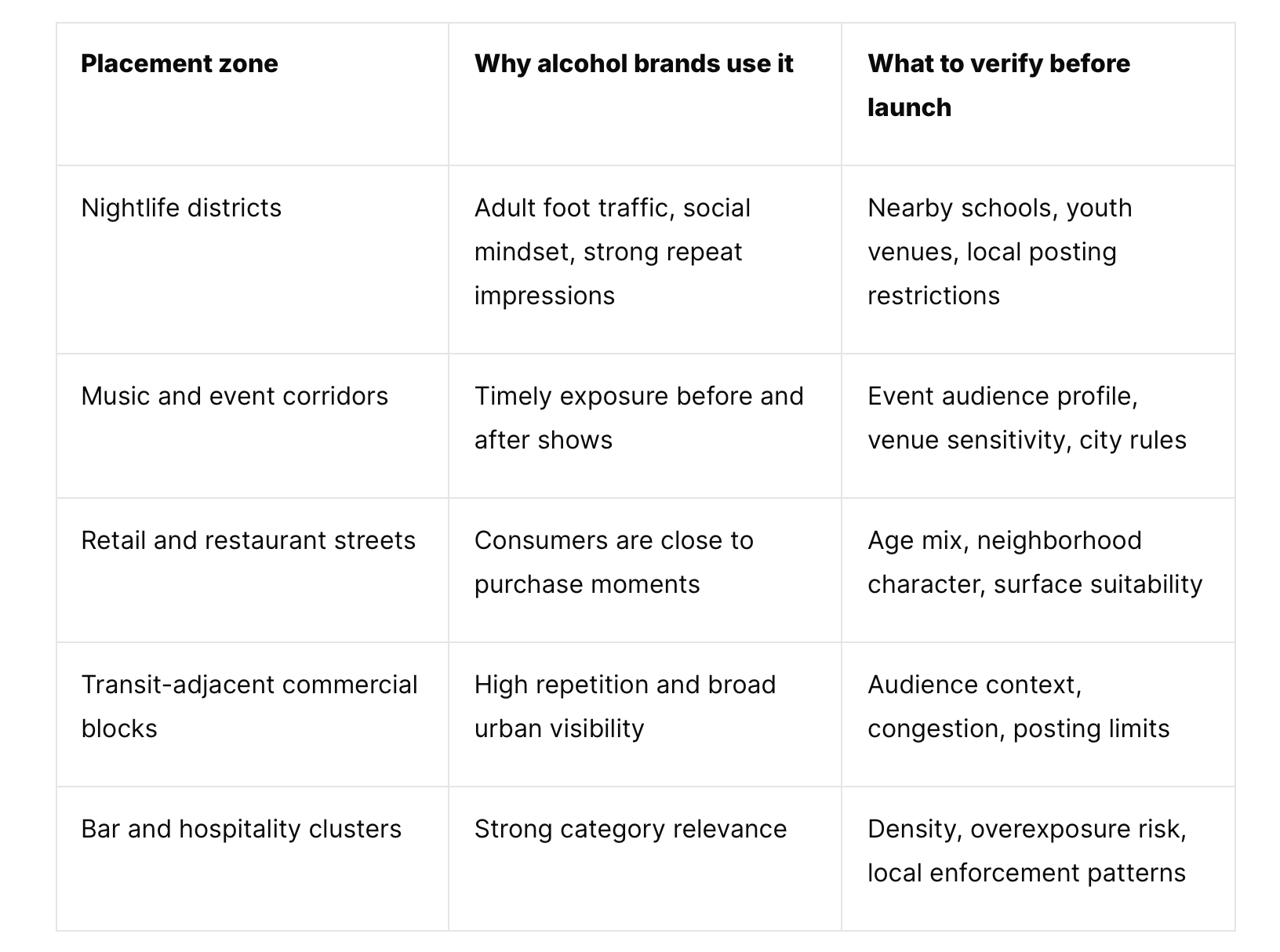
Placement strategy by sidewalktattos
Good placement is selective. More walls do not always mean a better alcohol campaign.
How wheatpaste installs work for alcohol street campaigns
A wheatpaste campaign usually starts with mapping, not printing. Teams identify target neighborhoods, likely walking paths, event-adjacent corridors, and high-visibility surfaces that fit the campaign’s audience and timing. For alcohol brands, that mapping should also screen for youth-sensitive contexts and local posting realities before creative goes into production.
Once locations are selected, posters are printed at scale and organized by route. Field teams install them by hand, often in concentrated waves so a brand can own a pocket of the city within a short launch window. The result is not a single sign. It is a clustered street presence that people encounter repeatedly across a district.
Sidewalk Tattoos is known for this kind of mapped street execution, combining wheat pasting, stencil activations, and custom poster installations across major cities. The model is built around high-foot-traffic visibility with photo documentation and geolocation tracking for each activation.
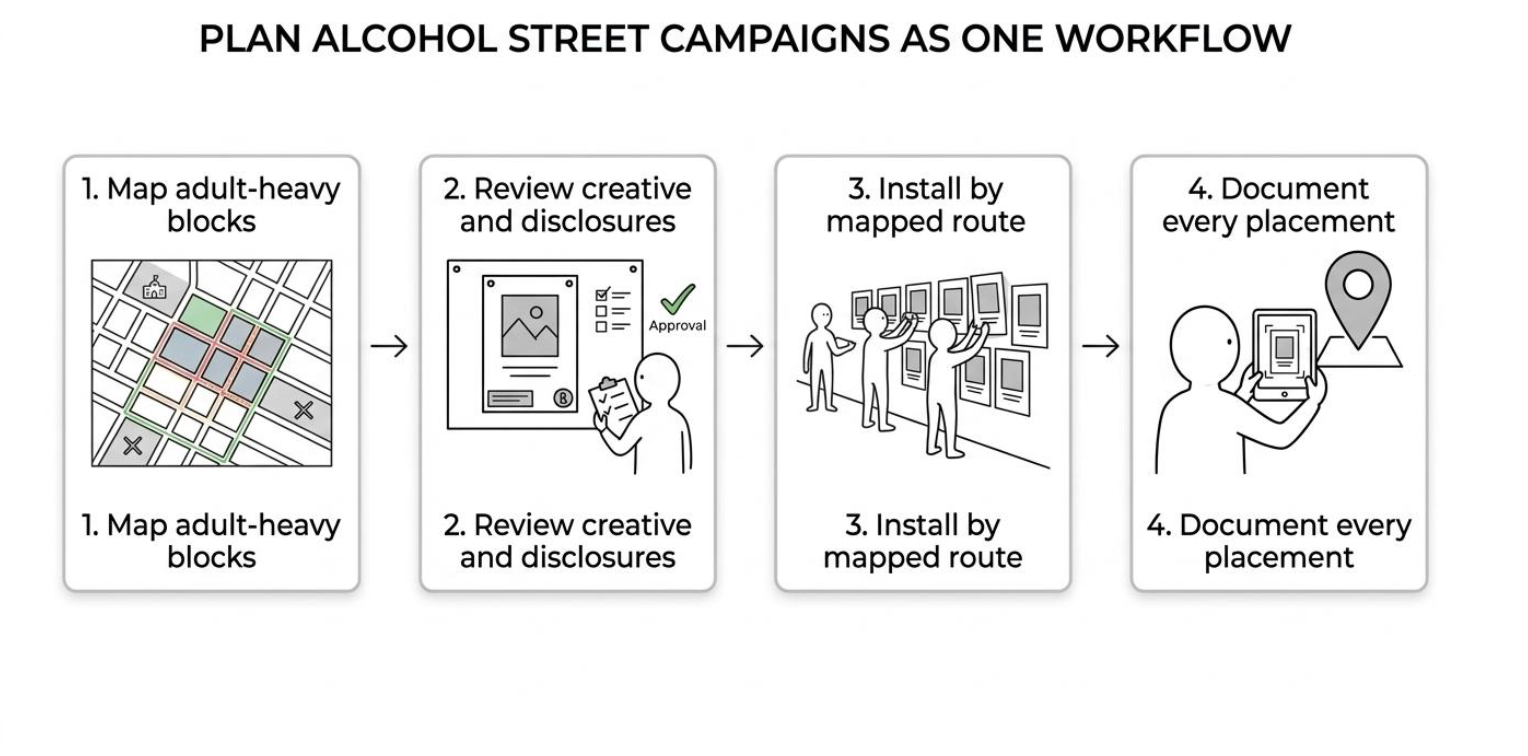
Alcohol Street Campaigns by sidewalktattos
A typical workflow looks like this:
Location mapping: Select adult-oriented zones, route density, and street visibility priorities.
Creative preparation: Size posters for field conditions and build in any required compliance elements.
Street installation: Deploy posters in concentrated runs to create repeat exposure across a neighborhood.
Campaign reporting: Capture photos and geolocation data so placements can be audited and reviewed.
That reporting piece matters more for alcohol than it does for many other categories.
Photo documentation and geolocation tracking make alcohol placements auditable
If a legal or brand team asks, “Where exactly did this go?”, “Near what?”, or “How do we know the placement matched the brief?”, screenshots and vague summaries are not enough.
Street campaigns become much easier to defend internally when every install is documented with clear photo documentation and geolocation tracking. That gives a brand a record of what was posted, where it appeared, how the creative looked in context, and whether the field team delivered against the mapped plan.
For alcohol marketers, documentation supports several needs at once. It helps with compliance review, agency accountability, internal reporting, market-by-market recap, and post-campaign optimization. It also helps separate disciplined street media from random posting.
A documented campaign can answer questions like these without guesswork:
Placement proof: Which blocks, corners, and corridors carried the campaign
Context review: What surrounding businesses, venues, and pedestrian patterns looked like
Execution quality: Poster condition, visibility, and clustering density
Market comparison: How one city or neighborhood performed against another
Alcohol ad creative needs tighter review than many street posters
Street posters often win with brevity. Alcohol posters still need brevity, but not at the expense of compliance.
The FTC says alcohol ad content should not appeal primarily to people under 21. That means brands should take a harder look at the signals inside the creative, not just the media plan. Youth-coded humor, school-adjacent references, underage-looking talent, teen-centric aesthetics, or illustrations that skew juvenile can turn a strong concept into a weak approval candidate.
At the same time, the TTB identifies several common advertising mistakes that are highly relevant to street creative. Missing mandatory statements remain a frequent problem. False or misleading health claims are another. Health-related statements can trigger issues even when the copy sounds casual or trend-driven.
This is where beverage marketing teams sometimes get overconfident with better-for-you language. A hard seltzer poster that hints at fitness, recovery, purity, or wellness may create more regulatory exposure than the team expects. Nutrition-oriented claims can bring extra conditions too. The TTB says calorie or carbohydrate claims require an accompanying statement of average analysis on the website, and certain terms, including “pure” for distilled spirits, need special care.
A few review points deserve extra attention:
Health claims: Avoid language that suggests functional, medical, or wellness benefits.
Nutrition callouts: Calorie or carb messaging may require linked supporting information.
Youth appeal: Visual style, casting, and tone should be built for adults 21 and older.
Restricted wording: Spirits advertising needs close review on terms that have specific regulatory treatment.
Street placement tactics that make more sense for alcohol brands
Not every street campaign should look the same, even within the same category.
A new canned cocktail entering one city may benefit from concentrated wheatpaste saturation around nightlife and live-music blocks. A heritage spirits brand may do better with fewer placements in higher-status hospitality corridors where the context feels more premium. A beer launch tied to a festival weekend may call for route planning around foot traffic spikes before and after event hours.
That is one reason street campaigns tend to work best when placement is built around real pedestrian behavior, not just a city map. People do not move through neighborhoods evenly. They collect around bars, clubs, corner stores, food strips, venues, rideshare pickup zones, transit exits, and retail stretches. Street media gets stronger when posters are positioned along those natural movement lines.
For alcohol brands, effective tactics often include:
clustered posters within a few walkable blocks
repeated exposure near social destinations
timing around launches, tastings, openings, or event weekends
coordination with digital, influencer, or retail activity
A street campaign is rarely strongest as a standalone stunt. It usually performs better as visible city-level reinforcement for a broader launch.
The same integrated thinking shows up in adjacent activation formats, where Just Serve It argues in its piece on drikkevarer til messestand that physical brand presence works best when it supports a larger event or campaign objective rather than trying to do all the work on its own.
Questions alcohol brands should ask before approving a wheatpaste campaign
The best questions come before production starts, not after the first install photos arrive.
A smart approval process should cover compliance, field logistics, geography, and reporting. That is especially true when a campaign spans several cities, because local conditions can shift fast. Different neighborhoods carry different audience profiles. Surfaces vary. Weather matters. Timing around nightlife and events matters too.
Brand teams should ask direct questions like these:
Audience fit: How is the placement strategy being screened for adults 21 and older?
Compliance path: Where will mandatory statements live, and who signs off on claims?
Location logic: Why these blocks, not just these cities?
Documentation: Will every install be photographed and geo-tagged?
Maintenance plan: What happens if posters are covered, removed, or damaged early?
Those questions do not slow a campaign down. They usually make it better.
Alcohol street campaigns work best when creative, placement, and reporting are built together
A lot of street campaigns fail in the planning stage, even if the field team does flawless work. The problem is usually fragmentation. Legal reviews the copy, brand reviews the look, media reviews the city list, and operations reviews the install plan, but no one is looking at how those pieces affect one another.
Alcohol brands tend to get better results when they build the street brief around three connected ideas: adult-oriented placement, compliant creative, and auditable execution. That combination gives the campaign room to be bold without becoming careless.
With wheat pasting, the honest answer is that the format can move fast, look striking, and dominate a neighborhood, but it still needs structure. A poster in the street should be treated like a public ad, a mapped asset, and a documented install all at once.
If your team is weighing a street launch for beer, wine, spirits, or RTDs, Sidewalk Tattoos can help map a campaign around the right city blocks, install it quickly, and document the rollout with photo evidence and geolocation tracking. Contact us to get started.
Reach out for more information :
929.678.0235
