
How Regional Brands Establish Multi-City Street Presence
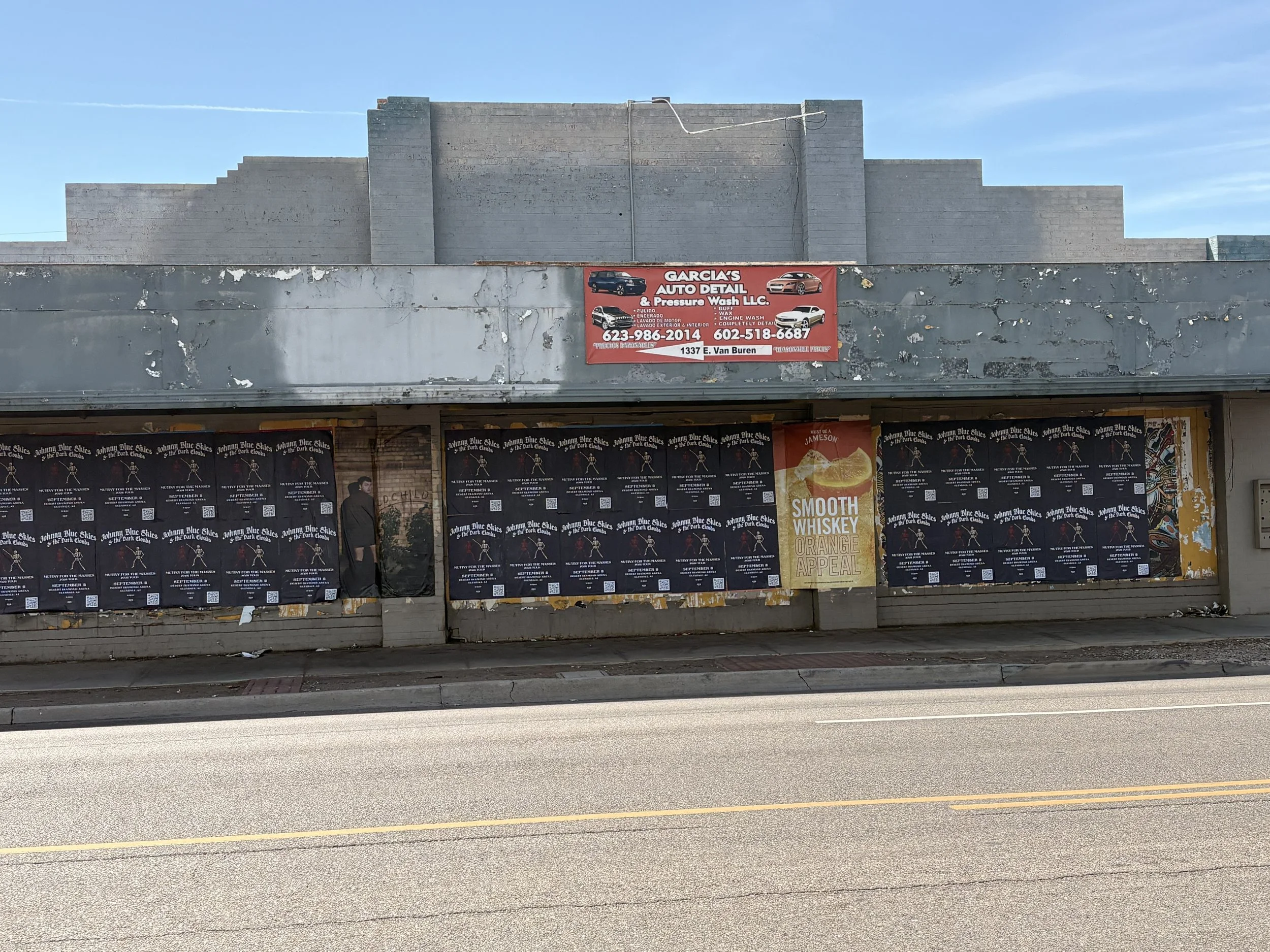
Johnny Blue Skies concert posters covering a roadside wall by sidewalktattos
Regional growth gets harder the moment a brand outgrows a single home market.
One neighborhood can build credibility. Two cities can change perception. When a regional brand appears on the street in multiple markets at nearly the same time, it starts to feel larger, more current, and more established. That shift matters for retail launches, event promotion, product drops, hospitality openings, and brand campaigns that need local attention without waiting months for momentum to build.
Street-level media is especially effective here because it puts the brand directly into the daily path of the audience. Wheat-pasted posters and sidewalk stencils can move fast, look native to the city, and scale from one district to another without losing their impact. For brands making a regional push, that combination is hard to ignore.
Why multi-city street presence matters for regional brands
A regional brand often sits in an interesting middle ground. It may already have strong awareness in one city, modest recognition in nearby markets, and a clear need to look bigger than its current footprint. Digital media can help with frequency, but physical visibility still shapes how people size up a brand in the real world.
That is one reason multi-city street campaigns work so well during expansion. They create a sense of arrival. Instead of entering a second market quietly, the brand shows up in public, at street level, with enough repetition to feel present. The effect becomes even stronger when two cities launch in sync.
There is also a local trust factor. Pew Research Center reported in 2024 that 85% of U.S. adults say local news outlets are at least somewhat important to the well-being of their community, and 69% say local journalists are mostly in touch with their community. That says something useful about audience behavior: people still care deeply about what feels local. Street media meets that instinct by putting the message into the built environment people move through every day.
Why wheatpasting works across multiple cities
Wheatpasting is built for speed, repetition, and visual consistency. A poster series can be adapted to different neighborhoods while keeping the same central identity across a region. That makes it a smart format for brands that want one campaign idea to hold together across multiple markets.
It is also practical. Large poster runs can be printed quickly, installed fast, and placed where foot traffic and cultural relevance intersect. A brand can dominate a few targeted corridors in two cities instead of spreading a small budget too thin across standard media placements.
When paired with sidewalk stencils, the campaign becomes even more dynamic. Posters build visual weight. Stencils create directional repetition, event energy, and social sharing opportunities close to intersections, retail zones, music venues, transit paths, and nightlife areas.
A scalable street campaign usually benefits from:
repeated creative in key corridors
market-specific placement strategy
fast install windows
geo-tagged reporting
What a two-city street campaign can accomplish
Two cities is often the right starting point for regional expansion.
It is large enough to signal growth and small enough to stay disciplined. A brand can test creative resonance, compare neighborhood performance, and build a repeatable model before widening the campaign to five, ten, or more markets. This matters for emerging brands, but it matters just as much for established regional businesses entering adjacent metros for the first time.
A two-city launch also creates a stronger narrative. When posters appear in both markets within the same campaign window, the brand no longer looks like it is experimenting. It looks like it is moving with intent.
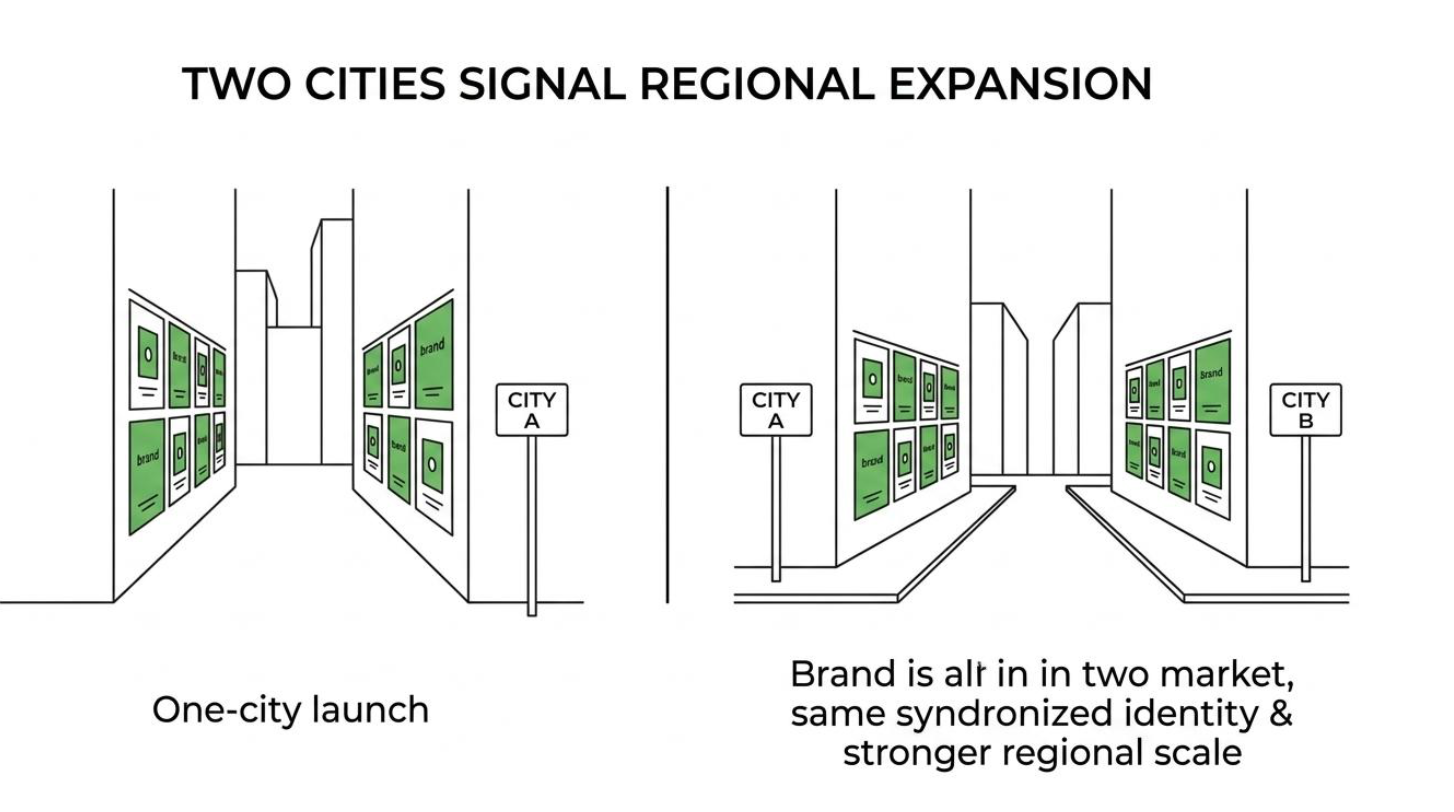
Region Expansion by sidewalktattos
Here is a simple way to think about campaign structure:
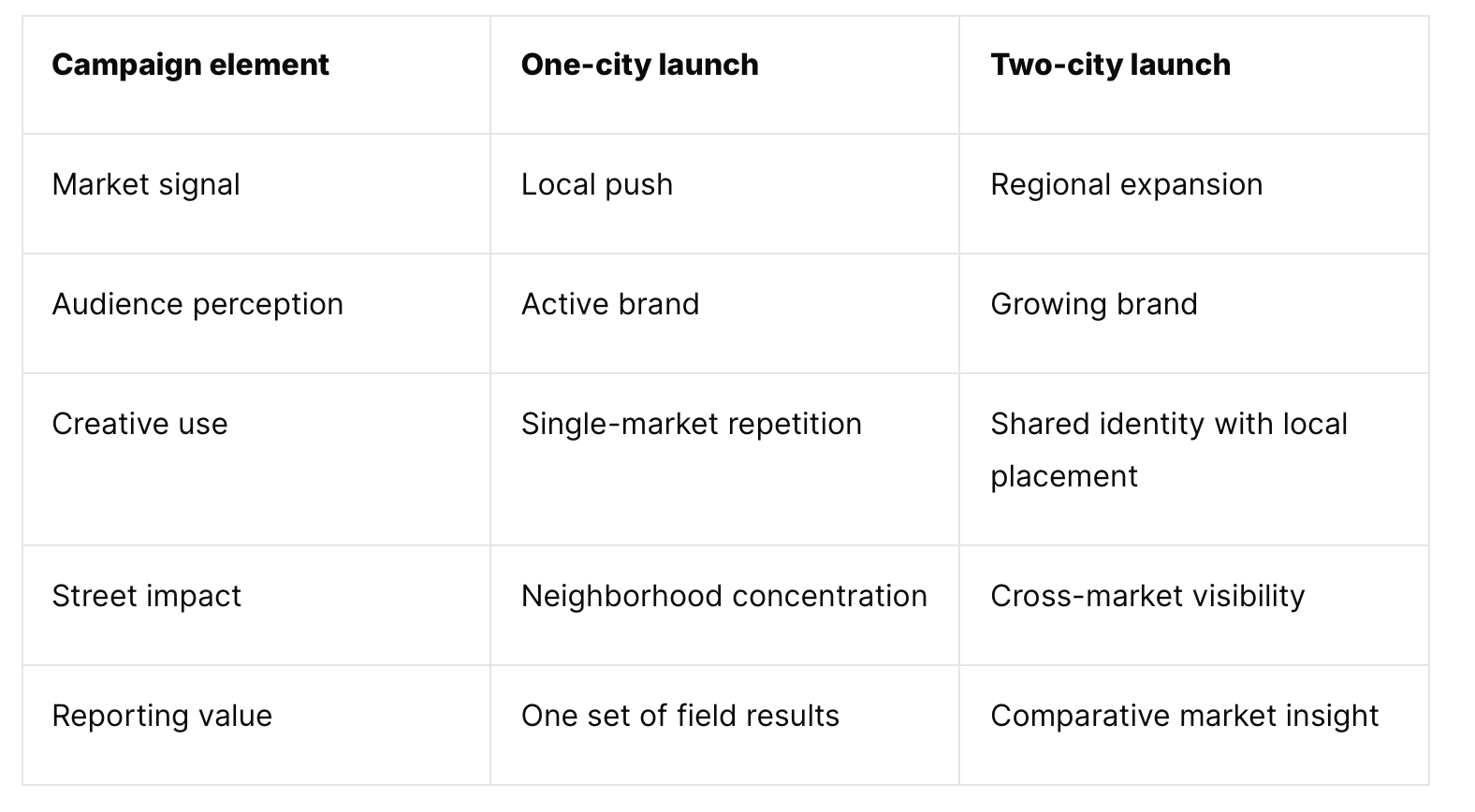
Campaign city launches by sidewalktattos
How regional brands keep local relevance in each city
The best multi-city campaigns are consistent, not identical.
That distinction matters. The poster art, headline, offer, or visual system should feel unmistakably tied to one brand. Yet placements should respond to the rhythm of each market. A dense retail corridor in one city may call for saturation. A nightlife district in another may benefit from fewer placements in tighter clusters around bars, venues, and late-evening foot traffic.
This is where mapping becomes strategic rather than administrative. The campaign plan should account for neighborhood function, audience movement, and timing. A regional food concept entering two new cities may want lunch-heavy pedestrian zones in one market and entertainment districts in the other. A fashion label may prioritize shopping corridors, transit exits, and street-culture nodes in both places, while still changing the exact blocks.
A smart local plan tends to focus on:
Neighborhood fit: retail streets, venue districts, commuter paths, or campus edges
Audience timing: weekday commuters, weekend shoppers, evening crowds
Creative density: hero walls, repeating poster clusters, and fill-in placements
Market nuance: language, event timing, seasonal cues, and local behavior
What current out-of-home research says about reach and receptivity
The broader out-of-home category gives regional brands good reason to invest in public-facing media.
In a 2024 Harris Poll study released by OAAA, 73% of consumers said they view digital out-of-home ads favorably. The same study found especially strong usefulness ratings for place-based commercial messages, with 86% rating grocery deal ads useful and 84% saying the same for restaurant deal ads. While wheatpasting is a different format from digital out-of-home, the broader takeaway still matters: audiences are highly receptive to messages encountered in public spaces when those messages feel timely and relevant.
Measurement is getting stronger too. Nielsen stated in February 2025 that its out-of-home measurement now covers 100% of the contiguous U.S. television population, up from 66% the year before, and that its person-level data comes from panels of more than 1.2 million individuals. That does not mean every street campaign should be treated like a national media buy. It does mean the market is paying closer attention to public-space media, with better tools and more confidence around audience visibility.
For regional brands, this supports a simple idea: physical presence is not a fringe tactic. It is part of a serious media mix.
How fast execution changes a regional launch
Speed has strategic value.
A multi-city street campaign gains power when the installs happen close together. If posters go up in City A today and City B three weeks later, the campaign may still work, but it will not carry the same feeling of momentum. Tight timing makes the expansion visible as one coordinated move.
That is why fast execution matters so much in wheatpasting. A regional brand may have a retail opening, a pop-up, a product release, a tour date, or a funding milestone that needs immediate street presence. In those cases, long setup cycles can flatten the moment.
Sidewalk Tattoos has highlighted this speed in its own case work. One documented True Religion wheat-paste campaign was installed in Houston within 24 hours of final artwork approval, and the same rollout was executed across 18 cities in a single day. The listed markets included Atlanta, Austin, Boston, Charlotte, Chicago, Los Angeles, Miami, Milwaukee, New Orleans, New York, Orlando, Philadelphia, Phoenix, Portland, San Francisco, Seattle, Washington, D.C., and Houston. That kind of capacity shows what is possible when a campaign is built for synchronized field execution.
Wheatpaste and sidewalk stencil activations as a combined regional strategy
Some campaigns need more than one street format.
Wheatpaste posters are excellent for visual mass and repeat exposure. Sidewalk stencils add a different kind of presence. They can guide foot traffic, create anticipation around a location, and deliver brand repetition at eye level and underfoot in a way that feels immediate. Used together, they turn a regional campaign into a stronger street system rather than a set of isolated placements.
This approach works especially well when one market has a flagship destination. A poster takeover can expand awareness across the city, while stencil hits concentrate energy near the store, event, or pop-up location. Sidewalk Tattoos notes that its sidewalk stencil activations can range from 25 to 200 or more hits depending on campaign scale, which gives brands room to adapt the mix by market.
A Soho pop-up case study from the company described a campaign with 100 sidewalk stencil hits and 600 jumbo wheat-pasted posters placed around intersections, subway exits, and shopping streets. The lesson for regional brands is clear: when placements reflect actual movement patterns, the street campaign can create both ambient visibility and direct path-to-location value.
What to plan before launching across two or more cities
The strongest regional campaigns usually look simple in public because the planning was disciplined behind the scenes.
Creative should be ready for repetition. Operations should be ready for market-by-market deployment. Reporting should be built into the campaign from the start, not added later. If those pieces are in place, expansion becomes much easier.
A useful planning checklist includes:
Primary objective: market entry, event promotion, retail traffic, brand awareness, or product launch
City selection: adjacent metros, cultural hubs, or cities with existing customer demand
Install window: same-day, same-week, or staggered launch based on timing needs
Format mix: posters only or posters plus sidewalk stencil hits
Proof of performance: photo sets, geo documentation, and recap reporting
Budget discipline matters here as well. It is often better to dominate targeted districts in two cities than to scatter light placements across six. Density makes a brand feel present. Presence is what changes perception.
How documentation supports multi-city campaign management
Once a campaign moves beyond one city, visibility into execution becomes part of the value.
Photo documentation confirms placement quality. Geo-tagged reporting helps teams compare neighborhoods, markets, and rollout patterns. For agencies and in-house marketers alike, that makes the campaign easier to share internally and easier to build on later. It also helps when the next phase includes more cities, new creative, or a larger activation footprint.
This becomes especially useful when regional campaigns serve multiple stakeholders. A retail team may care about proximity to store openings. A brand team may care about consistency of creative expression. A growth team may care about launch timing and market coverage. Good field documentation gives each group something concrete to work from.
Street media can feel raw in the best way, but its execution does not need to be vague.
Where regional street presence goes next
As more brands compete for attention across overlapping metros, the gap between being present online and being present in public will become more visible. Regional expansion is no longer just a media question. It is a perception question.
A brand that shows up on the street in multiple cities within the same campaign window signals confidence. It tells local audiences, partners, and competitors that growth is active, not theoretical. Wheatpasting and sidewalk stencil activations are well suited to that moment because they combine speed, scale, local texture, and repeatable execution.
If your brand is preparing to enter two cities at once, or wants to turn a strong home market into a broader regional footprint, this is the right time to build a street campaign that matches your pace. Contact Sidewalk Tattoos to get started.
